
Your Search for the Perfect Easy Vegan Gluten Free Pancake Ends Here
Fluffy, Cheap, and Ready in 20 Minutes — Yes, Really
Easy vegan gluten free pancakes are simpler to make than most people think — and they can be on your plate in under 20 minutes with ingredients that cost very little.
Here’s the quick answer:
How to make easy vegan gluten free pancakes:
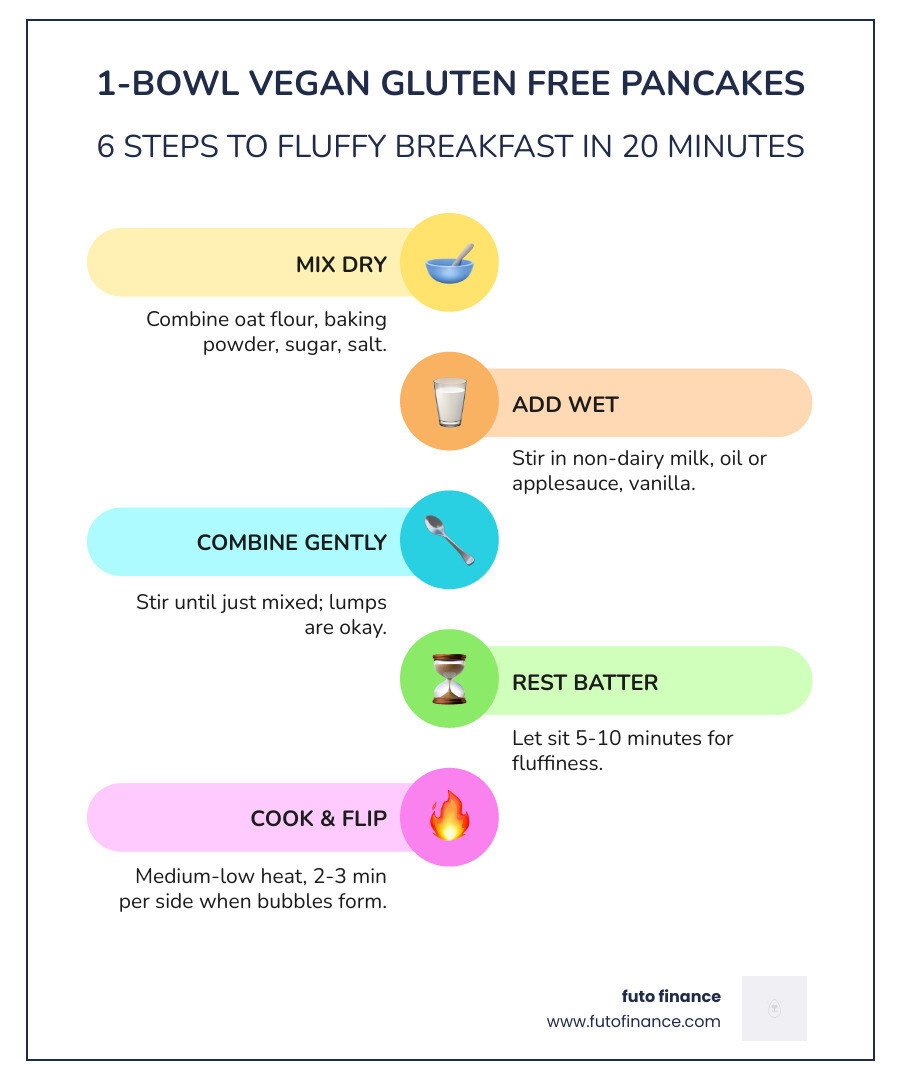
- Mix dry ingredients — gluten-free flour (oat flour or a 1:1 blend), baking powder, sugar, and salt in a large bowl
- Add wet ingredients — non-dairy milk, oil (or applesauce), and vanilla extract
- Stir until just combined — a few lumps are fine
- Rest the batter for 5-10 minutes
- Cook on medium-low heat — about 2-3 minutes per side, flipping when bubbles form
- Serve with maple syrup and fresh fruit
That’s it. One bowl. No eggs. No dairy. No gluten.
These pancakes work because gluten-free batters are actually more forgiving than regular ones — you can’t overwork the batter and make it tough, since there’s no gluten to develop. That makes this recipe especially great if you’re cooking in a cramped dorm kitchen with minimal time.
The sections below cover everything: the best flours, egg replacers, cooking tricks, storage tips, and how to batch-cook a week’s worth of breakfasts in one go.
Essential Ingredients for easy vegan gluten free pancakes
When we talk about making easy vegan gluten free pancakes, we are focusing on simplicity and affordability. For a university student, the last thing you want is a recipe requiring ten different expensive starches. Most of what you need is likely already in your cupboard.

To get that perfect stack, you’ll need:
- Gluten-Free Flour: This is your base. You can use a store-bought 1:1 blend or make your own using oats.
- Flaxseed Meal: When mixed with water, this acts as our “flax egg” to provide structure.
- Baking Powder: We use a generous amount (often 1 full tablespoon) to ensure a high rise without the help of gluten or eggs.
- Non-Dairy Milk: Soy, almond, oat, or coconut milk all work. If you want a “buttermilk” vibe, add a teaspoon of apple cider vinegar to your milk and let it sit for five minutes.
- Natural Sweetener: A touch of sugar or maple syrup helps with browning.
- Fat: A little oil or melted vegan butter provides moisture. For an oil-free version, applesauce is a fantastic student-friendly substitute.
The Benefits of Going Gluten-Free and Vegan
Scientific research, such as studies highlighted by the Celiac Disease Foundation, suggests that for those with gluten sensitivities, removing wheat can significantly reduce inflammation and digestive distress. Furthermore, a plant-based diet is often higher in fiber and lower in saturated fats. By combining these two dietary choices, you’re creating a breakfast that is gentle on the gut and provides sustained energy for a long day of lectures.
Flour Comparison Table
| Flour Type | Texture Result | Best For… | Student Budget Tip |
|---|---|---|---|
| Oat Flour | Wholesome, slightly nutty | Fluffy, hearty pancakes | Cheapest option; blend your own oats! |
| 1:1 GF Blend | Closest to “traditional” | Light, airy, classic taste | Look for store brands to save money. |
| Almond Flour | Rich, moist, dense | Adding protein and healthy fats | Buy in bulk or mix with oat flour. |
Choosing the Best Flour for easy vegan gluten free pancakes
The “best” flour often depends on what you have on hand.
- Oat Flour: This is our top pick for students. It’s incredibly cheap. You can make it by putting dry oats into a blender until they reach a fine powder. It creates a very soft, fluffy texture.
- 1:1 Baking Blends: Brands like Bob’s Red Mill or King Arthur are designed to be a direct swap for wheat flour. They usually contain xanthan gum, which helps the pancakes stay together.
- The Homemade Blend: Some experts prefer a mix of almond flour, oat flour, and a starch (like tapioca or potato starch). This creates a sophisticated texture that is indistinguishable from a “pancake house” short stack.
Vegan Egg Replacers that Actually Work
Since we aren’t using eggs, we need something to bind the ingredients so your pancake doesn’t turn into a pile of crumbs.
- Flax Egg: Mix 1 tablespoon of ground flaxseed with 3 tablespoons of water. Let it sit for 5 minutes until it becomes gelatinous.
- Applesauce: Use 1/4 cup of unsweetened applesauce per egg. This adds moisture and a hint of sweetness.
- Banana Puree: Half a mashed banana works wonders for binding and adds a delicious flavor profile, though it will make the pancakes taste like banana!
Step-by-Step Guide to Pancake Perfection
The process of making easy vegan gluten free pancakes is all about the “rest.” Unlike wheat pancakes, where you want to cook immediately to avoid developing too much gluten, gluten-free batter needs a few minutes to hydrate.

- Whisk the Dry: Start by sifting your flour, baking powder, and salt. This removes lumps and aerates the flour for more fluff.
- Prepare the “Egg”: If using a flax egg, prep it first so it has time to thicken.
- Combine: Pour your wet ingredients into the dry. Use a whisk or a fork and stir until the large flour streaks disappear. Don’t worry about small lumps—they actually help create air pockets!
- The 10-Minute Rest: This is the most important step. Let the batter sit on the counter for 10 minutes. During this time, the flours absorb the liquid, and the baking powder starts to react. You’ll see tiny bubbles forming on the surface.
- Heat the Pan: Use a non-stick skillet or griddle. Set it to medium-low heat. Gluten-free flours (especially oat flour) can burn faster than wheat, so a lower temperature for a slightly longer time is the secret to a golden-brown finish.
- The Flip: Pour about 1/4 cup of batter per pancake. Wait until the edges look dry and bubbles on top start to pop and stay open. Flip gently!
The Nutritional Power of Oats
Scientific research on the nutritional value of oats highlights that they are a powerhouse of beta-glucan, a type of soluble fiber that helps lower cholesterol and stabilizes blood sugar. For students, this means you won’t have a “sugar crash” halfway through your 10 AM seminar.
The Secret to Fluffiness in easy vegan gluten free pancakes
If your pancakes are coming out flat, check your baking powder. It usually expires after 9 months. To get that “miles-high” stack, ensure your batter is thick—it should be pourable but slow, like heavy cream. If it’s too thin, add a tablespoon of flour; if it’s too thick, add a splash of plant milk.
Mix-ins and Toppings for Variety
Don’t let your breakfast get boring! While the batter is resting, prep some additions:
- Blueberries: Fresh or frozen (don’t thaw frozen ones or they’ll turn the batter purple).
- Chocolate Chips: Dark chocolate chips are usually vegan.
- Walnuts or Pecans: Great for a bit of crunch and healthy fats.
- The “Student Special”: A swirl of peanut butter and a drizzle of cheap maple-flavored syrup.
Pro Tips for Texture and Troubleshooting
Even with the best recipe, gluten-free vegan cooking can be temperamental. Here is how we ensure success every time.
- Use a Non-Stick Surface: This is non-negotiable. Vegan, gluten-free batter is stickier than traditional batter. If you don’t have a good non-stick pan, use a generous amount of vegan butter or coconut oil.
- Avoid Gumminess: If the middle of your pancake feels “mushy” or gummy, it usually means the heat was too high. The outside cooked before the inside could set. Lower the heat and cook for an extra minute.
- Check the Sizzle: To see if your pan is ready, flick a drop of water onto it. If it sizzles and dances, you’re ready to go.
For more advice on maintaining a healthy, plant-based lifestyle while hitting the books, check out our guide to vegan nutrition.
Common Mistakes to Avoid
- Overmixing: While you can’t develop gluten, overmixing can pop all those lovely air bubbles we want for fluffiness.
- Cold Ingredients: If you use cold milk and melted coconut oil, the oil will solidify into little clumps. Try to use room-temperature milk if possible.
- Flipping Too Early: If you try to flip before the bubbles appear, the pancake will tear. Patience is your best friend here.
Adjusting Consistency for Different Flours
Different brands of gluten-free flour absorb liquid differently.
- If using Almond Flour, you may need less liquid.
- If using Coconut Flour (which we generally don’t recommend for this recipe), you would need significantly more liquid as it is highly absorbent.
- Oat Flour thickens as it sits. If your last batch of batter is like paste, whisk in another tablespoon of milk.
Meal Prep: Storing and Reheating
We know student life is hectic. You don’t always have 20 minutes on a Tuesday morning to whip up a fresh batch. The good news? These pancakes are built for meal prep.
Storage Basics
- Fridge: Store in an airtight container for up to 5 days.
- Freezer: These last for up to 3 months!
The “Flash Freeze” Method
To prevent your pancakes from turning into one giant frozen brick, follow this pro tip:
- Lay the cooked, cooled pancakes out in a single layer on a baking sheet.
- Put the sheet in the freezer for 30-60 minutes.
- Once they are firm, stack them into a freezer-safe bag. Now you can pull out just one or two at a time!
How to Reheat for the Best Texture
- The Toaster: This is the best method for students. It makes the edges slightly crispy again, just like they were fresh off the pan.
- The Microwave: Quick (20-30 seconds), but can make them a bit soft.
- The Oven: If you’re reheating a large batch, put them on a tray at 350°F (175°C) for about 5-8 minutes.
Batch Cooking for Busy Students
On a Sunday evening, double or triple the recipe. It doesn’t take much longer to cook 20 pancakes than it does to cook 8. This is a massive money-saver, as it prevents you from grabbing expensive, processed breakfast bars on your way to campus.
Frequently Asked Questions and Final Thoughts
Can I make these pancakes without oil?
Yes! Simply swap the oil in the recipe for an equal amount of unsweetened applesauce or mashed banana. You can also use a splash more non-dairy milk. Just ensure you are using a very high-quality non-stick pan so they don’t glue themselves to the surface.
Why are my gluten-free pancakes falling apart?
This usually comes down to the binder. If you skipped the flax egg or didn’t use a flour blend with xanthan gum, the structure will be weak. Also, make sure you let the batter rest! That 10-minute wait allows the starches to bond, which keeps the pancake together during the flip.
Is it cheaper to buy a mix or make it from scratch?
Making it from scratch is almost always cheaper, especially if you use the oat flour method. A bag of oats is one of the most cost-effective items a student can buy, and it can be used for porridge, cookies, and these easy vegan gluten free pancakes.
Conclusion
Eating a vegan, gluten-free diet doesn’t have to be expensive or complicated. With a single bowl and a few pantry staples, you can enjoy a breakfast that feels like a luxury but fits a student budget. We hope this guide helps you master the art of the fluffiest pancake!
Ready to level up your kitchen game? Start your vegan journey with Futo Finance for more student-friendly tips and recipes.

Melo Rodrigues is the founder of Futo Finance and a specialist in student-budget veganism. Having mastered the art of plant-based cooking in a university setting, Melo is dedicated to helping students achieve nutritional excellence without financial strain. Through Futo Finance, Melo shares lab-tested strategies for eating smart and living sustainably on a budget.
