
How to Make Simple Vegan Pasta Risotto in Under 25 Minutes
The Quickest Way to Make Simple Vegan Pasta Risotto (Ready in 25 Minutes)
Simple vegan pasta risotto is one of the easiest, creamiest comfort meals you can make on a student budget — and it’s ready in under 25 minutes.
Here’s the quick answer if you need it fast:
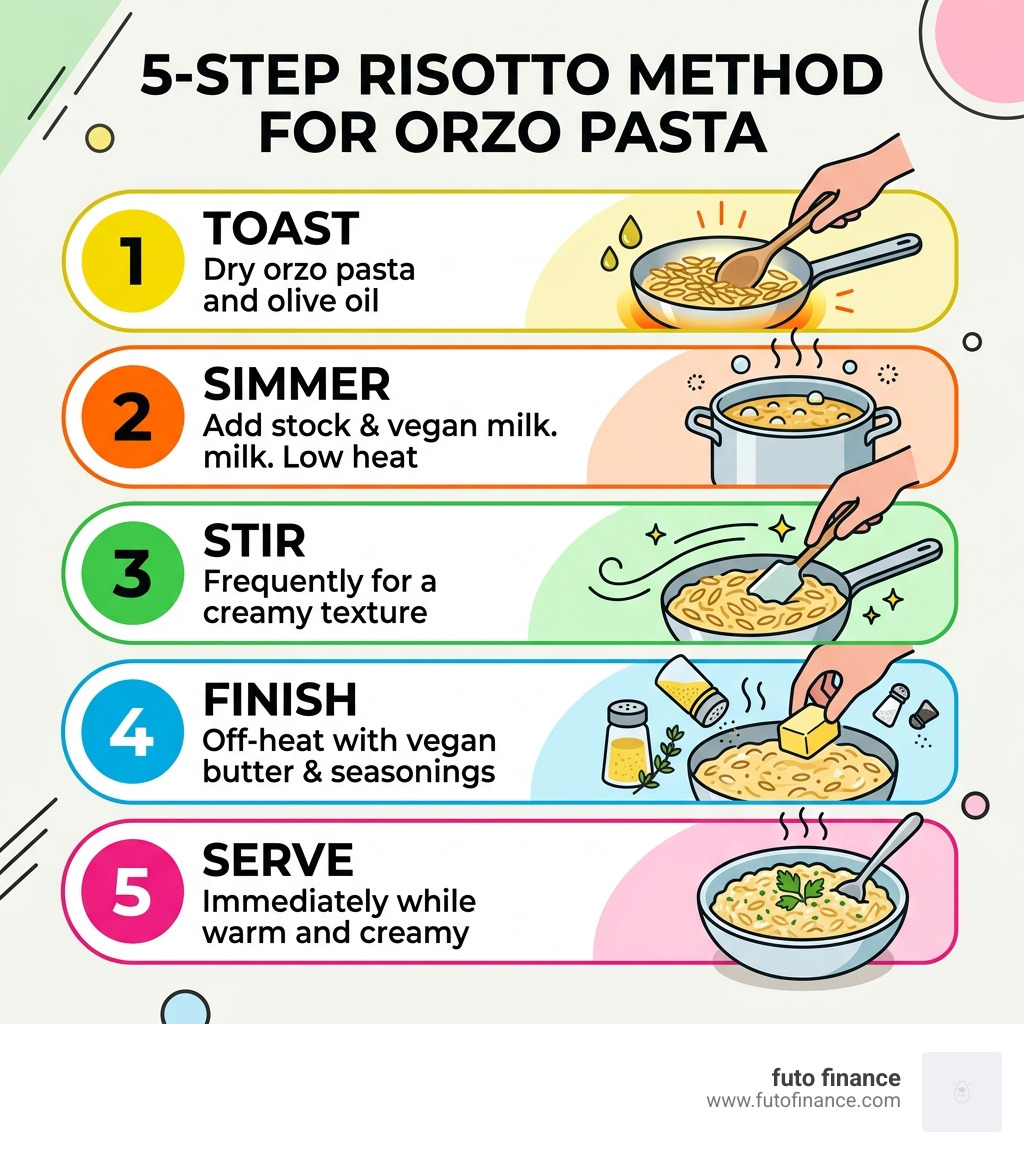
- Sauté diced onion and garlic in olive oil until golden
- Toast orzo pasta in the pan until it starts to pop
- Simmer with vegetable stock, dairy-free milk, nutritional yeast, salt, pepper, and thyme for 12-15 minutes, stirring frequently
- Finish off the heat with a knob of vegan butter
- Serve immediately — it thickens as it sits
That’s it. No constant stirring. No fancy ingredients. No dairy needed.
The secret is using orzo — a rice-shaped pasta that releases starch as it cooks, creating a naturally silky, creamy texture just like traditional risotto. It’s faster than rice-based risotto and far less fussy.
This dish clocks in at around 356–475 calories per serving, delivers a solid hit of protein (~17–19g), and costs very little per portion. It’s the kind of meal that feels indulgent but is genuinely simple and affordable — perfect for a busy weeknight.
What is Simple Vegan Pasta Risotto?
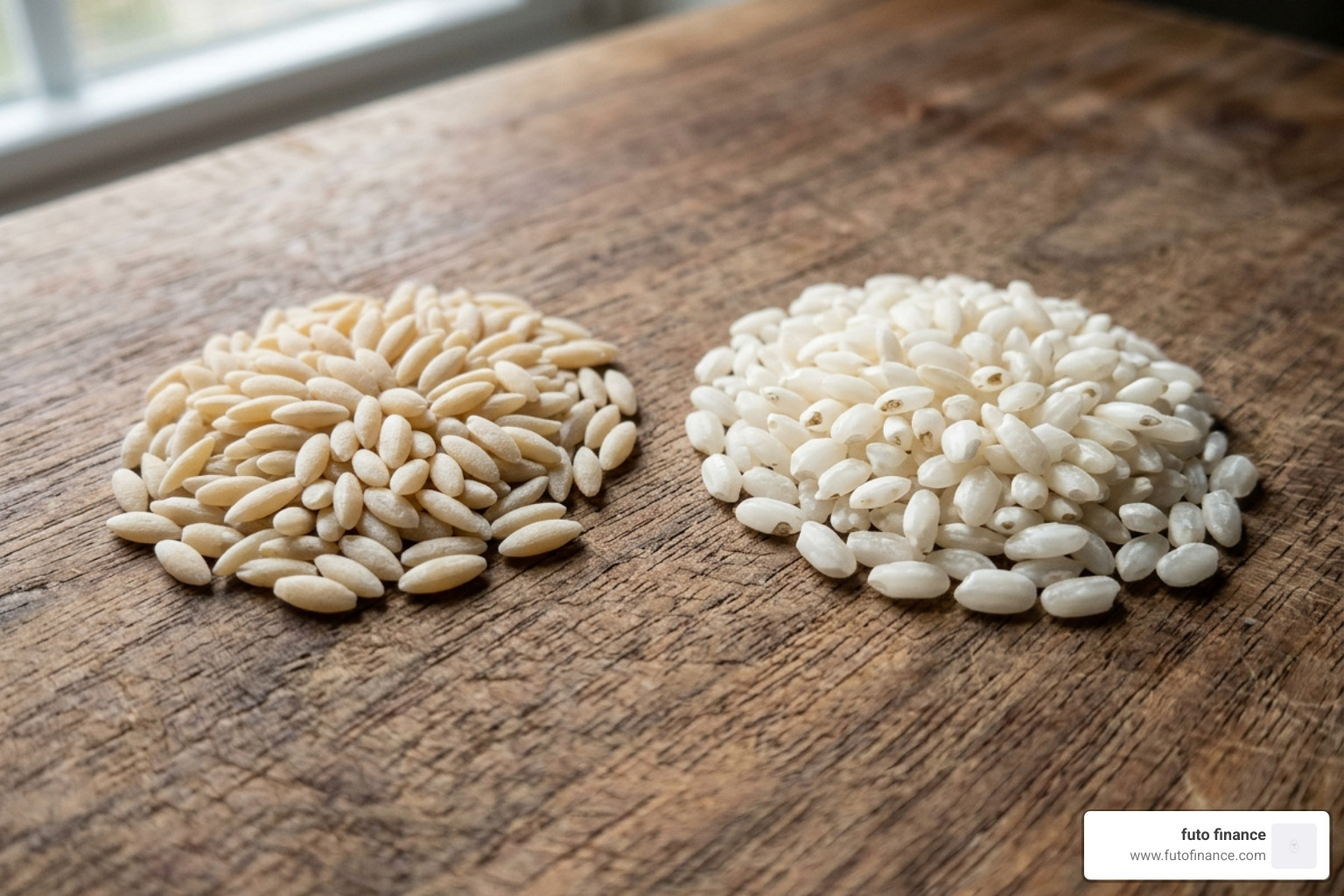
When we talk about simple vegan pasta risotto, we are often referring to a dish known as “orzotto” or “risoni risotto.” Traditionally, risotto is a Northern Italian rice dish made with high-starch short-grain rice like Arborio or Carnaroli. It requires a slow, methodical process of adding warm broth ladle by ladle, stirring constantly to coax the starch out of the rice to create a velvety sauce.
In our student-friendly version, we swap the rice for orzo (also called risoni). Orzo is a type of pasta shaped exactly like a large grain of rice. Because it is made from semolina flour, it behaves similarly to high-starch rice. When you cook it using the “risotto method”—adding liquid gradually and stirring—the outer layers of the pasta break down slightly, thickening the cooking liquid into a rich, dairy-free cream.
Scientific research into whole grains and semolina-based pastas suggests that these complex carbohydrates provide sustained energy release. By using the risotto method, we aren’t just boiling pasta; we are creating an emulsion. This allows us to achieve that legendary Italian creaminess without a single drop of heavy cream or cheese.
Why Orzo is the Best Base for a Simple Vegan Pasta Risotto
For those of us living the university lifestyle, time and money are our most precious resources. This is where orzo shines as the ultimate MVP of the pantry.
Traditional Arborio rice takes roughly 18 to 20 minutes of active cooking time, plus prep, often pushing the total meal time to 40 or 50 minutes. Orzo, however, is a “quick-cooking” champion. It reaches a perfect al dente state in about 10 to 12 minutes.
Furthermore, orzo is incredibly accessible. You can find it in the pasta aisle of any budget supermarket, often for a fraction of the price of specialty Italian rices. It is also more forgiving; while traditional rice risotto can become “gluey” if over-stirred or mushy if left for a minute too long, orzo maintains a pleasant, chewy texture that holds up well even if you’re a beginner in the kitchen.
| Feature | Orzo (Pasta) | Arborio Rice |
|---|---|---|
| Cook Time | 10–12 Minutes | 18–25 Minutes |
| Total Prep Time | < 25 Minutes | 40–50 Minutes |
| Stirring Required | Occasional | Constant |
| Budget | Very Low (Student-friendly) | Moderate |
| Texture | Silky & Chewy | Creamy & Soft |
Nutritional Benefits of Plant-Based Orzotto
Choosing a simple vegan pasta risotto isn’t just a win for your wallet; it’s a win for your body. A standard serving of this dish provides a balanced profile of macronutrients.
- Calories: Approximately 356–475 kcal per serving, making it a filling main course.
- Protein: You can expect around 17g to 19g of protein, especially if you use nutritional yeast and a high-quality vegetable stock.
- Fiber: With about 6g of fiber, this dish supports healthy digestion and keeps you full during long library sessions.
- Vitamins & Minerals: By adding aromatics like garlic and onions, and finishing with nutritional yeast, you’re getting a boost of B-vitamins (including B12 if your yeast is fortified), which is essential for vegan energy levels.
Essential Ingredients and Plant-Based Swaps
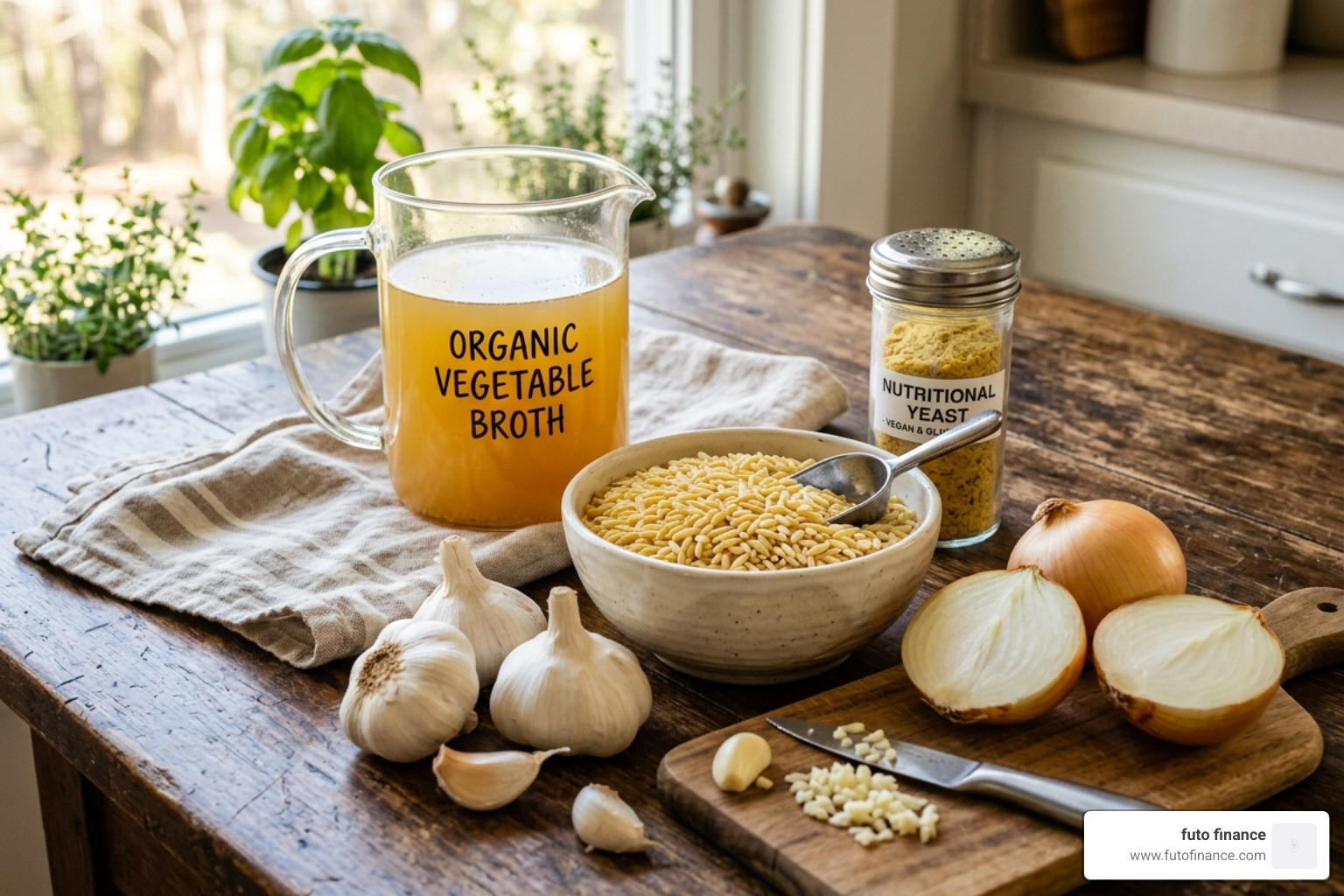
To make a truly great simple vegan pasta risotto, you only need a handful of pantry staples. Here is our “essential” list:
- Orzo Pasta: The star of the show.
- Vegetable Stock: The primary flavor builder. We recommend a low-sodium version so you can control the salt yourself.
- Aromatics: Onions and fresh garlic are non-negotiable for that deep, savory base.
- Olive Oil: For sautéing and adding healthy monounsaturated fats.
- Nutritional Yeast: This is the “secret weapon.” It provides a nutty, cheesy, umami flavor that mimics Parmesan cheese perfectly.
Scientific research on nutritional yeast highlights its role as a complete protein, containing all nine essential amino acids. It’s a powerhouse for plant-based eaters, providing that “savory” hit that usually comes from dairy.
Affordable Substitutions for Your Simple Vegan Pasta Risotto
University life is all about being resourceful. If you’re missing an ingredient, don’t panic! Here are our favorite swaps:
- For Butter: Use a student-budget vegan margarine or simply an extra drizzle of olive oil. If you want a gourmet “umami” punch, stir in a teaspoon of white miso paste at the end.
- For Wine: Many traditional recipes use white wine to deglaze the pan. If you don’t have an open bottle (or want to save it for drinking), just use an extra splash of vegetable broth and a squeeze of lemon juice to provide that necessary acidity.
- For Creaminess: While the pasta starch does most of the work, you can add a splash of unsweetened plant milk (soy or cashew work best). Avoid homemade oat milk for this specific recipe, as it can become overly “gloopy” and thick when heated, which ruins the silky texture.
- Gluten-Free: If you are gluten-intolerant, look for gluten-free orzo made from corn, rice, or cassava. GF orzo may absorb liquid differently, so add your broth slowly.
- Oil-Free: You can sauté your onions and garlic in a splash of water or broth instead of oil for a lower-fat version.
Step-by-Step Guide: How to Cook Creamy Orzo Risotto
Ready to cook? Grab a deep skillet or a wide pot and let’s get started.
- Sauté the Base: Heat 1-2 tablespoons of olive oil over medium heat. Add one finely diced yellow onion and cook until translucent (about 3-5 minutes). Add 3 cloves of minced garlic and cook for another minute until fragrant.
- Toast the Orzo: Pour in 1.5 cups of dry orzo. Stir it frequently for 2 minutes. You want the pasta to smell slightly nutty and even hear a few “pops.” Toasting the pasta prevents it from becoming mushy later.
- Deglaze: If using white wine, add 1/4 cup now. Stir and scrape the bottom of the pan until the liquid has evaporated. If not using wine, skip to the next step.
- The Simmer Phase: Add 3 cups of vegetable broth and 1/2 cup of unsweetened plant milk. Bring to a gentle simmer.
- Stir for Success: Unlike rice risotto, you don’t need to stand there for 20 minutes, but you should stir every 2-3 minutes. This agitation is what releases the starch.
- Seasoning: Stir in 1/4 cup of nutritional yeast, a pinch of dried thyme, salt, and plenty of cracked black pepper.
- The Finish: Once the orzo is tender but still has a slight “bite” (usually after 12 minutes), remove from heat. Stir in 1 tablespoon of vegan butter or miso paste.
- The Rest: Cover the pot and let it sit for 2 minutes. This allows the pasta to finish absorbing the flavors and creates that perfect “loose” but creamy consistency.
Pro Tips for the Creamiest Dairy-Free Texture
Achieving a restaurant-quality simple vegan pasta risotto in a dorm kitchen is all about technique. Here are our top “pro” secrets:
- Warm Your Broth: If you have an extra burner, keep your broth in a small pot on low heat. Adding cold broth to a hot pan shocks the pasta and slows down the starch release.
- The “Mantecatura”: This is the Italian term for the final flourish where fat is added. By stirring in your vegan butter or oil after the heat is off, you create a creamy emulsion that won’t break or become greasy.
- Starch Agitation: The more you stir, the creamier it gets. If you notice the pan looking dry but the pasta is still hard, add more broth 1/2 cup at a time.
- Acid is Key: If the dish tastes “flat,” it likely needs acid. A squeeze of fresh lemon juice right before serving brightens all the other flavors.
- Fresh vs. Dried: Use dried herbs (like thyme or oregano) during the cooking process, but save fresh herbs (like parsley or basil) for the garnish to keep their color vibrant.
Frequently Asked Questions
Is vegan pasta risotto gluten-free friendly?
Yes! While standard orzo is made from wheat, most large grocery stores now carry gluten-free orzo made from rice or corn. You can also use “risoni” made from chickpeas or lentils for an extra protein boost. Just be sure to check that your vegetable broth is certified gluten-free, as some brands use yeast extract derived from barley.
How should I store and reheat leftovers?
Leftover simple vegan pasta risotto stays fresh in an airtight container in the fridge for up to 4 days.
- To Reheat: The pasta will absorb all the liquid as it sits, turning into a solid block. To bring it back to life, place it in a pan with a splash of water or broth and heat gently while stirring. This will restore the creamy sauce.
- Freezing: You can freeze this dish for up to 3 months. Thaw it overnight in the fridge before reheating. It might lose a little bit of its “al dente” texture, but the flavor will still be great!
What are the best vegetable add-ins and variations?
One of the reasons we love this recipe is that it’s a “blank canvas.” You can add whatever is wilting in your fridge:
- Mushrooms: Sauté them separately until browned and balsamic-glazed, then stir them in at the end.
- Spring Veggies: Add frozen peas or chopped asparagus during the last 5 minutes of simmering.
- Spinach: Fold in a handful of baby spinach at the very end; the residual heat will wilt it perfectly.
- Roasted Toppings: Top your bowl with crispy roasted chickpeas or cubes of butternut squash for extra texture.
- The “Cheesy” Factor: If you have the budget, a sprinkle of store-bought vegan parmesan or a dollop of vegan almond ricotta takes this to the next level.
Conclusion
Making a simple vegan pasta risotto doesn’t require a culinary degree or a massive bank account. By using orzo and the traditional stirring method, you can create a high-end, comforting meal in the time it takes to watch a sitcom episode.
At Futo Finance, we know that university life is a balancing act. You want to eat well, stay healthy, and keep your environmental impact low—all without spending hours in the kitchen or breaking your budget. This orzo risotto is the perfect example of how plant-based cooking can be both luxurious and practical.
Whether you’re cooking for a date night, meal-prepping for a week of exams, or just need some “hug-in-a-bowl” comfort food, this recipe is a reliable winner. Give it a try, experiment with your favorite veggies, and see how easy the vegan lifestyle can be.
Start your vegan journey with Futo Finance

Melo Rodrigues is the founder of Futo Finance and a specialist in student-budget veganism. Having mastered the art of plant-based cooking in a university setting, Melo is dedicated to helping students achieve nutritional excellence without financial strain. Through Futo Finance, Melo shares lab-tested strategies for eating smart and living sustainably on a budget.
