
Snack Like a Pro with These High-Protein Vegan Treats
The Best High-Protein Vegan Snacks You Can Start Eating Today
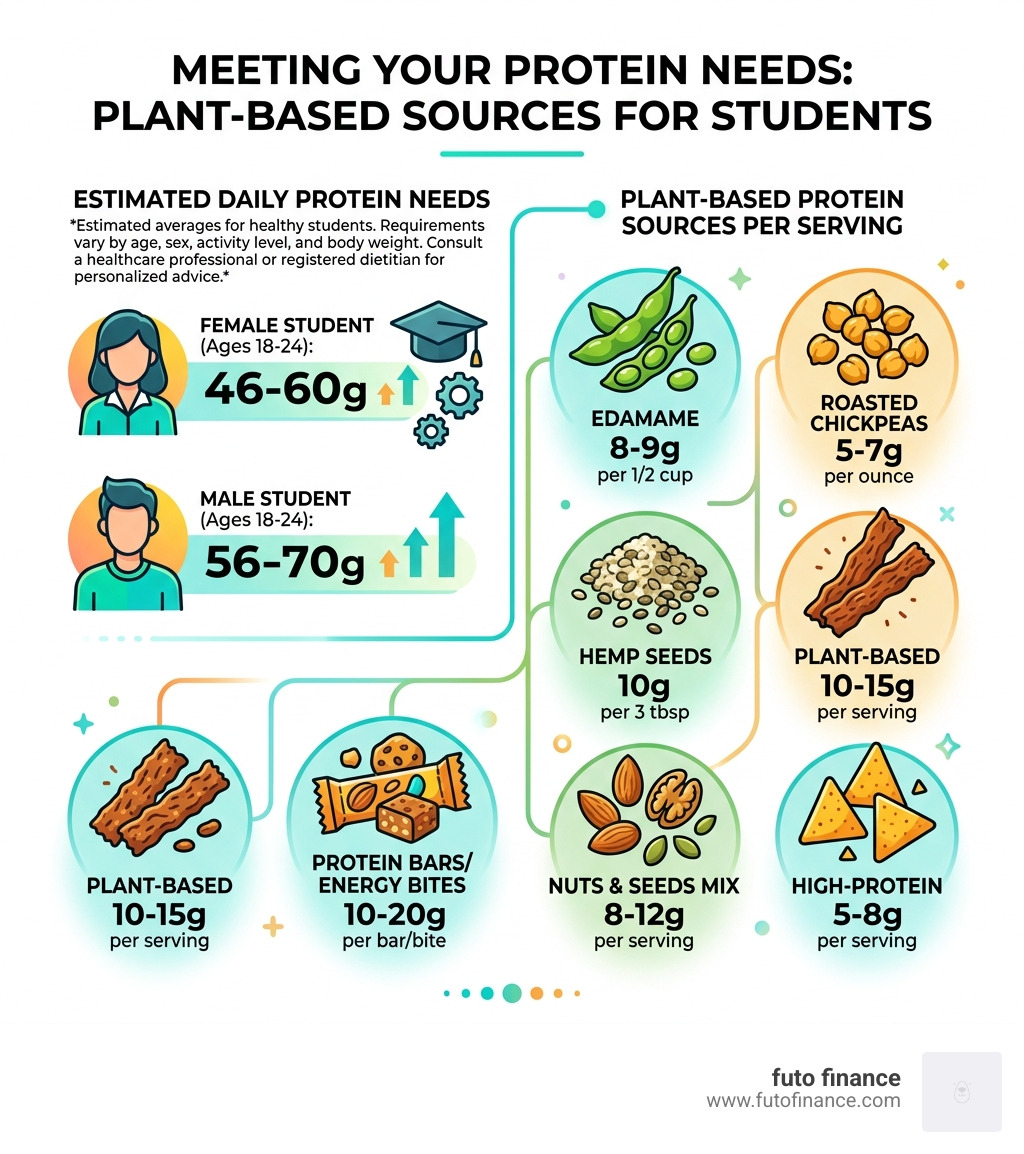
High-protein snacks vegan options are more varied and accessible than most people think. Here are the top picks to keep you fueled between classes or workouts:
Top High-Protein Vegan Snacks at a Glance:
| Snack | Protein Per Serving |
|---|---|
| Edamame | ~8-9g per half cup |
| Roasted chickpeas | 5-7g per ounce |
| Hemp seeds (3 tbsp) | 10g |
| Plant-based jerky | 10-15g |
| Protein bars / energy bites | 10-20g |
| Nuts and seeds mix | 8-12g |
| High-protein chips | 5-8g |
Getting enough protein as a vegan student is totally doable — but it takes a little planning.
The challenge? Between lectures, deadlines, and a tight budget, most students don’t have time to think deeply about nutrition. It’s easy to grab whatever’s nearby, which often means low-protein, highly processed foods that leave you tired and hungry an hour later.
The good news is that plant-based protein snacks can be cheap, quick, and genuinely satisfying — whether you’re buying them at the store or making a batch on Sunday to last the whole week.
This list covers the best options, from grab-and-go bites to simple homemade recipes, so you always have something smart to reach for.
Why High-Protein Snacks Vegan Options are Essential for Students
As we navigate the academic landscape of April 2026, the demand for mental clarity and physical endurance has never been higher. For those of us following a plant-based lifestyle, understanding the “why” behind our snack choices is just as important as the “what.”
The Science of Plant-Based Protein
Proteins are made of amino acids, the building blocks of our muscles, skin, and neurotransmitters. While animal products are “complete” proteins (containing all nine essential amino acids), plant sources are sometimes “incomplete.” However, the myth that vegans must “combine proteins” at every single meal is outdated. By eating a variety of high-protein snacks vegan throughout the day—like pairing grains with legumes—we easily hit our amino acid requirements. This is supported by the Academy of Nutrition and Dietetics, which confirms that varied plant-based diets meet all protein needs.
Digestibility and Satiety
It is a scientific fact that plant-based proteins may have slightly lower digestibility compared to animal proteins. This means we might need a slightly higher total intake to compensate. High-protein snacks are the secret weapon here. They provide a steady release of energy, preventing the dreaded “afternoon slump” during a three-hour seminar.
Furthermore, protein is incredibly satiating. It triggers the release of hormones that tell your brain you’re full. When you combine protein with the high fiber content found in most vegan snacks, you get a “slow-burn” energy source that keeps hunger at bay far longer than a sugary granola bar ever could. For those looking to build muscle or maintain focus, Futo Finance’s guide to student vegan nutrition can help you fine-tune your diet on a budget.
Quick and Savory Plant-Based Bites
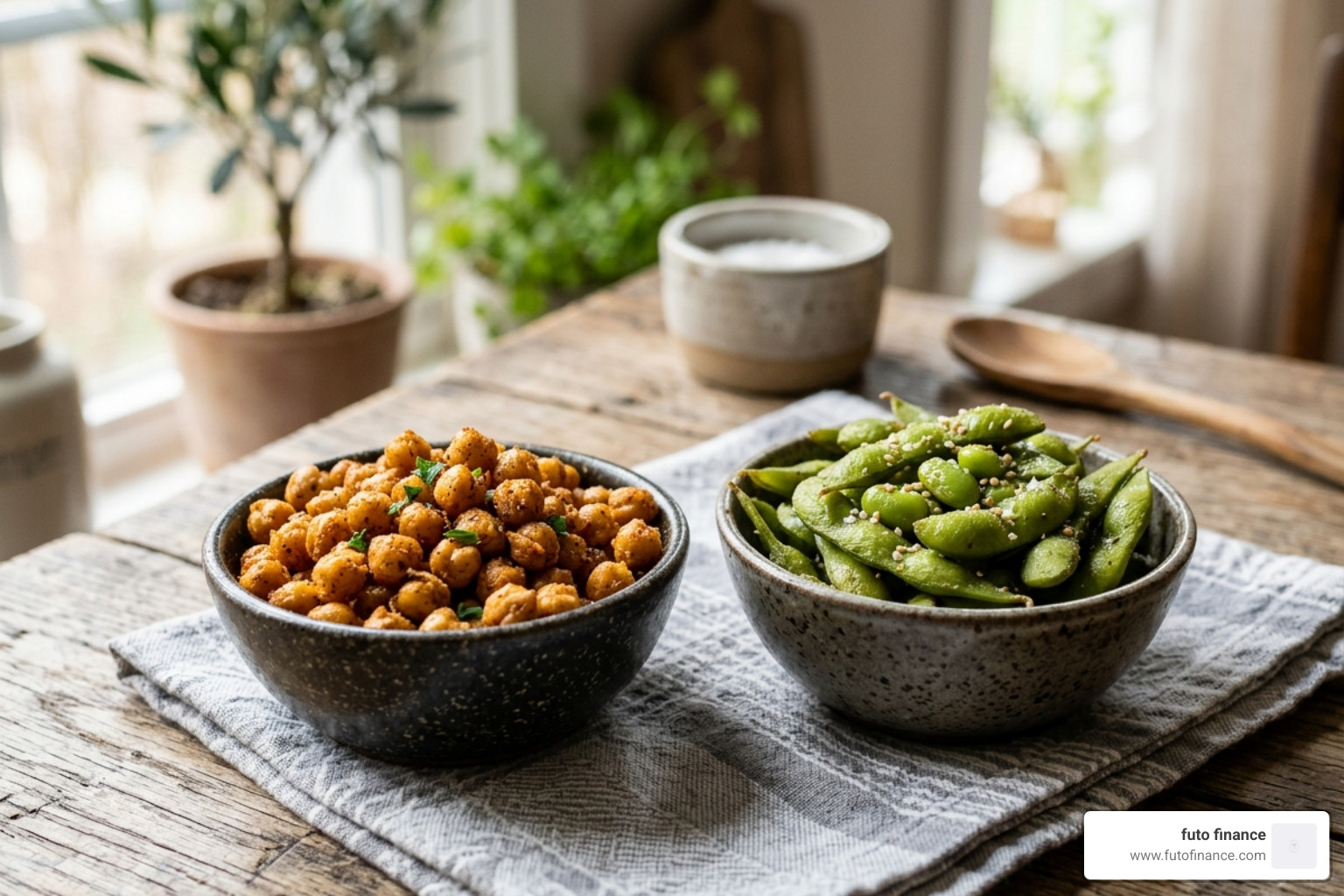
When you’re craving something salty and crunching, you don’t have to settle for empty-calorie chips. The savory world of vegan snacking is rich with protein-dense options that are budget-friendly for any student.
Edamame: The King of Beans
Edamame (soybeans) is a nutritional powerhouse. It contains about twice as much protein as many other beans and is a complete protein source. A half-cup of steamed edamame provides roughly 9 grams of protein. We recommend keeping a bag of frozen salted edamame in your dorm freezer; you can defrost them in minutes for a quick, high-protein treat.
Roasted Legumes and Seitan Jerky
- Roasted Chickpeas: These are the ultimate “desk snack.” You can buy them pre-made or roast them yourself with salt, pepper, and smoked paprika. They offer about 5-7g of protein per ounce.
- Seitan Jerky: Seitan is made from wheat gluten and is incredibly dense in protein. Modern plant-based jerky typically provides 10-15g of protein per serving, making it one of the most efficient snacks for muscle recovery.
- Nutritional Yeast Popcorn: Sprinkle “nooch” on your popcorn. This inactive yeast has a cheesy flavor and adds a significant protein boost to an otherwise light snack.
Protein Content Comparison: Seeds and Nuts
| Seed/Nut | Protein per 1/4 Cup | Key Benefit |
|---|---|---|
| Pumpkin Seeds | ~9g | High in Magnesium |
| Peanuts | ~9g | Very Affordable |
| Almonds | ~7g | Vitamin E |
| Hemp Hearts | ~10g (3 tbsp) | Omega-3 Fatty Acids |
| Cashews | ~5g | Creamy Texture |
Which ingredients are best for high-protein snacks vegan recipes?
If you are looking to stock your pantry on a budget, focus on these staples:
- Hemp and Chia Seeds: These are easy to sprinkle on anything—from toast to yogurt—to instantly add 5-10g of protein.
- Black Beans and Lentils: Don’t just save these for dinner. A quick lentil dip or black bean hummus is a protein-packed alternative to standard chickpea hummus.
- Soy Products: Tofu bites (baked or air-fried) and tempeh strips are excellent savory snacks that can be prepped in bulk.
- Nut Butters: Peanut butter is the most cost-effective, but sunflower butter is a great nut-free alternative that still packs a punch.
Sweet Homemade Treats and Protein Bars

Sometimes you need a snack that feels like a dessert but performs like a meal. Homemade treats allow you to control the sugar content while maximizing the protein.
The Power of Energy Balls and Bites
Energy balls are the “holy grail” of student meal prep. They require no baking, stay fresh for weeks, and are highly customizable.
- Vegan Protein Energy Balls: By mixing almond flour, vegan protein powder, peanut butter, and chia seeds, you can create bites that contain about 6g of protein and only 4g of net carbs.
- Snickers Protein Bites: You can mimic the flavors of a candy bar using an oat-cashew “nougat” and a peanut butter “caramel.” These provide roughly 6.8g of protein per serving and are far healthier than vending machine options.
Chickpea Cookie Dough
Yes, you read that right. By blending chickpeas with nut butter, maple syrup, and vanilla protein powder, you get a “cookie dough” that is safe to eat raw and packed with fiber and protein. It’s the perfect late-night study snack.
Benefits of No-Bake Snacks:
- Time-Saving: Most take less than 20 minutes to prep.
- Nutrient Retention: No heat means the healthy fats in seeds and nuts remain stable.
- Portability: They don’t crumble in your backpack.
- Customizable: Easy to make nut-free or gluten-free.
Are high-protein snacks vegan friendly for weight loss?
Absolutely. High-protein vegan snacks are often lower in calorie density than their animal-based counterparts while being significantly higher in fiber.
- Satiety: Protein and fiber work together to keep you full, preventing overeating later in the day.
- Metabolism: The “thermic effect of food” means your body burns more calories digesting protein than fats or carbs.
- Sugar-Free Options: By using ingredients like Medjool dates or stevia-sweetened protein powders, you can satisfy sweet cravings without the insulin spikes associated with refined sugar.
- Portion Control: Pre-portioning your nuts or energy balls into small containers helps you manage your intake while staying on track with your goals.
Common Mistakes and Storage Tips
Even with the best intentions, it’s easy to fall into common snacking traps. Here is how to keep your snack game professional:
Avoid the “Ultra-Processed” Trap
Not all vegan snacks are healthy. Many store-bought vegan cookies or chips are “accidentally vegan” but loaded with sodium, trans fats, and added sugars. Always read the label. If the first ingredient is sugar or a refined starch, it’s not going to provide the sustained energy you need for a long day of lectures.
Sodium Levels
Savory snacks like roasted nuts or jerky can be very high in salt. While some sodium is necessary for electrolyte balance, excessive amounts can lead to bloating and lethargy. Look for “unsalted” or “low-sodium” versions of your favorite nuts and seeds.
Storage for Freshness
To keep your high-protein snacks vegan creations tasting great, follow these rules:
- Airtight Containers: These are essential for keeping roasted chickpeas crunchy and energy balls moist.
- Refrigeration: Anything containing tofu, cooked beans, or fresh nut butters should be kept in the fridge. Most homemade protein bars last about 5–7 days refrigerated.
- Freezing: You can freeze energy balls and homemade protein bars for up to 3 months. In fact, many chickpea-based bars are delicious eaten straight from the freezer!
- Batch Prepping: Spend one hour on Sunday making a double batch of snacks. It’s the most effective way to save money and ensure you don’t end up at the campus vending machine on Wednesday afternoon.
Frequently Asked Questions about Vegan Protein
Can you get enough protein on a vegan diet?
Yes, absolutely. While plant proteins are often “incomplete,” eating a varied diet ensures you get all essential amino acids. Many plant foods like soy (edamame, tofu), quinoa, and hemp seeds are complete proteins on their own. As a student, focusing on high-protein snacks throughout the day makes hitting your goals effortless.
How do you store homemade high-protein vegan snacks?
Most no-bake snacks like energy balls should be stored in an airtight container in the fridge for up to two weeks. Savory snacks like roasted chickpeas should be kept at room temperature in a dry place to maintain their crunch. If you’ve made a huge batch, most vegan protein treats freeze exceptionally well.
What are the best affordable snacks for university students?
Peanuts, sunflower seeds, and dried beans are your best friends. Buying in bulk is the ultimate “pro tip” for saving money. A large bag of dried chickpeas can be turned into a week’s worth of roasted snacks for just a few dollars. Peanut butter on whole-grain toast is another classic, budget-friendly protein hit.
Conclusion
Navigating university life in 2026 requires a lot of energy, and your diet is the fuel that gets you through. By choosing high-protein snacks vegan options, you aren’t just eating ethically; you’re choosing snacks that support your brain, your muscles, and your wallet.
At Futo Finance, we believe that being a student shouldn’t mean sacrificing your health or your values. Whether you’re whipping up a batch of chickpea cookie dough or grabbing a handful of pumpkin seeds on your way to the library, these small choices add up to big results for your health goals.
Ready to level up your kitchen game without breaking the bank? Explore affordable vegan recipes at Futo Finance and join our community of plant-powered students today!

Melo Rodrigues is the founder of Futo Finance and a specialist in student-budget veganism. Having mastered the art of plant-based cooking in a university setting, Melo is dedicated to helping students achieve nutritional excellence without financial strain. Through Futo Finance, Melo shares lab-tested strategies for eating smart and living sustainably on a budget.
