
How to make the best vegan porridge oats every morning
Why a Vegan Porridge Recipe Belongs in Every Student’s Morning Routine
A porridge recipe vegan style is one of the fastest, cheapest, and most filling breakfasts you can make. Here’s the basic method in under a minute:
How to make basic vegan porridge:
- Add 1/2 cup rolled oats and 1 cup water (or plant milk) to a saucepan
- Bring to a gentle simmer over medium-low heat
- Stir for 5-7 minutes until thick and creamy
- Add a natural sweetener like maple syrup or ripe banana
- Top with fruit, seeds, or nut butter and serve hot
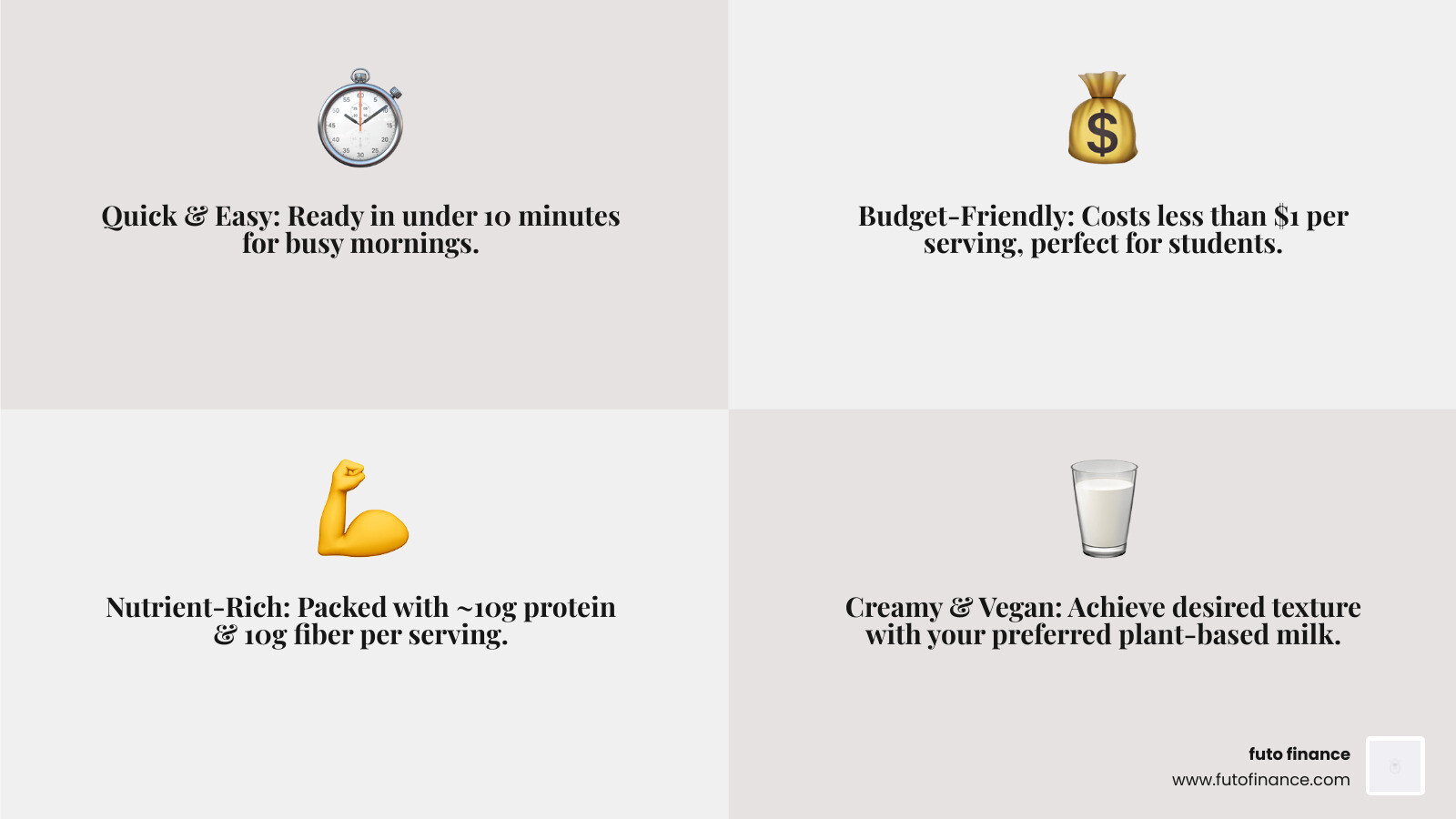
That’s it. Ready in under 10 minutes, for less than a dollar a serving.
Porridge has been a staple breakfast for thousands of years — and for good reason. It’s warming, filling, and endlessly flexible. Whether you’re rushing to a 9am lecture or taking a slow Sunday morning, a bowl of vegan porridge fits the moment.
In the US it’s called oatmeal. In the UK, it’s porridge. Either way, it’s the same idea — grains simmered in liquid until thick and creamy. And when you swap dairy milk for a plant-based alternative, it becomes completely vegan without sacrificing any of that comfort.
A single serving can deliver around 10g of protein and 10g of fiber, keeping you full for hours without breaking your budget.
This guide covers everything: basic recipes, flavor variations, alternative grains, meal prep tips, and common mistakes to avoid.
The Essentials of a Perfect Porridge Recipe Vegan
To master the art of the porridge recipe vegan, we need to start with the foundation. While it seems simple, the difference between a “meh” bowl of oats and a “life-changing” one lies in the details. As of April 2026, the trend in student kitchens is moving away from processed cereals and back toward these whole-grain powerhouses.
Rolled Oats: The Gold Standard
For the best balance of speed and texture, we recommend rolled oats (also known as old-fashioned oats).
- Steel-cut oats are delicious and nutty but take 30 minutes to cook.
- Instant oats are fast but can become “mushy” very quickly.
- Rolled oats hit the sweet spot, cooking in about 5-7 minutes while maintaining a pleasant chew.
The Magic Ratio
The golden rule for a creamy consistency is a 1:2 ratio. That means for every 1 cup of oats, you need 2 cups of liquid. If you prefer a thinner porridge, you can increase the liquid to a 1:3 ratio.
Don’t Forget the Salt!
Even in a sweet recipe, a tiny pinch of sea salt is essential. It doesn’t make the porridge salty; instead, it acts as a flavor enhancer, making the oats taste more like themselves and making the sweetness of your toppings “pop.”
Natural Sweeteners
In April 2026, we’re all about reducing refined sugars. Ripe bananas are the ultimate natural sweetener. When mashed and stirred into the simmering oats, they melt into a creamy, sweet base. Other great options include maple syrup, agave nectar, or even a few chopped dates.
Choosing the Best Plant Milks for Your Porridge Recipe Vegan
The liquid you choose defines the creaminess of your bowl. While water works in a pinch, plant milks elevate the dish to cafe-quality levels.
- Oat Milk: Our top pick for a porridge recipe vegan. Since it’s made from the same grain, the flavors harmonize perfectly. It’s naturally sweet and creates the thickest, creamiest texture.
- Soy Milk: The best choice for students on a budget who want a protein boost. It has a neutral flavor and mimics dairy milk’s consistency very closely.
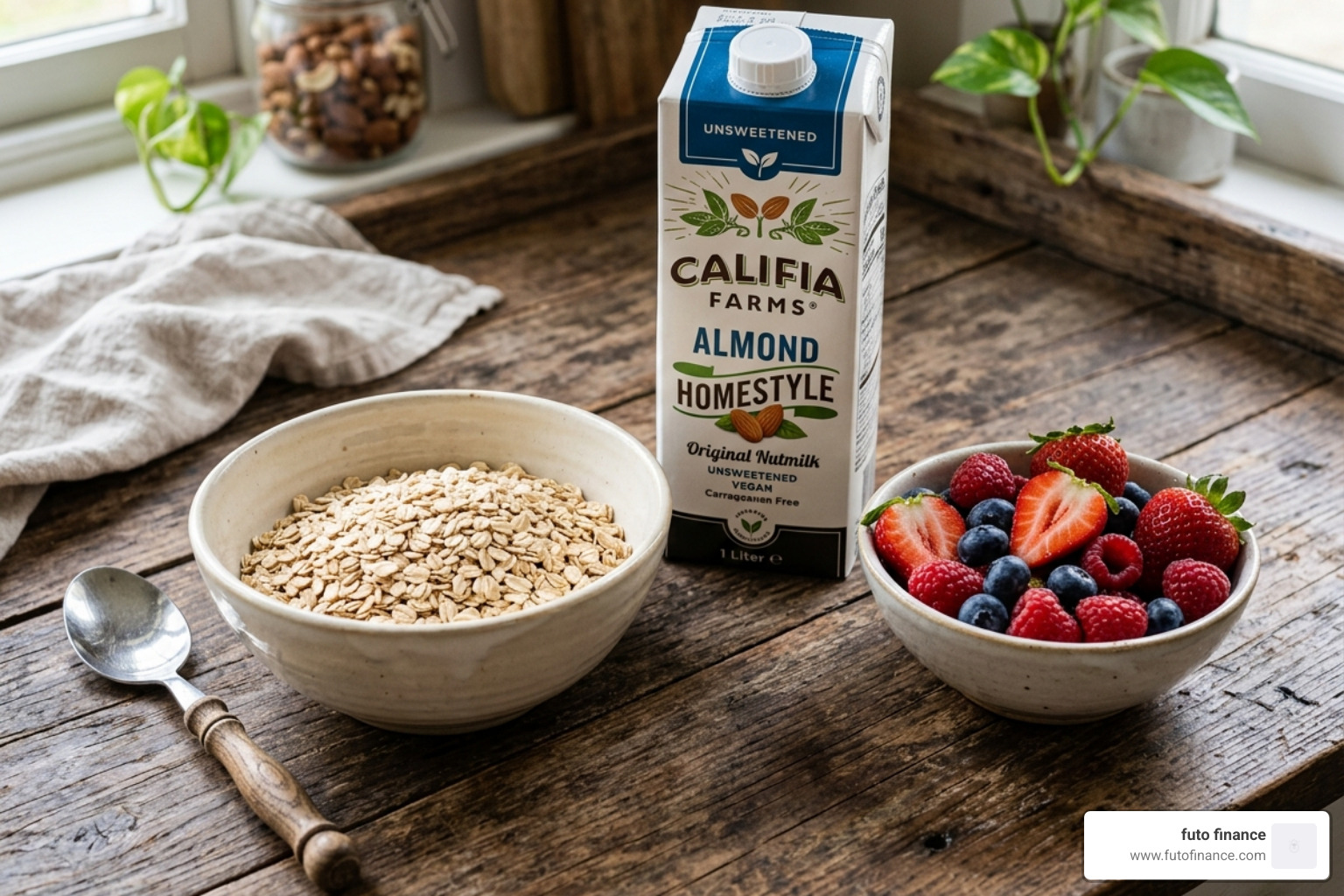
- Almond Milk: Great for a light, nutty flavor. We suggest using unsweetened versions so you can control the sugar levels yourself.
- Coconut Milk: For an ultra-indulgent breakfast, use canned light coconut milk or the carton variety. It’s perfect for tropical variations with mango or pineapple.
- Cashew Milk: Exceptionally creamy and rich, though often a bit pricier.
Essential Pantry Staples for Vegan Toppings
A “naked” bowl of oats is just the canvas. To turn a porridge recipe vegan into a nutritional powerhouse, we keep these staples in our Futo Finance pantry:
- Chia Seeds: These tiny seeds absorb liquid and expand, adding a gel-like creaminess and a massive hit of Omega-3 fatty acids.
- Flaxseeds (Ground): Perfect for digestive health and adding a subtle nutty flavor.
- Nut Butters: A swirl of peanut, almond, or cashew butter adds healthy fats and keeps you full until lunch.
- Spices: Cinnamon is a classic, but don’t sleep on nutmeg, ginger, or even a tiny pinch of cardamom.
- Vanilla Extract: A few drops can make your kitchen smell like a bakery and add a “sweet” perception without the sugar.
Step-by-Step: Stovetop and Quick Prep Methods
Cooking on the stovetop is the most traditional method, allowing you to monitor the texture and adjust the liquid as you go.
- Combine: Add your oats, liquid, and salt to a small saucepan.
- Boil then Simmer: Bring the mixture to a boil over medium-high heat. As soon as it bubbles, drop the heat to medium-low.
- Stir Regularly: This is the secret to creaminess. Stirring releases the natural starches in the oats.
- The Swell: Once the liquid is mostly absorbed (usually after 5-7 minutes), turn off the heat. Put a lid on the pot and let it sit for 2-3 minutes. This “swelling time” results in the perfect, velvety texture.
Mastering the Microwave Porridge Recipe Vegan
For the student living in a dorm or rushing to a 9 AM lecture, the microwave is your best friend. You can have a hot meal in about 3 minutes.
- The Container: Use a deep microwave-safe bowl. Oats tend to bubble up and overflow in shallow bowls.
- The Method: Mix 1/2 cup oats with 1 cup plant milk.
- The Cook: Microwave at 600-800 watts for 2 minutes.
- The Interval: Stop at the 1-minute mark to give it a quick stir. This prevents lumps and ensures even cooking.
- The Rest: Let it sit for 1 minute after the timer goes off to thicken.
Instant Pot and Slow Cooker Techniques
If you’re cooking for a housemate dinner or want to batch-prep for the week, the Instant Pot is a game-changer, especially for steel-cut oats.
- Ratio: Use 1 cup of steel-cut oats to 3 cups of water/milk.
- Time: Set to high pressure for 10 minutes (for a chewier texture) or 13 minutes (for creamier).
- Release: Allow for a natural pressure release (about 15-20 minutes). This prevents the “starchy foam” from spraying out of the valve.
- Slow Cooker: For a “wake up to breakfast” vibe, put oats and liquid in a slow cooker on low for 7-8 hours. It’s the ultimate set-and-forget method.
Beyond Oats: Gluten-Free and International Grains
While oats are the most common base, a porridge recipe vegan can be made with almost any grain. This is great for variety or for those who need strictly gluten-free options (remember, while oats are naturally gluten-free, they are often processed in facilities with wheat, so look for the “certified gluten-free” label).
Quinoa Porridge
Quinoa is a complete protein, meaning it contains all nine essential amino acids. It has a delightful “pop” and a nutty flavor.
- Cook time: About 15-20 minutes.
- Pro tip: Rinse your quinoa thoroughly before cooking to remove the “saponins,” which can taste bitter.
Millet Porridge
Millet is an underutilized grain that is incredibly cheap and nutritious. It’s rich in B vitamins and magnesium. For a super creamy texture, some people like to use an immersion blender on a portion of the cooked millet.
Cornmeal Porridge
A staple in Caribbean cuisine, this is often called “Polenta” in other contexts. It’s smooth, buttery, and incredibly comforting. It usually takes about 13 minutes to prepare.
Rice Congee
In many Asian cultures, savory rice porridge (congee or jook) is the ultimate comfort food. It uses a much higher liquid ratio (usually 1:9) and is simmered until the rice grains almost disintegrate.
| Grain Type | Protein (per serving) | Fiber (per serving) | Cook Time |
|---|---|---|---|
| Rolled Oats | 5-7g | 4-5g | 5-10 mins |
| Quinoa | 10-12g | 6-8g | 15-20 mins |
| Millet | 6g | 6g | 25-30 mins |
| Cornmeal | 4-6g | 5g | 13 mins |
Savory Vegan Porridge Variations
Who says breakfast has to be sweet? Savory porridge is a fantastic way to use up leftover veggies and get a nutrient-dense start to the day.
- Miso and Avocado: Stir a teaspoon of white miso paste into your cooked oats for a hit of umami. Top with sliced avocado and a drizzle of soy sauce.
- Mushroom and Spinach: Sauté some mushrooms and spinach in a separate pan and stir them into your porridge.
- Nutritional Yeast: Add a tablespoon of “nooch” for a cheesy, nutty flavor without the dairy.
- The Umami Boost: A splash of tamari or a sprinkle of furikake (vegan version) can transform the dish.
Caribbean and Asian Inspired Porridge
If you want to travel the world from your kitchen, try these:
- Jamaican Cornmeal Porridge: Use fine cornmeal, coconut milk, nutmeg, and cinnamon. Sweeten it with condensed coconut milk for a truly authentic, luxurious feel.
- Chinese Jook: Simmer jasmine rice with ginger and lemongrass. In our vegan version, we use dried shiitake mushrooms to create a rich, savory broth that rivals any meat-based version.
Creative Flavor Profiles and Nutritional Perks
One of the reasons we love the porridge recipe vegan lifestyle is that it never gets boring. Here are some of our favorite combinations to try in April 2026:
- Chocolate Orange: Stir in 1 tablespoon of cacao powder and the zest of half an orange. It tastes like a dessert but is packed with antioxidants.
- Apple Cinnamon: Sauté chopped apples with cinnamon and a little vegan butter or coconut oil until soft, then pile them onto your oats.
- Vanilla Berry: Use vanilla soy milk as your base and top with a mix of fresh or frozen raspberries and blueberries.
- Carrot Cake: Stir finely grated carrots, raisins, and walnuts into the oats while they cook. Top with a dollop of vegan yogurt.
For even more inspiration, you can check out this Vegan porridge recipe – BBC Food which offers some fantastic classic variations.
Health Benefits of a Vegan Porridge Diet
Why do we keep pushing the porridge recipe vegan? Because the science is clear:
- Beta-Glucan: Oats contain a specific type of soluble fiber called beta-glucan, which has been proven to lower cholesterol and help regulate blood sugar levels.
- Slow-Release Energy: Unlike sugary cereals that give you a “crash” by 11 AM, the complex carbohydrates in porridge provide a steady stream of energy.
- Satiety: The high fiber and protein content (especially if you use quinoa or add nuts) keeps you feeling full, which is great for staying focused during long study sessions.
- Digestive Health: The fiber acts as a prebiotic, feeding the good bacteria in your gut.
Common Mistakes to Avoid
Even experts trip up sometimes. Watch out for these:
- High Heat: Cooking oats on high heat will scorch the bottom of the pan and leave you with a burnt taste. Low and slow is the way to go.
- Old Oats: While oats have a long shelf life, very old oats can become dusty and lose their nutty flavor. Store them in an airtight container.
- Skipping the Rinse: If you’re using quinoa or millet, always rinse them! Otherwise, your breakfast will taste like soap (due to the natural saponins).
- Incorrect Ratios: If you don’t use enough liquid, you’ll end up with a dry, “clumpy” mess. If you use too much, it’s soup. Stick to the 1:2 rule and adjust from there.
Meal Prep, Storage, and Reheating Tips
As students, we know time is your most valuable resource. You don’t have to cook from scratch every single morning.
Overnight Oats
This is the ultimate “no-cook” meal prep. Combine oats and plant milk in a jar, add your toppings, and leave it in the fridge overnight. The oats “cook” by absorbing the liquid. In the morning, grab it and go!
Baked Porridge
Think of this as a breakfast cake. Mix oats, milk, flaxseed, and fruit in a baking dish and bake for 30 minutes. You can slice it into squares and keep it in the fridge for up to 5 days. It’s perfect for eating cold or warming up in the microwave.
Storage
- Fridge: Cooked porridge stays fresh in an airtight container for 2-5 days.
- Freezer: You can actually freeze porridge! Freeze it in muffin tins for individual “porridge pucks.” They last for up to 2 months.
How to Reheat Leftover Porridge
The main issue with reheating is that porridge thickens significantly as it cools (it turns into a solid block!).
- Add Liquid: Before reheating, add a splash of plant milk or water. This is crucial to bring back the creamy texture.
- Microwave: Heat in 30-second bursts, stirring in between.
- Stovetop: Reheat on low power, stirring constantly and adding liquid as needed until it’s “loosened” up.
Frequently Asked Questions about Vegan Porridge
Is all porridge naturally vegan?
Most traditional porridge is made with just oats and water, which is vegan. However, many “instant” packets contain milk powder or honey. Always check the label. When you make it yourself using our porridge recipe vegan tips, you’re 100% safe!
How do I make my porridge extra creamy without dairy?
The secret is a combination of three things: using a creamy plant milk (like oat or cashew), stirring frequently to release the starches, and letting the porridge “rest” with a lid on for a few minutes after cooking.
Can I use frozen fruit as a topping?
Absolutely! In fact, frozen berries are often cheaper for students and just as nutritious. You can stir them in while the porridge is cooking to create a “fruit swirl” effect, or just pop them on top and let the heat of the oats thaw them out.
Conclusion
At Futo Finance, we believe that eating well shouldn’t be a luxury reserved for those with a full-time salary. Mastering a porridge recipe vegan style is a foundational skill for any university student looking to fuel their brain and body without draining their bank account.
By choosing the right grains, experimenting with plant milks, and getting creative with toppings, you can turn a humble bowl of oats into the highlight of your day. Whether it’s the classic stovetop method or a quick microwave bowl, the benefits for your heart, digestion, and energy levels are undeniable.
Ready to take your plant-based journey further? From budget-friendly meal plans to the latest nutrition tips for April 2026, we’ve got you covered. Start your vegan journey with Futo Finance and discover how delicious and affordable student life can be.

Melo Rodrigues is the founder of Futo Finance and a specialist in student-budget veganism. Having mastered the art of plant-based cooking in a university setting, Melo is dedicated to helping students achieve nutritional excellence without financial strain. Through Futo Finance, Melo shares lab-tested strategies for eating smart and living sustainably on a budget.
