
How to make the best vegan fried rice ever
The Best Vegan Fried Rice Recipe You Can Make in 20 Minutes
A great vegan fried rice recipe is one of the fastest, cheapest, and most satisfying meals a student can make. Seriously — it takes about 20 minutes, costs very little, and tastes better than takeout.
Here’s the basic vegan fried rice recipe at a glance:
- Cook or grab leftover cold rice (jasmine or long-grain works best)
- Sauté aromatics — garlic and onion in vegan butter or oil
- Add vegetables — carrots, peas, edamame, or whatever you have
- Add protein — crumbled tofu, chickpeas, or edamame
- Stir in sauce — soy sauce, sesame oil, and optional extras
- Fry on high heat for crispy, golden rice
- Serve immediately with green onions or sesame seeds on top
The whole dish comes together in one pan and uses ingredients that are easy to find and easy on a budget.
The hardest part? Waiting for your rice to cool down. (More on that in the next section.)
Whether you’re cooking for yourself after a long day of classes or meal-prepping for the week, this is one recipe worth keeping on repeat.
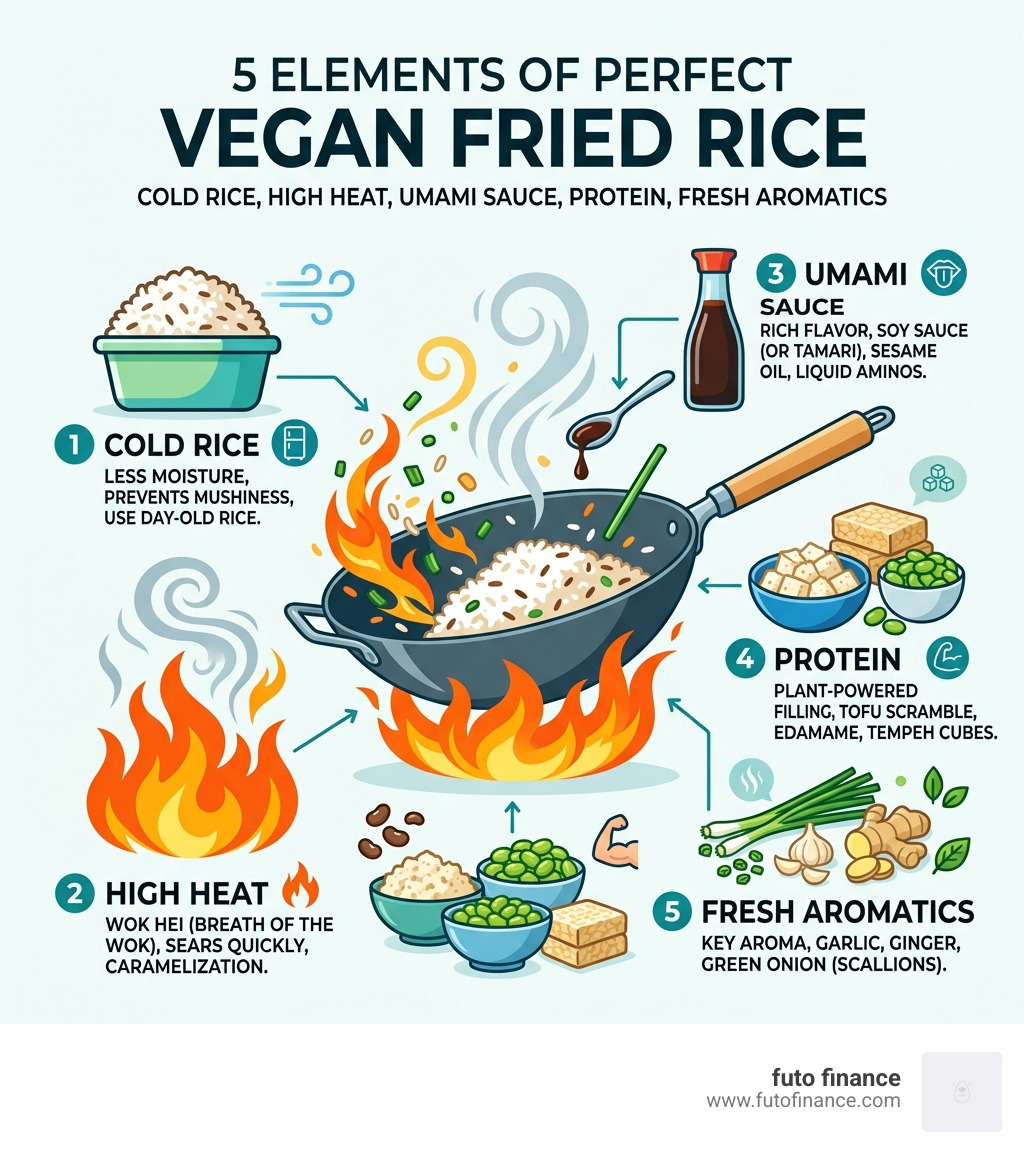
The Secret to Perfect Texture: Why Leftover Rice is Non-Negotiable
If you’ve ever wondered why your homemade fried rice turns out mushy while the restaurant version is light and fluffy, the answer is simple: temperature and time. For a truly professional vegan fried rice recipe, you absolutely must use cold, day-old rice.
The Science of Cold Rice
When rice is cooked and then chilled, it undergoes a process called starch retrogradation. The starch molecules realign into a more crystalline structure, which makes the grains firmer and less sticky. Beyond the texture, there are actually health benefits of resistant starch in cooled rice, as it acts more like fiber in your digestive system, preventing sharp blood sugar spikes.
Using cold rice ensures that the grains stay separate when they hit the hot pan. Freshly steamed rice is full of moisture; if you try to fry it immediately, it will clump together and steam rather than fry, leaving you with a soggy mess.
Choosing Your Grain
While you can technically fry any rice, some are better than others:
- Jasmine Rice: Our top pick. It has a beautiful floral aroma and a sturdy structure that crisps up perfectly.
- Basmati Rice: A great second choice. It’s naturally dry and fluffy, though it has a more distinct nutty flavor.
- Brown Rice: Excellent for a fiber boost. It takes longer to cook initially but holds its shape very well during frying.
Wok vs. Skillet
In 2026, we see more students investing in a basic carbon steel wok, and for good reason. A wok allows for “wok hei” (the breath of the wok), where the high surface area and intense heat create a smoky, charred flavor. However, if you only have a large non-stick or cast-iron skillet, don’t worry! You can still get great results by cooking in smaller batches to keep the heat high.
Essential Ingredients for a Flavorful vegan fried rice recipe
To make this the “best ever” recipe, we need to replace the traditional egg and fish-based sauces with plant-based powerhouses. Here is how we build layers of flavor and protein.
The Protein Pivot
Since we aren’t using eggs, we have several fantastic options to add bulk and nutrition to our vegan fried rice recipe.
| Substitute | Texture | Best For… |
|---|---|---|
| Tofu Scramble | Crumbly & Soft | Mimicking traditional scrambled eggs |
| Silken Tofu | Creamy & Custard-like | High-end, silky texture (mix with nutritional yeast) |
| Just Egg | Liquid-to-solid | The most realistic “egg” experience |
| Chickpeas | Crunchy & Hearty | A budget-friendly, high-fiber alternative |
| Edamame | Firm & Nutty | Quick prep and vibrant green color |
Building the Umami Base
The “savory” factor in fried rice usually comes from oyster sauce or eggs. We achieve this by using nutritional yeast, which adds a cheesy, nutty depth, and vegan oyster sauce (often made from mushrooms).
If you’re watching your salt intake, use low-sodium soy sauce or coconut aminos. To get that authentic “takeout” smell, a drizzle of toasted sesame oil at the very end is essential. For a richer, hibachi-style flavor, we recommend using a tablespoon of vegan butter instead of just plain vegetable oil.
Aromatics and Veggies
Never skip the fresh stuff! Finely minced garlic and ginger are the backbone of the dish. For vegetables, we love the classic combo of peas and carrots, but you can use whatever is in your fridge. Bell peppers, broccoli, and even shredded cabbage work beautifully.
Step-by-Step: How to Cook Your vegan fried rice recipe
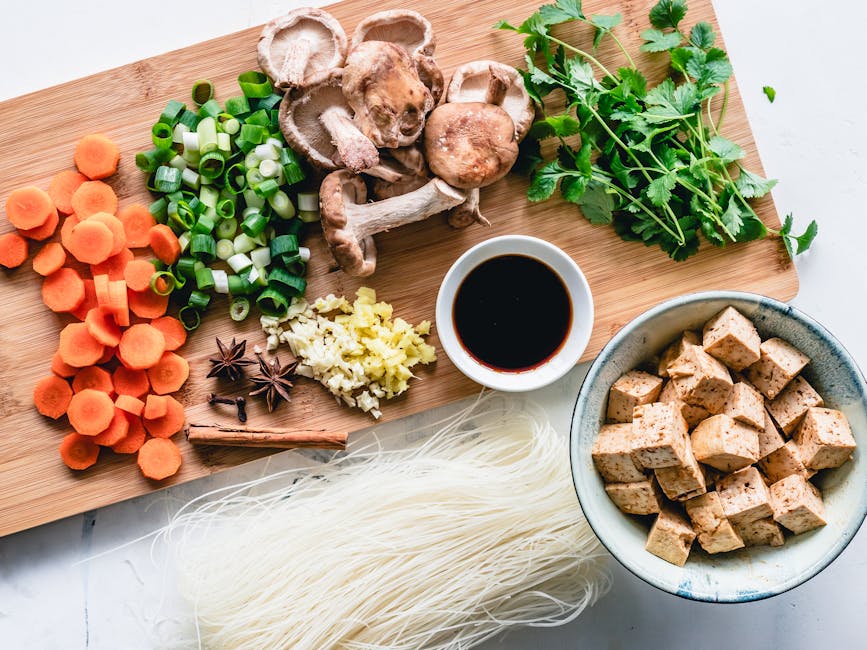
1. Mise en Place for Success
Fried rice is a game. Once the pan is hot, you won’t have time to chop a carrot. Prepare everything in advance:
- Crumble your tofu or drain your chickpeas.
- Whisk your sauce (soy sauce, rice vinegar, a pinch of sugar, and sesame oil).
- Chop your aromatics and veggies into uniform, small pieces so they cook evenly.
2. The Sizzle: Sautéing and Frying
Turn your burner to medium-high. Add a splash of oil or vegan butter.
- Sauté Aromatics: Toss in your onions, garlic, and ginger. Stir-fry for about 60 seconds until your kitchen smells amazing.
- Cook Protein: Add your tofu or chickpeas. If using tofu, sprinkle with a little turmeric for that classic yellow “egg” color.
- Veggies In: Add the harder veggies (carrots, peppers) and cook for 2-3 minutes.
- The Rice: This is the big moment. Add your cold rice. Use a spatula to break up any large clumps.
- The Toast: Let the rice sit undisturbed for about 30 seconds to get a little char, then toss. Repeat this for 3-4 minutes.

3. Pro Tips for the Ultimate vegan fried rice recipe
- The High-Heat Finish: Right before you finish, turn the heat to high. This helps the sauce caramelize and ensures the rice doesn’t stay wet.
- Adding Greens: Toss in green onions or spinach at the very last second so they wilt but stay bright.
- Finishing Oils: Turn off the heat before adding your toasted sesame oil. Heat can turn its delicate flavor bitter.
- The Garnish: Top with Furikake seasoning (check labels to ensure it’s vegan!) or toasted sesame seeds for an extra crunch.
Customizing Your Bowl: Variations and Dietary Tweaks
One of the reasons we love the vegan fried rice recipe is how adaptable it is for different student tastes and needs.
- Teriyaki Twist: Swap the soy sauce for a mix of maple syrup, ginger, and tamari for a sweeter, thicker glaze.
- Spicy Sriracha: Add a tablespoon of sriracha or chili garlic sauce into your liquid mix for a heat that builds.
- Kimchi Fried Rice: Chop up some vegan kimchi and fry it with the aromatics. It adds a fermented tang that is out of this world.
- Pineapple Express: Adding diced pineapple gives you that classic Thai-style sweet and savory balance.
- Gluten-Free: Simply use tamari or coconut aminos instead of traditional soy sauce.
- Oil-Free: You can “dry fry” the rice in a very high-quality non-stick pan using small splashes of vegetable broth to prevent sticking.
Storage, Reheating, and Nutritional Benefits
Meal Prep and Storage
This recipe is a meal-prep legend. Store your leftovers in an airtight container in the fridge for up to 4 days. You can even freeze it! Fried rice stays good in the freezer for up to 2 months.
Pro Reheating Tip: Skip the microwave if you have time. Reheat the rice in a skillet with a tiny drop of oil. This brings back the crispy texture that the microwave usually turns into mush.
Health Benefits
Compared to traditional takeout, which is often loaded with MSG and heavy oils, our homemade version is a nutritional powerhouse. By using tofu or edamame, you’re getting high-quality plant protein. There is significant scientific research on the nutritional profile of soy protein showing it provides all nine essential amino acids.
Plus, by loading the dish with veggies, you’re looking at 8-10 grams of fiber per serving, which keeps you full during those long study sessions.
Student Budget Tips
- Buy in Bulk: A 5kg bag of jasmine rice is significantly cheaper than small boxes.
- Frozen Veggies: Frozen peas and carrots are just as nutritious as fresh ones and cost a fraction of the price.
- Canned Chickpeas: These are the ultimate cheap protein. Rinse them well and fry them until they’re “popped” and crispy.
Frequently Asked Questions about Vegan Fried Rice
Can I use freshly cooked rice if I’m in a hurry?
We’ve all been there. If you must use fresh rice, spread it out on a large baking sheet and put it in the freezer for 15-20 minutes. This “flash-chills” the rice and dries out the surface enough to prevent it from turning into a giant clump in the pan.
What is the best protein to add for a meaty texture?
If you want something “meaty,” try crumbled tempeh or smoked tofu. They have a firmer bite than regular tofu. Alternatively, some students love using soy curls or seitan strips for a “chicken” fried rice vibe.
How do I make my fried rice taste like authentic Hibachi style?
The secret to hibachi style is three things: vegan butter, a pinch of sugar, and garlic butter. Instead of using just oil, melt vegan butter and sauté an extra-large amount of minced garlic. The butter coats the rice grains and gives them that rich, indulgent restaurant flavor.
Conclusion
At Futo Finance, we believe that being vegan shouldn’t mean eating boring food or spending your entire student loan on groceries. Mastering a solid vegan fried rice recipe gives you a reliable, delicious, and healthy meal that you can whip up faster than a delivery driver can get to your dorm.
Ready to expand your kitchen skills? Check out more vegan student recipes on our blog and start cooking smarter today!

Melo Rodrigues is the founder of Futo Finance and a specialist in student-budget veganism. Having mastered the art of plant-based cooking in a university setting, Melo is dedicated to helping students achieve nutritional excellence without financial strain. Through Futo Finance, Melo shares lab-tested strategies for eating smart and living sustainably on a budget.
