
Don’t Go Bacon My Heart: Simple Vegan Grocery Tips
Vegan Grocery Shopping Doesn’t Have to Be Hard (Or Expensive)
Simple vegan grocery tips can save you serious time and money — especially as a student on a tight budget. Here’s a quick-start summary before we dive in:
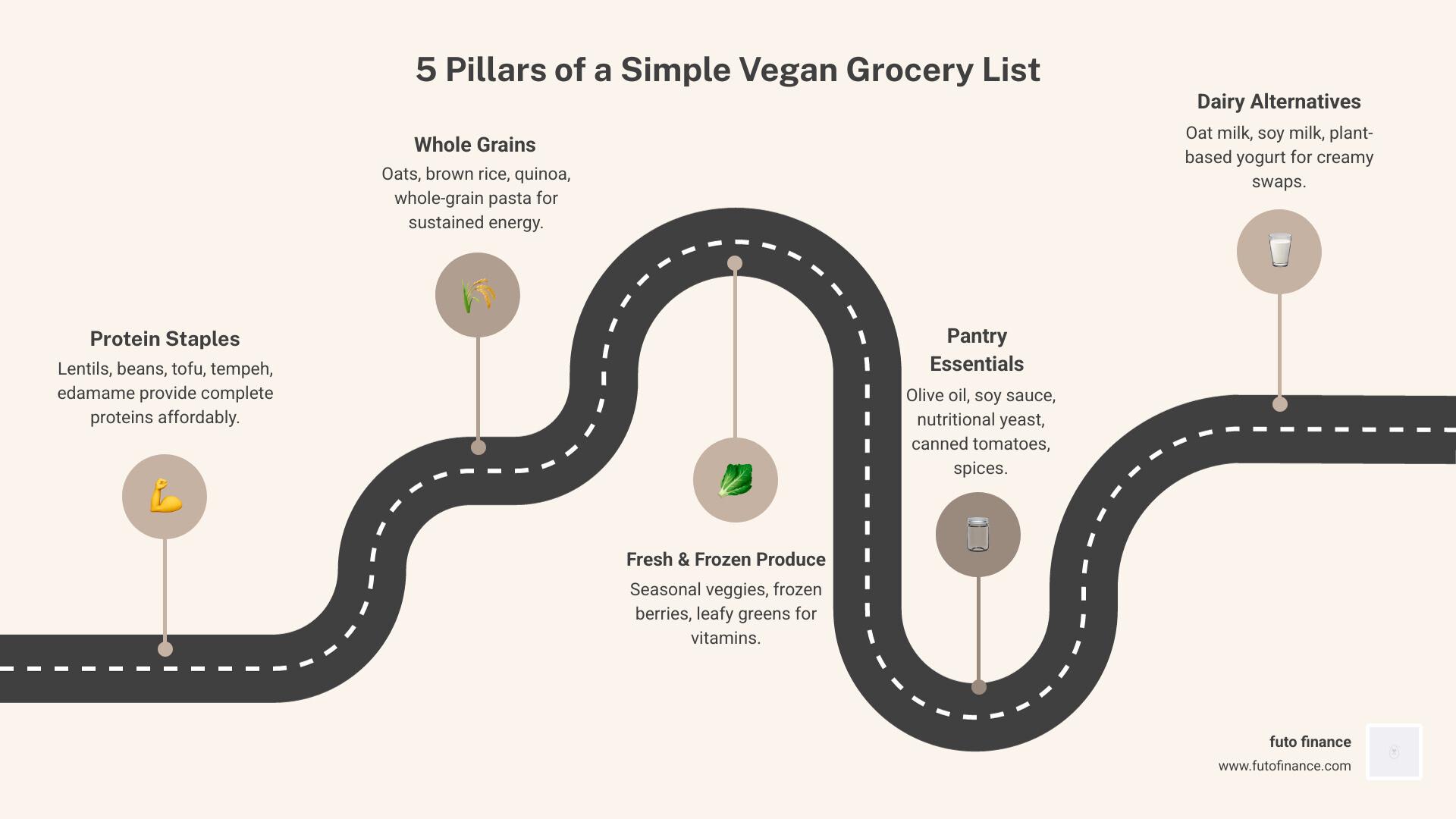
The 5 pillars of a simple vegan grocery list:
- Protein staples — lentils, beans, tofu, tempeh, edamame
- Whole grains — oats, brown rice, quinoa, whole-grain pasta
- Fresh and frozen produce — seasonal vegetables, frozen berries, leafy greens
- Pantry essentials — olive oil, soy sauce, nutritional yeast, canned tomatoes, spices
- Affordable dairy alternatives — oat milk, soy milk, plant-based yogurt
A lot of people assume eating vegan is expensive. It doesn’t have to be.
The truth is, whole plant foods — beans, lentils, rice, oats, seasonal produce — cost far less than meat, dairy, and eggs. The spending problem usually comes from loading your cart with packaged vegan alternatives and specialty products.
Think about it this way: one can of chickpeas can become pasta, a cold salad, or a roasted snack — all in the same week. That’s serious value for very little money.
As a student, your biggest challenges are probably time, budget, and knowing what to actually buy. This guide is built around exactly that.
Essential Categories for Your Simple Vegan Grocery Tips

When we first walk into a grocery store in April 2026, the sheer volume of products can be paralyzing. However, the secret to simple vegan grocery tips is to view the store as a collection of foundational blocks. Instead of looking for “vegan meals,” we look for the components that build them.
A healthy vegan diet isn’t just about removing meat; it’s about crowding your plate with nutrient-dense whole foods. We need to focus on fiber, which is exclusive to plants, and micronutrients like iron and calcium. By focusing on these categories, we ensure our bodies get everything they need without a massive price tag.
Building a Foundation with Simple Vegan Grocery Tips
The backbone of our kitchen consists of legumes and grains. These are the most budget-friendly items in the store. Legumes like chickpeas, black beans, and lentils are protein powerhouses. For example, lentils provide about 18g of protein per cup, while tempeh offers a whopping 18g of protein and 6g of fiber in just 3 ounces.
Scientific research on plant-based protein adequacy confirms that well-planned vegan diets meet all nutritional requirements. To make this work for a student schedule, we recommend stocking up on:
- Tofu and Tempeh: These are incredibly versatile. Tofu can be scrambled for breakfast or baked for dinner.
- Seitan: Often called “wheat meat,” it’s a high-protein option for those who want a heartier texture.
- Quinoa and Brown Rice: These provide complex carbohydrates that keep us full during long lectures.
- Oats: A non-negotiable for us. They can be breakfast (overnight oats) or even ground into flour.
- Sprouted Bread: Brands like Ezekiel are easier to digest and packed with more nutrients than standard white bread.
Navigating Dairy and Meat Alternatives
While whole foods are the goal, we all crave a little comfort. Transitioning is easier when you have a plant milk you actually enjoy. Soy milk is often our top choice for students because it is naturally higher in protein compared to almond or coconut milk. Oat milk is a close second because it froths beautifully for that morning coffee.
Nutritional yeast (or “nooch”) is another essential. It adds a savory, cheesy flavor to everything from popcorn to pasta. If you’re craving cheese, cashew-based options are delicious but can be pricey; we suggest using them as a treat rather than a daily staple.
| Item | Average Cost (Dried) | Average Cost (Canned) | Protein per Cup |
|---|---|---|---|
| Black Beans | $0.15 per serving | $0.60 per serving | 15g |
| Chickpeas | $0.18 per serving | $0.65 per serving | 14.5g |
| Lentils | $0.20 per serving | $0.75 per serving | 18g |
As you can see, buying dried beans is significantly cheaper because you aren’t paying for the weight of the water or the canning process.
Master the Art of Label Reading and Hidden Ingredients

One of the most important simple vegan grocery tips is learning to decode the back of the package. The FDA requires major allergens like milk and eggs to be identified, which is a huge help. Usually, you can look at the “Contains” section at the very bottom of the ingredient list for a quick “Milk” or “Egg” warning.
However, some animal-derived ingredients are sneaky. Watch out for:
- Casein and Whey: Derivatives of milk often found in “non-dairy” cheeses or protein bars.
- Gelatin: Made from animal bones, common in gummy candies and some yogurts.
- Lanolin: Sheep’s wool grease, often found in Vitamin D3 fortified cereals.
- Isinglass: A substance obtained from fish bladders used to clarify some beers and wines.
- Lactic Acid: Usually vegan (produced via fermentation), but it’s worth double-checking the source if the package isn’t labeled vegan.
- Bone Char: Some white sugars are processed using animal bone char. To be safe, we opt for organic sugar, which is never processed this way.
Identifying Accidentally Vegan Products
You don’t always need to buy products with a “Certified Vegan” logo. Many everyday items are “accidentally vegan.” Most high-quality sourdough bread is just flour, water, and salt. Dry pasta (unlike fresh pasta) is almost always vegan. Dark chocolate (70% or higher) is frequently dairy-free, but always check for milk solids.
Other staples like hummus, guacamole, most rice, and spice blends are naturally plant-based. Even some commercial snacks like certain brands of “bacon” bits are actually made from flavored soy flour!
How to Shop Vegan on a Student Budget
Being a student means every dollar counts. One of our favorite simple vegan grocery tips is to shop the bulk bins. Buying grains, nuts, and seeds in bulk allows you to get exactly what you need without paying for fancy packaging.
Seasonal produce is another major money-saver. When fruits and vegetables are in season, they are at their cheapest and most nutritious. We recommend checking the USDA guide to seasonal produce before you head out. In the winter, we lean heavily on frozen vegetables. Frozen broccoli, peas, and berries are picked at peak ripeness and frozen immediately, making them just as healthy (and often cheaper) than fresh versions that have been sitting on a truck for a week.
Discount retailers are a goldmine for vegans. Stores like The Grocery Outlet can offer vegan brand-name products at 50-80% off. One shopper reported saving over $32 on a $25 haul! Always check the expiration dates at these stores, as that’s often why the prices are so low.
Strategic Meal Planning to Reduce Waste
The biggest drain on a student budget isn’t the price of food—it’s the food that goes bad in the fridge. We practice the 80/20 rule: 80% whole foods and 20% convenience items for those nights when we’re too exhausted to cook.
To minimize waste:
- Inventory Check: See what you already have before buying more.
- Batch Cooking: Cook a big pot of grains or beans on Sunday. This forms the base for your meals all week.
- Versatile Ingredients: Buy items that work in multiple dishes. Cabbage, for example, lasts weeks in the fridge and works in tacos, stir-fries, or salads.
- Leftover Transformation: Last night’s roasted veggies can become today’s grain bowl or tomorrow’s breakfast burrito.
Stocking a Pro-Level Vegan Pantry and Fridge
A well-stocked kitchen is your insurance policy against expensive takeout. We focus on long-lasting produce. Onions, garlic, carrots, and sweet potatoes can last for weeks if stored properly. We keep garlic and onions at room temperature, while carrots stay crunchy in the crisper drawer.
Your pantry should be your “flavor station.” We always have:
- Nut Butters: Peanut butter is the most affordable protein and healthy fat source.
- Tahini and Miso Paste: These add a professional-level depth to sauces and dressings.
- Vegetable Broth: Essential for soups, stews, and even cooking rice for extra flavor.
- Apple Cider Vinegar: A splash of acidity can brighten up a dull dish instantly.
Quick Meal Hacks with Simple Vegan Grocery Tips
When you’re between classes, you need food now. Here are our go-to student hacks:
- Chickpea Salad: Mash a can of chickpeas with vegan mayo, mustard, and spices. It’s a perfect tuna-substitute for sandwiches.
- Tofu Scramble: Crumble tofu into a pan with turmeric, nutritional yeast, and salt. It takes less than 10 minutes.
- 15-Minute Stir-Fry: Use frozen stir-fry veggies, pre-cooked rice, and a splash of soy sauce.
- Smoothie Packs: Freeze overripe bananas and berries in portions for a 2-minute breakfast.
Frequently Asked Questions about Vegan Grocery Shopping
Is a vegan diet more expensive for students?
Absolutely not! While vegan “meats” and “cheeses” are expensive, whole foods like rice, beans, and oats are some of the cheapest foods on the planet. By focusing on these staples and buying in bulk, we’ve found that a vegan diet is often significantly cheaper than an omnivorous one.
How can I find hidden animal ingredients quickly?
Look at the allergen statement first. If it says “Contains: Milk” or “Contains: Egg,” put it back. For more obscure ingredients, keep a list of common additives on your phone or use resources from PETA. Over time, you’ll recognize the “safe” brands automatically.
What are the best protein sources for a simple vegan grocery list?
Lentils are the undisputed king of budget protein. Tempeh and tofu are great for texture. For snacks, hemp seeds and peanut butter provide protein along with healthy fats. Don’t forget edamame—we keep a bag in the freezer at all times for a quick protein boost.
Conclusion
Transitioning to a plant-based diet is a journey, not a race. Perfection isn’t the goal; progress is. By using these simple vegan grocery tips, you can build sustainable, healthy habits that fit your student lifestyle and your bank account.
At Futo Finance, we believe that eating well shouldn’t be a luxury reserved for the wealthy. Whether you’re looking for a 10-minute dinner or trying to understand the environmental impact of your food, we’re here to help you navigate affordable, student-focused vegan cuisine.
Ready to start cooking? Check out More info about vegan recipes and student tips to find your next favorite meal!

Melo Rodrigues is the founder of Futo Finance and a specialist in student-budget veganism. Having mastered the art of plant-based cooking in a university setting, Melo is dedicated to helping students achieve nutritional excellence without financial strain. Through Futo Finance, Melo shares lab-tested strategies for eating smart and living sustainably on a budget.
