
Vegan on a Student Budget: Eating Green While Staying in the Black
Can You Really Eat Vegan on a Student Budget?
A vegan meal plan budget can realistically cost as little as $20–$63 per person per week, depending on how you shop and plan. Here’s a quick snapshot:
| Budget Level | Weekly Cost (1 person) | Cost Per Meal |
|---|---|---|
| Ultra-tight | ~$20 | ~$0.95 |
| Moderate | ~$30 | ~$1.43 |
| Comfortable | ~$63 | ~$3.00 |
The short answer: Yes, eating vegan on a student budget is absolutely doable — and in many cases, cheaper than eating meat.
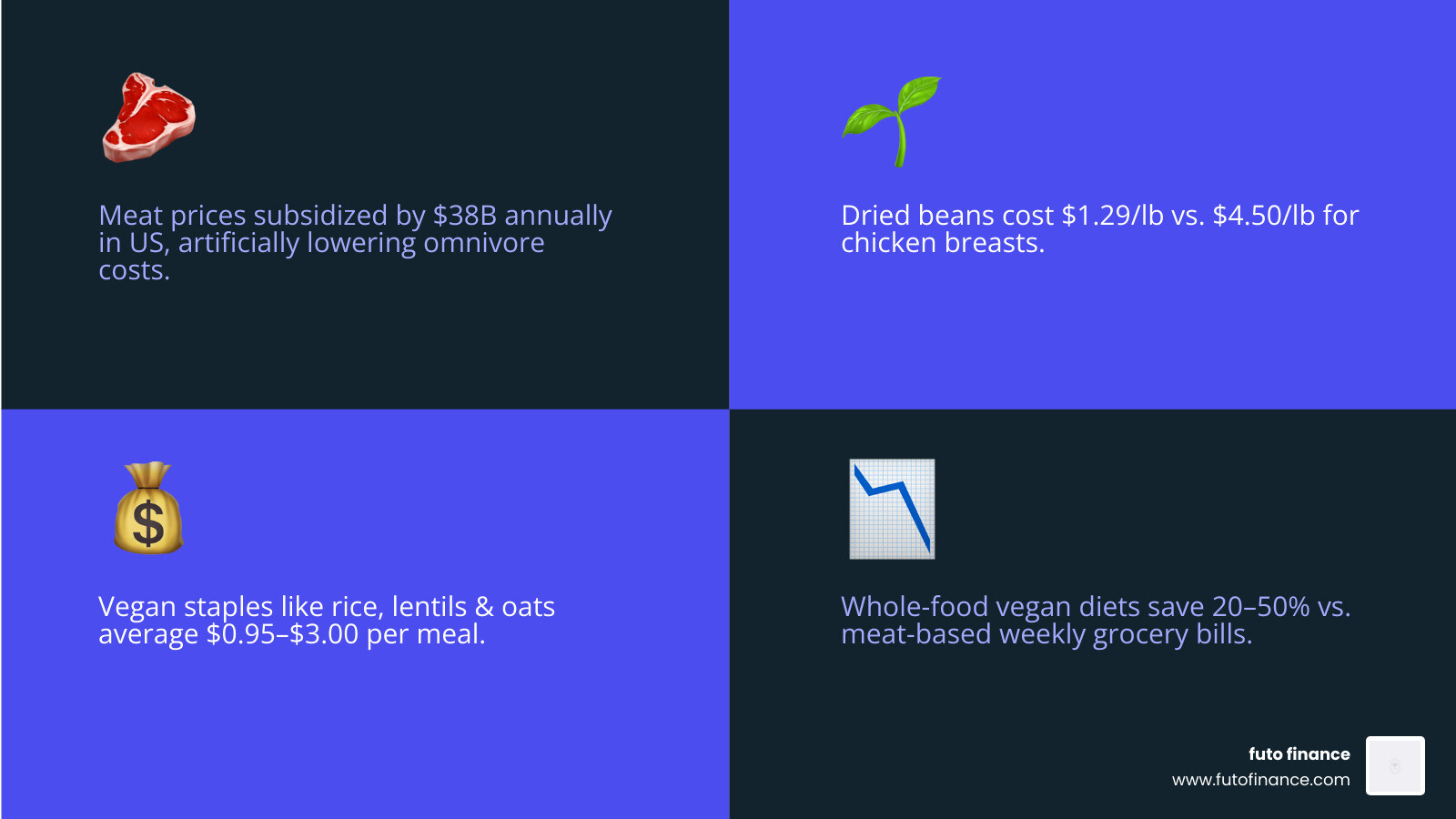
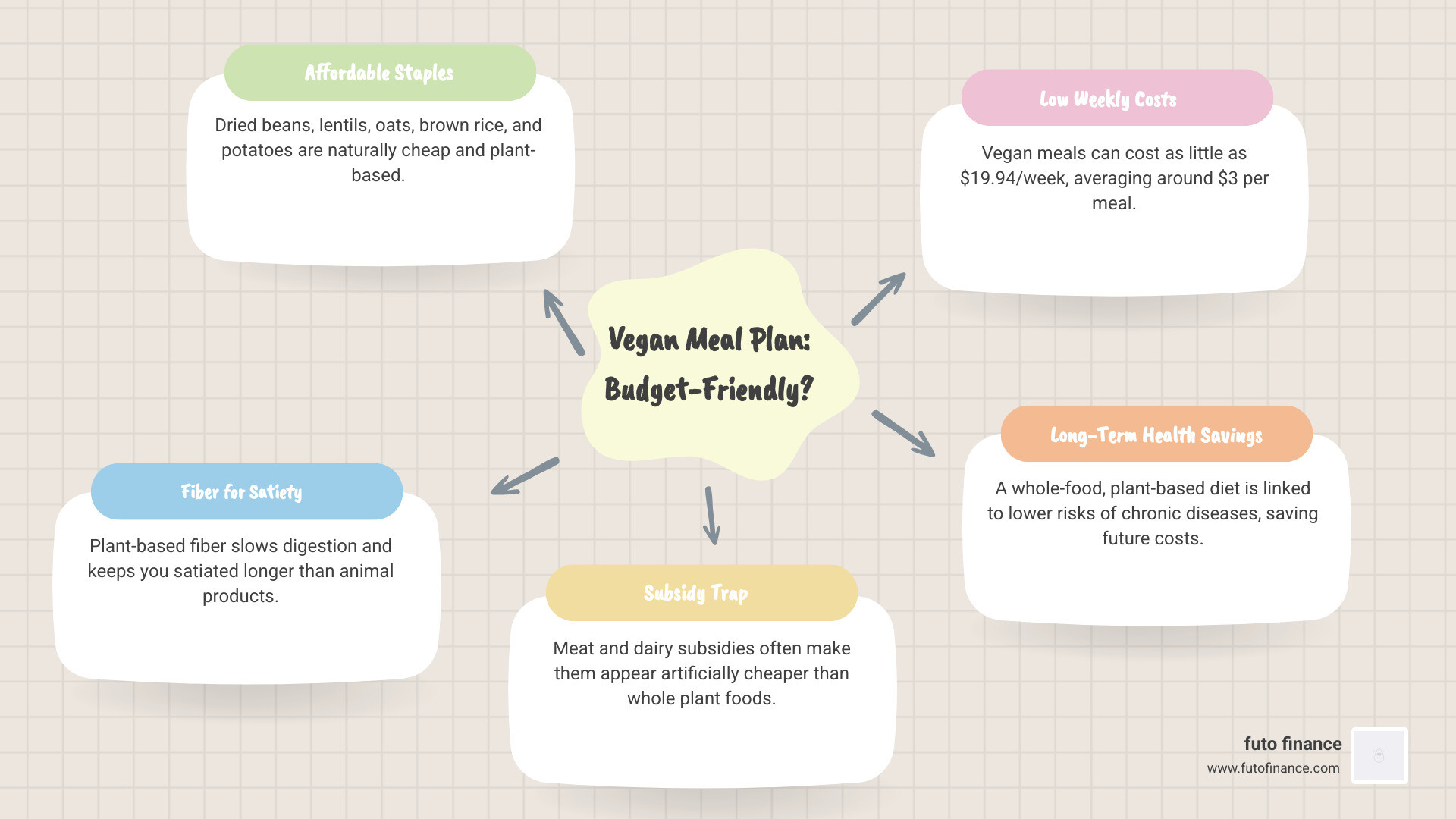
Here’s the thing most people get wrong: they assume vegan food means expensive specialty products. It doesn’t. The cheapest ingredients in any supermarket — dried beans, lentils, oats, brown rice, and potatoes — happen to be entirely plant-based.
In fact, real-world budget challenges have shown that one person can eat full days of vegan meals for as little as $19.94 a week. Even a more generous plan with breakfast, lunch, dinner, and snacks comes in around $3 per meal.
For a cash-strapped student juggling classes, part-time work, and a tiny kitchen, that’s a genuinely encouraging starting point.
The key is knowing which foods to buy, where to buy them, and how to stretch them across the week — which is exactly what this guide covers.
Debunking the Myth: Is a Vegan Meal Plan Budget-Friendly?
One of the loudest arguments against going plant-based is the “luxury” price tag. We’ve all seen the $9 artisanal vegan cheese or the $12 mock-chicken nuggets. If you build your diet around these processed alternatives, your bank account will definitely feel the sting. However, when we look at a vegan meal plan budget through the lens of whole foods, the math changes completely.
The Subsidy Trap
In the United States and many other regions, meat and dairy products are often heavily subsidized. This makes them appear artificially cheaper than they should be. Despite this, whole grains, beans, and lentils remain some of the most affordable items in the world. When you buy a pound of dried black beans for $1.50, you are getting roughly 1.5 cups of cooked beans per 15-ounce equivalent, providing massive amounts of protein and fiber for pennies.
Satiety: Fiber vs. Protein
A common concern for students is whether they will feel full without meat. The secret weapon of a budget vegan diet is fiber. While animal products contain zero fiber, plant-based staples like legumes and potatoes are packed with it. Fiber slows down digestion and keeps you satiated for longer. Scientific research consistently shows that diets high in legumes (beans, peas, lentils) offer high satiety levels, meaning you eat less but feel more satisfied.
Long-Term Health Savings
Beyond the weekly grocery bill, eating plant-based is an investment in your future. A diet rich in whole grains and vegetables is linked to lower risks of chronic diseases. For a student in April 2026, thinking about long-term health might feel secondary to passing finals, but the immediate benefits–like better digestion and sustained energy levels for late-night study sessions–are hard to ignore.
The Ultimate Vegan Meal Plan Budget Breakdown for Students
To make this practical, we’ve broken down what a week of groceries actually looks like in 2026. Inflation has certainly made its mark, but by sticking to store brands and bulk sections, we can still hit these targets.
The $20 “Survival” Tier
This plan relies heavily on “starches and pulses.” You’ll be buying large bags of brown rice, oats, and dried lentils. Your “produce” will likely be a large bag of potatoes, some bananas, and perhaps a head of kale or frozen mixed veggies. It’s functional, filling, and keeps you “in the black.”
The $30 “Balanced” Tier
At $30 a week (roughly $1.43 per meal), you can introduce more variety. This budget allows for tofu, peanut butter, a wider array of seasonal fruits, and perhaps some soy milk for your morning oats. This is often the “sweet spot” for most students.
The $63 “Full-Service” Tier
This is the “Forks Over Knives” style budget, coming in at about $3 per meal. It includes snacks, a variety of fresh produce, and perhaps some higher-end staples like nutritional yeast or specialty spices. Even at this “premium” student level, you are still spending significantly less than the average omnivore who eats out twice a week.
Maximizing Your Vegan Meal Plan Budget at Ethnic Markets
If you are still shopping exclusively at high-end supermarkets, you’re leaving money on the table. We always tell our community: “Don’t sleep on ethnic markets!”
- Indian Groceries: The absolute best place for bulk lentils (dal), chickpeas, and massive bags of rice. You can also find spices for a fraction of the cost of those tiny glass jars in standard stores.
- East Asian Markets: These are gold mines for affordable tofu (often sold in large blocks), mushrooms, and bok choy.
- Mexican Markets: Great for affordable dried chilies, bulk beans, and seasonal produce like avocados and limes.
High-Protein Staples for a Vegan Meal Plan Budget
Protein is the number one question we get. On a tight budget, you aren’t buying expensive protein powders. You’re buying:
- Dry Beans/Lentils: The undisputed kings of budget protein.
- Peanut Butter: One of the cheapest fats and protein sources available.
- Oats: Not just for breakfast; they add bulk and protein to smoothies and even savory patties.
- Soy Milk: Usually the most protein-dense plant milk for the price.
- Tofu: Extremely versatile and often under $2 per block if you shop at discount stores or ethnic markets.
Strategic Shopping and Meal Prep Hacks
Efficiency is the friend of the frugal. If you want to keep your vegan meal plan budget under control, you need a system.
Batch Cooking and Passive Time
The biggest mistake students make is cooking every single meal from scratch every day. Instead, dedicate a “Day 0” (usually Sunday) to batch cook.
- Rice Cookers: Throw in your brown rice and walk away.
- Passive Cooking: While the rice is going, simmer a large pot of beans or lentils on the hob.
- Chopping: Cut all your veggies at once. It saves time and reduces the temptation to order takeout when you’re tired on a Tuesday night.
The “Dirty Dozen” vs. “Clean 15”
You don’t need to buy everything organic. To save money, use the Environmental Working Group’s lists. Buy “Clean 15” items (like onions, frozen sweet peas, and avocados) conventional to save cash. Reserve your organic budget for the “Dirty Dozen” (like strawberries and spinach) if you’re concerned about pesticides, or just stick to conventional and wash them well to keep costs at the absolute minimum.
Stretching Your Ingredients Across Seven Days
We love the “Cook Once, Eat Thrice” method.
- The Base: Make a massive pot of Red Lentil Dal.
- Day 1: Serve it over rice.
- Day 3: Use the leftovers as a thick spread inside a wrap with some greens.
- Day 5: Thin it out with some vegetable broth and add frozen spinach to make a hearty soup.
Pro Tip: Don’t throw away stale bread! Turn it into “cheaty” croutons by toasting them in a pan with a little oil and garlic powder to top your soups and salads.
Sample 7-Day Budget Vegan Menu
Here is a glimpse of what a balanced, affordable week looks like. Most of these recipes utilize the same “core” ingredients (oats, rice, beans, potatoes, peanut butter) to keep the shopping list short.
- Breakfasts: Apple-cinnamon overnight oats or savory polenta porridge.
- Lunches: Chickpea “tuna” salad sandwiches or leftover lentil ragu over pasta.
- Dinners:
- Monday: Sweet potato and tofu curry.
- Tuesday: Black bean and potato burrito bowls.
- Wednesday: Teriyaki tofu with broccoli and noodles.
- Thursday: Chickpea curry-topped jacket potatoes.
- Friday: One-pot spicy sausage (using bean-based homemade patties) and tomato rice.
- Saturday: Slow cooker ratatouille or veggie stew.
- Sunday: “Empty the fridge” stir-fry with all remaining produce.
- Snacks/Sweets: Banana oat cookies (just mashed bananas and oats!) or peanut butter on apple slices.
Frequently Asked Questions about Vegan Budgeting
How can I get enough protein on a $30 weekly budget?
Focus on the “Big Three”: beans, tofu, and peanut butter. A single block of tofu has about 40g of protein, and a cup of cooked lentils has 18g. If you eat a variety of these along with whole grains like quinoa or even whole-wheat pasta, meeting your protein needs is easy and inexpensive.
Is it cheaper to buy canned or dry beans?
Dry beans are significantly cheaper. A 1lb bag of dry beans usually costs about the same as one or two cans but yields the equivalent of four to five cans once cooked. If you have the time to soak them overnight, dry is the way to go. If you’re in a rush, keep a few “emergency” cans of chickpeas in the cupboard.
What are the best stores for affordable vegan groceries in 2026?
In 2026, discount retailers like Aldi and Lidl remain top choices for staples. For produce, check out local farmers’ markets near closing time for deals, or use digital coupons on store apps. Don’t forget online wholesalers for bulk items like nutritional yeast or hemp seeds, which can be pricey in physical stores.
Conclusion
Transitioning to a plant-based lifestyle doesn’t require a trust fund. By focusing on whole food staples, shopping strategically at ethnic markets, and mastering the art of the “repurposed leftover,” you can thrive on a vegan meal plan budget that fits a student lifestyle.
At Futo Finance, we believe that financial freedom and culinary creativity go hand-in-hand. You don’t have to choose between your ethics and your bank balance. Start small, batch cook your grains, and remember: the humblest bean can become the most delicious meal with the right spices.
For more student-focused recipes and tips on staying “green while in the black,” check out our community. More info about vegan student services

Melo Rodrigues is the founder of Futo Finance and a specialist in student-budget veganism. Having mastered the art of plant-based cooking in a university setting, Melo is dedicated to helping students achieve nutritional excellence without financial strain. Through Futo Finance, Melo shares lab-tested strategies for eating smart and living sustainably on a budget.
