
The Ultimate Survival Guide for Beginner Vegan Cooking Students
Dorm Room Vegan Cooking: Everything You Need to Get Started
Dorm room vegan cooking is completely doable — even without a full kitchen, a big budget, or any cooking experience.
Here’s a quick overview of what works best:
- Appliances to get: Microwave, electric kettle, mini rice cooker, personal blender
- Pantry staples to stock: Canned beans, oats, nut butter, nutritional yeast, instant noodles, canned chickpeas
- Fastest meals: Overnight oats, avocado toast, chickpea “tuna” wraps, microwave sweet potato, mug oats
- Key nutrients to watch: Protein, B12, iron, calcium, vitamin D
- Money-saving moves: Buy in bulk, use store brands, split groceries with roommates
College brings a lot of freedom — including the freedom to choose what you eat. But if you follow a vegan diet, dorm life can feel like it’s working against you. Tiny spaces. Limited appliances. A dining hall that might offer one sad salad bar.
Here’s the reality though: around 14% of college students now follow a plant-based diet — far higher than the 4% of American adults who do. Campus dining is catching up fast, with major food service providers committing to dramatically expanding vegan options by 2025. But you still can’t rely on the dining hall alone.
The good news? You don’t need a full kitchen to eat well. A microwave, an electric kettle, and a handful of smart pantry staples are enough to build real, satisfying meals. This guide walks you through exactly how to do it — from appliances and pantry building to quick recipes and nutrition basics.
Essential Dorm-Safe Appliances for Dorm Room Vegan Cooking
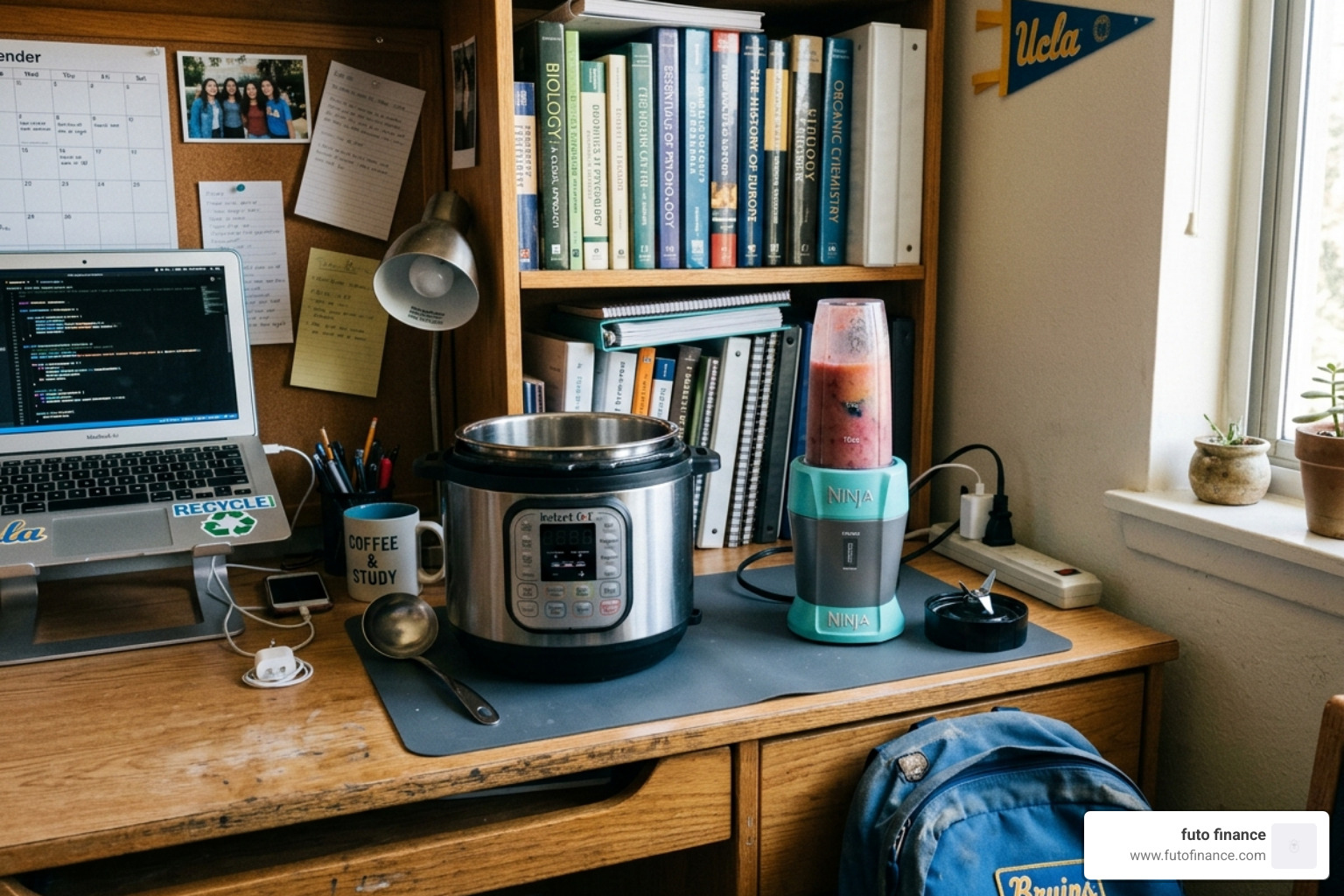
When you’re living in a space roughly the size of a walk-in closet, you have to be strategic. You can’t fit a full kitchen, but you can build a “dorm room kitchen” that produces gourmet-level plant-based meals. At Futo Finance, we believe the right tools make the difference between eating cold beans from a can and enjoying a steaming bowl of homemade lentil dahl.
The Microwave: Your Culinary MVP
The microwave is the undisputed king of dorm room vegan cooking. It’s not just for reheating leftovers. You can steam fresh broccoli, “bake” sweet potatoes until they are melt-in-your-mouth tender, and even make single-serving chocolate mug cakes for those 2 AM study sessions.
The Electric Kettle
If you can’t have a stove, the electric kettle is your best friend. Beyond making tea, it provides the boiling water needed for instant noodles, couscous (which cooks in five minutes just by soaking), and even “washing” canned beans to warm them up.
Rice Cookers and Instant Pots
If your dorm allows them, these are game-changers. A mini rice cooker can handle oatmeal, quinoa, and soups. An Instant Pot is a bit of a splurge, but it’s a multi-tool that functions as a slow cooker, pressure cooker, and steamer all in one. It’s perfect for batch-prepping grains or beans for the week.
Safety First: UL-Listed and Dorm Rules
Before you buy anything, check your housing contract. Most dorms prohibit open-coil hot plates because they are fire hazards. Look for appliances that are “UL-listed” and have safety features like automatic shutoff and cool-touch exteriors. It’s always better to check with your RA than to have your expensive multi-cooker confiscated during a room inspection.
| Appliance | Versatility | Power Usage | Space Required | Best For |
|---|---|---|---|---|
| Microwave | High | High | Medium | Potatoes, steaming, mug cakes |
| Electric Kettle | Medium | Medium | Low | Noodles, couscous, tea |
| Rice Cooker | Medium | Low | Low | Rice, quinoa, oatmeal |
| Instant Pot | Very High | High | Medium | Batch cooking, stews, beans |
| Personal Blender | Low | Low | Very Low | Smoothies, sauces, dressings |
Microwave-Friendly Dorm Room Vegan Cooking Hacks
Don’t underestimate the power of the “potato” setting. Poking holes in a sweet potato and nuking it for 5-7 minutes creates a perfect base for a meal. Top it with black beans, salsa, and a squeeze of lime.
Another hack? Use a microwave-safe mug for everything. You can make “mug oats” with chia seeds and nut butter in under three minutes. For savory cravings, a 5-minute vegan mac and cheese is possible by cooking pasta in water in the microwave, then stirring in nutritional yeast and a splash of plant milk once the water is absorbed.
High-Protein Dorm Room Vegan Cooking Strategies
One of the biggest myths about dorm room vegan cooking is that it’s hard to get enough protein. We recommend keeping “flavor boosters” like hemp hearts and nutritional yeast on hand. Sprinkle hemp hearts on your avocado toast for a nutty crunch and a massive protein boost.
Tofu is surprisingly dorm-friendly. You don’t always need to fry it. You can crumble firm tofu into a bowl, add turmeric, nutritional yeast, and black salt (kala namak), and microwave it for a quick “tofu scramble.” For snacks, protein balls made from oats, nut butter, and vegan protein powder are shelf-stable and perfect for carrying to class.
Building a Budget-Friendly Vegan Pantry on Campus
Staying vegan on a student budget requires a “pantry-first” mindset. Fresh produce is great, but shelf-stable staples are the backbone of affordable eating.
Essential Staples
- Nutritional Yeast (Nooch): This is non-negotiable. It adds a cheesy, umami flavor to everything and is packed with B vitamins.
- Canned Beans and Chickpeas: These are your cheapest protein sources. Buy them by the case if you can.
- Bulk Oats: Perfect for breakfast, but can also be ground up to thicken soups or make “energy balls.”
- Nut Butters: Peanut butter is a classic, but almond or sunflower butter works too. It’s a great source of healthy fats.
For more information on why these foods are so good for you, you can check out this scientific research on the health benefits of a plant-based diet.
Sourcing Affordable Ingredients Near University Housing
You don’t always have to trek to an expensive health food store. Many universities now have on-campus markets that accept dining cards. We’ve found that “stealing” (okay, repurposing) ingredients from the dining hall is a time-honored tradition. If your dining hall has a salad bar, grab extra spinach, chickpeas, or sunflower seeds to use in your dorm later.
Check if your school offers a grocery shuttle to local supermarkets. When you get there, look for store brands and compare unit prices (the price per ounce). Buying the “big bag” of rice or oats is almost always cheaper in the long run. Don’t forget farmers markets! By April 2026, many local markets offer student discounts on seasonal produce that is much fresher than what you’ll find in a plastic container.
Windowsill Herbs
Even in a tiny room, you can usually fit a small pot of basil or mint on your windowsill. It’s an inexpensive way to make a $1 bowl of instant ramen taste like a $15 restaurant dish.
Quick Micro-Meals and No-Cook Recipes for Busy Students
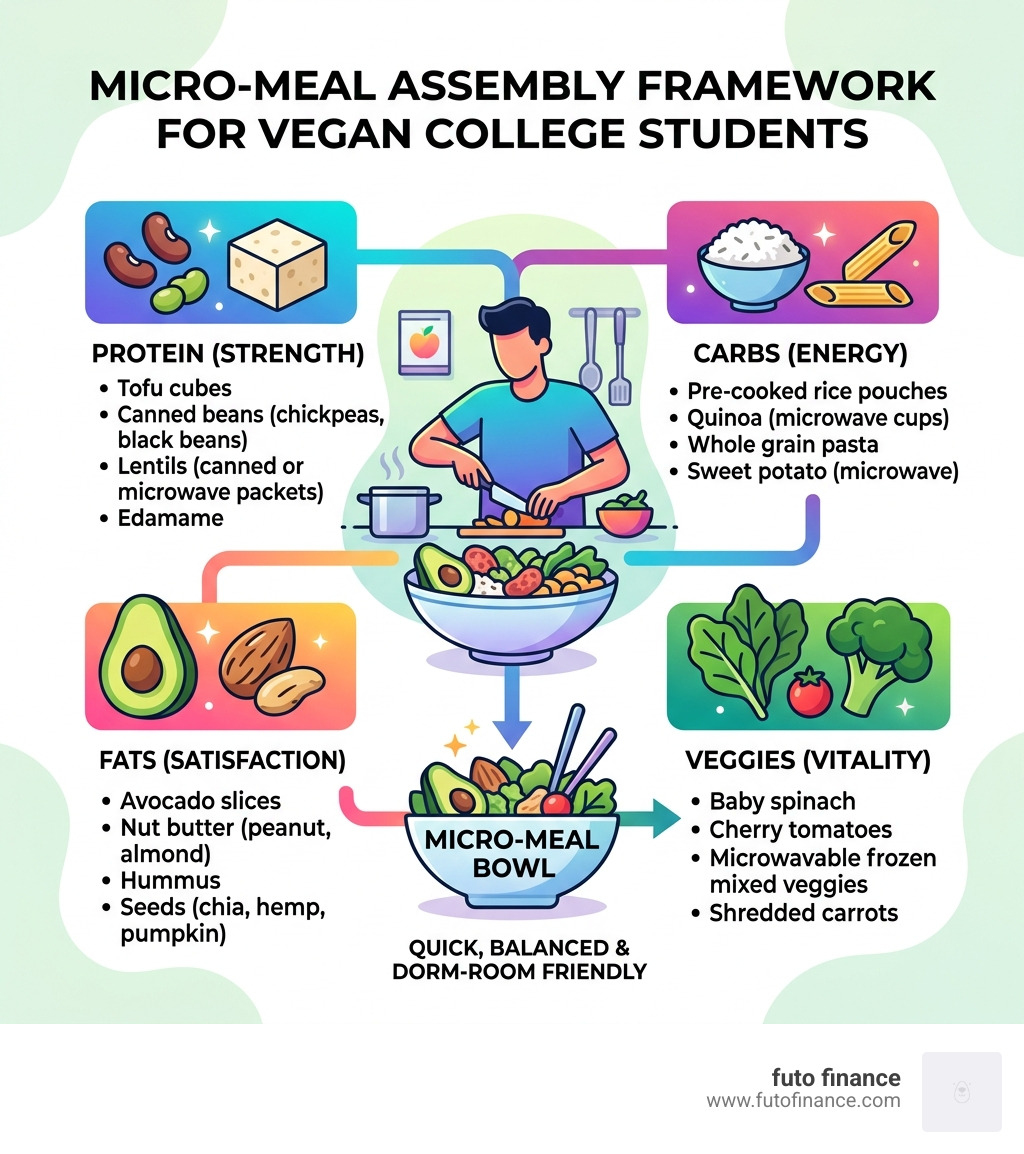
The “micro-meal” philosophy is all about assembly rather than traditional cooking. These are meals you can put together in 10 minutes or less using minimal tools.
Breakfast: The Power of the Jar
Overnight oats are the ultimate “busy student” breakfast. Mix equal parts oats and plant milk in a jar, add a spoonful of chia seeds, and leave it in your mini-fridge. By morning, it’s a creamy, filling porridge.
Lunch: The Chickpea “Tuna”
Mash a can of chickpeas with a fork. Add a dollop of vegan mayo (or hummus), some mustard, and any spices you have. Serve it on crackers or in a wrap with some spinach. It’s sturdy enough to pack in your bag without getting soggy before lunch.
Dinner: Mason Jar Miso Soup
Layer miso paste, shredded carrots, tofu cubes, and thin rice noodles in a glass jar. When you’re ready to eat, just add boiling water from your kettle, let it sit for five minutes, and stir. It’s healthy, warm, and requires zero cleanup.
Healthy “Drunk Food” Alternatives
We’ve all been there—it’s 3 AM, you’re back from a party, and the pizza place is calling your name. Instead of greasy takeout, satisfy your “inner party goblin” with a Grilled Peanut Butter and Banana Sandwich. If you don’t have a toaster, you can even make a “pizza pocket” using a waffle iron if your dorm allows one! It’s faster, cheaper, and won’t leave you with a “food hangover” the next morning.

Ensuring Nutritional Balance and Food Safety in Small Spaces
When you’re in charge of your own meals for the first time, nutrition can take a backseat to convenience. However, a little planning ensures you stay energized for exams.
The Big Four: B12, Iron, Calcium, and Vitamin D
- Vitamin B12: This is the only nutrient you cannot reliably get from unfortified plant foods. While nutritional yeast and fortified milks help, most experts recommend a supplement. For more details, see this scientific research on vitamin B12 deficiency and prevention.
- Iron: Combine iron-rich foods (like lentils or spinach) with Vitamin C (like orange juice or bell peppers) to significantly boost absorption.
- Calcium: Look for fortified plant milks. Most soy and almond milks have as much calcium as dairy milk.
- Protein: Don’t stress too much. If you’re eating enough calories and including beans, nuts, and grains, you’re likely hitting your targets.
Food Safety in a Tiny Space
Mini-fridges are notorious for having “hot spots” and “cold spots.” Keep your perishables like plant milk and tofu away from the door, where the temperature fluctuates. Use stackable glass containers to save space and keep your food fresh.
Pro-tip: Label your food! If you share a fridge with three other people, a “VEGAN – DO NOT TOUCH” label is a survival necessity. Also, manage odors by keeping an open box of baking soda in the back of the fridge. Your roommates will thank you when your leftover chickpea curry doesn’t make their cereal taste like garlic.
Navigating Dorm Rules and Roommate Dynamics
Cooking in a dorm isn’t just about the food; it’s about the people. Communication is key to avoiding “fridge wars.”
Shared Kitchen Etiquette
If you’re lucky enough to have a communal kitchen, follow the golden rule: clean up immediately. Nothing creates tension faster than a sink full of dirty dishes. If you’re worried about your vegan butter being used by others, consider a “buddy system.” Find another vegan or vegetarian on your floor and split the cost of staples. It saves money and fridge space.
Social Cooking Clubs
One of the best ways to normalize dorm room vegan cooking is to share it. Start a “Sunday Night Dinner Club” where everyone brings one ingredient to make a giant pot of chili or a taco bar. It’s a great way to make friends and prove that vegan food isn’t just “rabbit food.”
For more tips on how to balance your budget while eating plant-based, check out More info about affordable student vegan resources. We specialize in helping students navigate the financial side of healthy living.
Frequently Asked Questions about Dorm Room Vegan Cooking
How do I cook vegan if my dorm bans hot plates and toaster ovens?
Stick to the “Big Three”: Microwave, Electric Kettle, and Blender. You can make 90% of the recipes in this guide with just those. Focus on no-cook meals like wraps and salads, and use the kettle for things like couscous and instant noodles.
What are the best shelf-stable vegan proteins for limited fridge space?
Canned beans, chickpeas, and lentils are king. Don’t forget about soy curls (which are dry and shelf-stable until rehydrated) and high-quality protein powders. Nuts and seeds also provide protein and don’t need refrigeration.
How can I meet my B12 and Iron requirements using only dorm appliances?
Fortified foods are your best friend. Many cereals and plant milks are fortified with both B12 and Iron. For iron, a microwave-steamed bowl of spinach with a squeeze of lemon (Vitamin C) is an easy dorm fix. However, a daily multivitamin is a smart “insurance policy” for any busy student.
Conclusion
At Futo Finance, we know that being a student is stressful enough without worrying about where your next cruelty-free meal is coming from. Dorm room vegan cooking doesn’t have to be a struggle. With a few smart appliances, a well-stocked pantry, and a bit of creativity, you can eat better than most people with a full kitchen.
The shift toward plant-based living on campus is only accelerating. By taking control of your dorm room kitchen, you’re not just eating—you’re participating in a sustainable future.
Ready to level up your college cooking game? Start your affordable vegan journey today and discover how delicious student life can be. Happy cooking, and good luck with those midterms!

Melo Rodrigues is the founder of Futo Finance and a specialist in student-budget veganism. Having mastered the art of plant-based cooking in a university setting, Melo is dedicated to helping students achieve nutritional excellence without financial strain. Through Futo Finance, Melo shares lab-tested strategies for eating smart and living sustainably on a budget.
