
The Ultimate Guide to Vegan Amaranth Porridge
The Breakfast That Powers Your Morning on a Student Budget
Vegan amaranth porridge is a creamy, high-protein breakfast made by simmering amaranth seeds in plant-based milk or water — and it takes under 30 minutes to make.
Here’s what you need to know at a glance:
- What it is: A warm, nutty porridge made from an ancient pseudocereal (not a true grain)
- Who it’s for: Anyone eating vegan or gluten-free who wants a filling, affordable breakfast
- How long it takes: 5 minutes prep, 20-25 minutes cook time
- Key benefit: It’s a complete protein — meaning it contains all nine essential amino acids
- Cost: Requires as few as 2 main ingredients plus water
Breakfast can feel like a chore when you’re juggling lectures, deadlines, and a tight budget. Smoothies get boring. Skipping it altogether leaves you running on empty by 10am.
Amaranth porridge solves that. It’s cheap, quick, and surprisingly filling. One serving delivers roughly 9 grams of protein and nearly 9 grams of fiber — more than most standard breakfast options.
It also beats oats on iron, magnesium, and B vitamins, calorie for calorie. If you’ve never heard of it, you’re not alone — but that’s about to change.
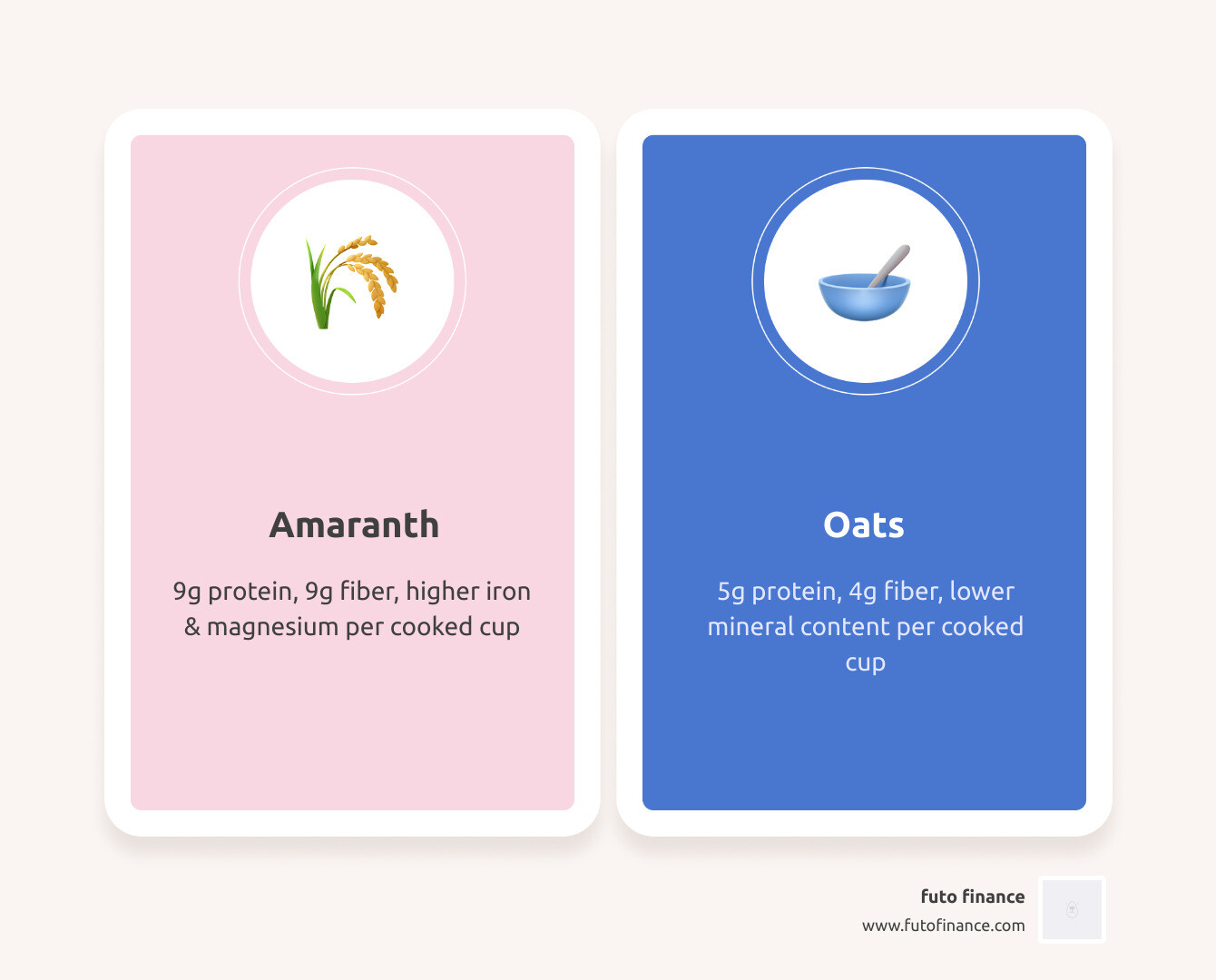
Nutritional Powerhouse: Why Amaranth Beats Oats in 2026
As we move through 2026, more of us are looking for ways to maximize our nutrition without spending a fortune. While oats have been the reigning champion of the breakfast bowl for decades, amaranth is the underdog that’s finally getting the spotlight it deserves.
Technically, amaranth isn’t a grain; it’s a pseudocereal. This means it’s a seed that acts like a grain but packs a much punchier nutritional profile. According to scientific research on amaranth nutritional benefits, one of its most impressive features is that it is a complete plant protein.
Most grains are missing at least one essential amino acid, but amaranth contains all nine. We’re particularly excited about its high levels of lysine, an amino acid that is notoriously difficult to find in most plant-based “grains.” If you’re following a vegan diet, getting enough lysine is crucial for tissue repair and energy production.
Amaranth vs. Oats: The 2026 Breakdown
When we compare them side-by-side, the data is clear. One cup of cooked amaranth contains 12.5% more protein than a cup of cooked quinoa and significantly more than a standard bowl of oatmeal.
| Nutrient (per cooked cup) | Amaranth | Oats (Rolled) |
|---|---|---|
| Protein | ~9.4g | ~6.0g |
| Fiber | ~5.2g | ~4.0g |
| Iron | ~5.2mg | ~2.1mg |
| Magnesium | ~160mg | ~63mg |
| B Vitamins | High | Moderate |
Beyond the basics, amaranth is a rich source of heart-healthy oleic acid and essential fatty acids. It also provides twice the iron and magnesium of oats, which is a massive win for students who might be feeling the fatigue of a long semester. Plus, it is naturally gluten-free, making it a safe and nutritious choice for those with celiac disease or gluten sensitivities.
Essential Ingredients for a Basic Vegan Amaranth Porridge
One of the reasons we love vegan amaranth porridge at Futo Finance is its simplicity. You don’t need a pantry full of “superfoods” to make this happen. In fact, you can make a delicious base with just two main ingredients.
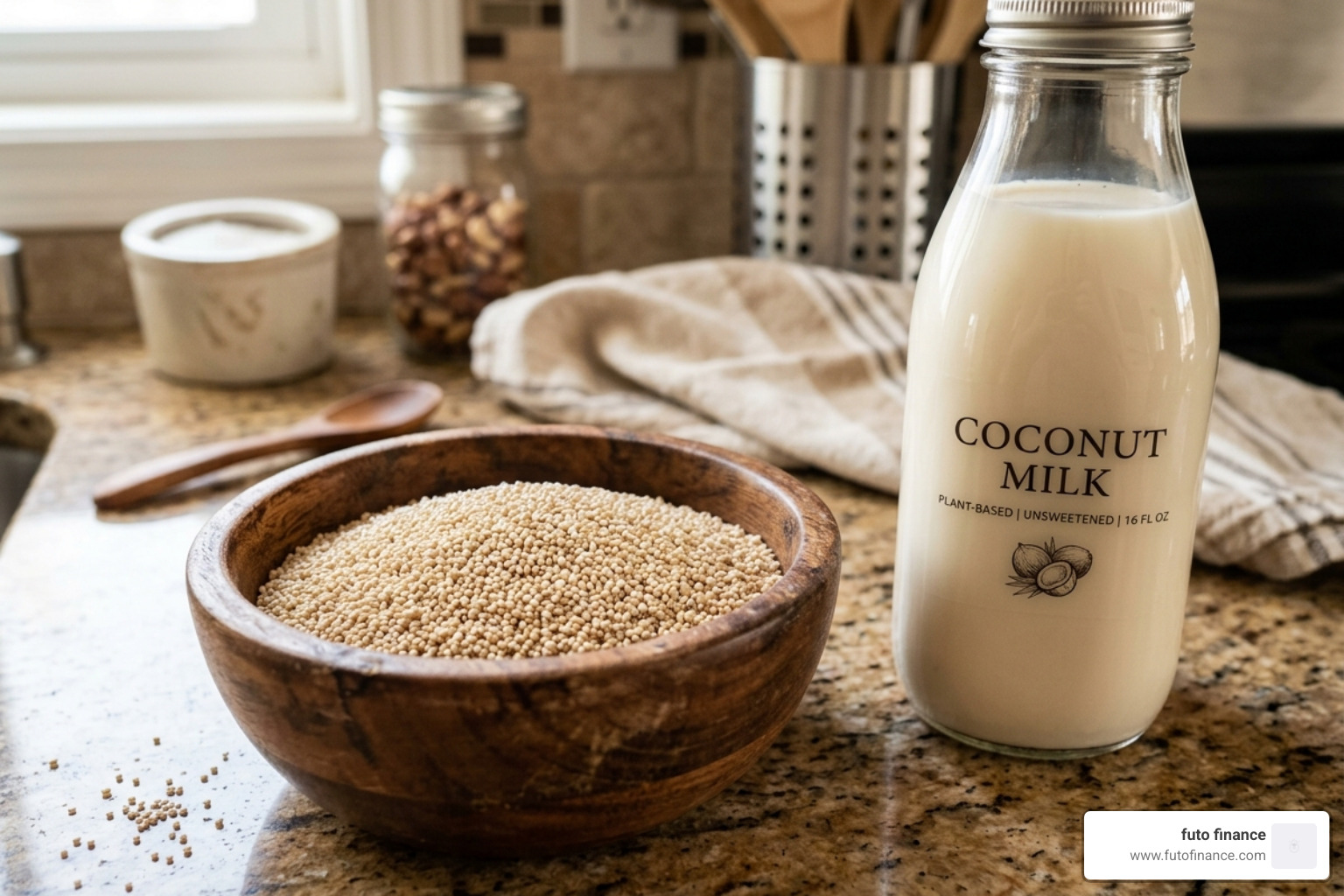
The Core Components
- Amaranth Grain: Look for the tiny, off-white seeds. They are often found in the bulk section of health food stores or the “ancient grains” aisle.
- Plant-Based Milk: For the creamiest results, we recommend full-fat coconut milk or soy milk. If you’re watching your budget, even a mix of half water and half oat milk works wonders.
- Filtered Water: Used for the initial simmer to ensure the seeds soften perfectly.
- Sea Salt: Just a pinch to enhance the natural nuttiness of the grain.
The Flavor Boosters (Optional but Recommended)
If you have a few extra cents in your budget, these additions transform the porridge from “good” to “heavenly”:
- Vanilla Extract: A teaspoon adds a comforting aroma.
- Cinnamon or Nutmeg: These spices add warmth and depth without needing extra sugar.
- Natural Sweeteners: Maple syrup, date syrup, or even a mashed banana can provide that sweet kick.
Step-by-Step Guide to Cooking and Mastering Texture
Cooking amaranth can be a little intimidating the first time because the seeds are so tiny—they’re like miniature quinoa! But once you master the “rinse and simmer” technique, you’ll be making this in your sleep.
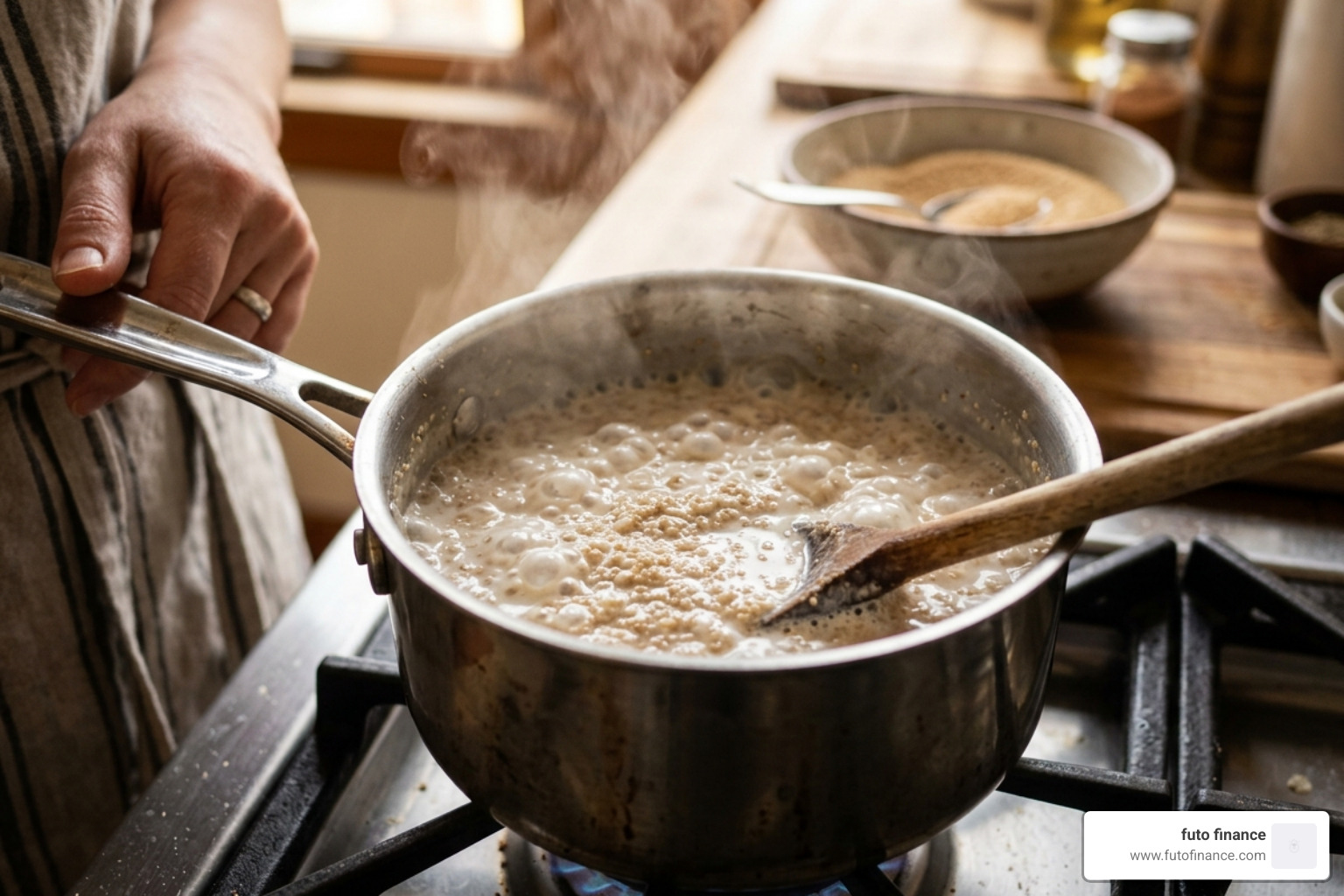
1. The Rinse (Don’t Skip This!)
Amaranth, like quinoa, contains saponins. These are naturally occurring compounds that can taste bitter or soapy if not washed away.
- Action: Place your amaranth in a fine-mesh strainer (the holes must be very small!) and run it under cold water for 30-45 seconds.
2. The Toast (The Flavor Secret)
For a deeper, nuttier flavor, we suggest toasting the dry seeds before adding liquid.
- Action: Heat a small saucepan over medium heat. Add the dry (or damp from rinsing) amaranth and stir constantly for 2-3 minutes. You’ll know it’s ready when it smells like toasted nuts and a few seeds might even start to “pop” like tiny popcorn.
3. The Simmer
- Ratio: Use a 1:3 ratio. For every 1 cup of amaranth, use 3 cups of liquid.
- Action: Add your water, plant milk, and a pinch of salt. Bring to a boil, then immediately reduce the heat to low. Cover the pot and let it simmer for 15 to 25 minutes.
Mastering the Texture of Vegan Amaranth Porridge
The texture of amaranth is unique. It doesn’t turn into a mushy paste like some oats; instead, it retains a slight, delightful “crunch” or “pop” when you bite into it, similar to caviar or couscous.
To achieve a creamy consistency without it becoming gummy:
- Stir occasionally: This helps release the natural starches.
- The “Water First” Method: Some of our favorite recipes suggest cooking the amaranth in water first, then stirring in a splash of plant milk at the very end. This prevents the proteins in the milk from scorching or making the texture too thick.
- Consistency Check: If it looks too thick after 20 minutes, don’t panic! Just whisk in an extra 1/4 cup of milk until it reaches your desired silkiness.
Customization, Toppings, and Meal Prep Storage
One bowl of vegan amaranth porridge can taste like a completely different meal depending on how you dress it up. Whether you’re a fan of “Apple Pie” flavors or want something savory, amaranth is the perfect blank canvas.
Popular Flavor Variations
- Apple Pie Style: Stir in diced apples, cinnamon, and a dash of nutmeg during the last 5 minutes of cooking. Top with toasted pecans.
- Pumpkin Spice: Add 1/4 cup of pumpkin puree and a teaspoon of pumpkin pie spice to the pot. It’s like eating dessert for breakfast.
- The “Berry Blast”: Swirl in some vanilla vegan yogurt and top with frozen berries that have been thawed in a saucepan to create a “compote.”
Meal Prep and Storage
We know student life is hectic. You don’t always have 30 minutes on a Tuesday morning to stand over a stove.
- Fridge: Store cooked porridge in an airtight container for 4-5 days.
- Reheating: Amaranth thickens significantly as it cools. When reheating on the stove or in the microwave, add a splash of water or plant milk to loosen it up.
- Freezer: You can freeze individual portions for up to 3 months. This is a lifesaver during finals week!
Affordable Toppings for Your Vegan Amaranth Porridge
Staying healthy on a budget is our mission. You don’t need expensive goji berries to make a great bowl.
- Seasonal Fruit: Whatever is on sale! Pears in winter, berries in summer.
- Seeds: Flaxseeds or chia seeds add Omega-3s for just a few cents per serving.
- Nut Butters: A swirl of peanut butter adds even more protein and healthy fats.
For more tips on eating well without breaking the bank, check out more info about vegan nutrition.
Frequently Asked Questions about Amaranth
Does amaranth need to be rinsed before cooking?
Yes, absolutely. Rinsing removes debris and those bitter saponins we mentioned earlier. Because the seeds are so small, a standard colander won’t work—you’ll lose half your breakfast down the drain! Use a fine-mesh sieve or even a clean nut milk bag to get the job done.
Can I make amaranth porridge in a slow cooker or Instant Pot?
You can! For an Instant Pot, use a 1:3 ratio of amaranth to water/milk and set it to high pressure for 5-7 minutes with a natural release. For a slow cooker, cook on low for 6-7 hours (perfect for overnight prep). Just be aware that the texture may be slightly softer than the stovetop version.
Is amaranth porridge better for you than oatmeal?
“Better” is subjective, but in terms of protein density and mineral variety, amaranth often takes the lead. It’s an excellent way to introduce dietary diversity into your routine. If you find yourself crashing an hour after eating oatmeal, the extra protein and fiber in amaranth might provide the sustained energy you need to get through back-to-back lectures.
Conclusion
Vegan amaranth porridge is more than just a trend; it’s a functional, affordable, and incredibly nutritious tool for any student’s kitchen. By switching up your morning routine with this ancient grain, you’re fueling your brain with essential minerals and a complete protein source that keeps you full until lunch.
Whether you like it simple with just a splash of milk or loaded with seasonal fruits and spices, the versatility of amaranth makes it a winner. The key to a great bowl is rinsing well, toasting for flavor, and not being afraid to experiment with your toppings!
Ready to level up your vegan game? Join the Futo Finance community for more affordable vegan recipes and let’s make 2026 your healthiest year yet.

Melo Rodrigues is the founder of Futo Finance and a specialist in student-budget veganism. Having mastered the art of plant-based cooking in a university setting, Melo is dedicated to helping students achieve nutritional excellence without financial strain. Through Futo Finance, Melo shares lab-tested strategies for eating smart and living sustainably on a budget.
