
The Ultimate Guide to Fiber Rich Student Snacks
Why Cheap High Fiber Snacks Are a Student’s Secret Weapon
Cheap high fiber snacks don’t have to mean boring or complicated. Here are the best options to grab right now:
Best cheap high-fiber snacks (under $1 per serving):
| Snack | Fiber per Serving | Approx. Cost |
|---|---|---|
| Air-popped popcorn (3 cups) | 5.8g | ~$0.25 |
| Cooked lentils (1/2 cup) | 7.8g | ~$0.20 |
| Cooked black beans (1/2 cup) | 5.7g | ~$0.20 |
| Apple (1 medium) | 3-4g | ~$0.50 |
| Cooked oats (1/2 cup dry) | 4g | ~$0.15 |
| Carrots (1 raw) | 2g | ~$0.20 |
| Cooked chickpeas (1/2 cup) | 6.2g | ~$0.25 |
Here’s a problem most students face: you’re tired, between classes, and your energy is crashing. You need something fast and filling — but you’re also watching every dollar.
Fiber is the nutrient that fixes this. It slows digestion, steadies your energy, and keeps you full longer.
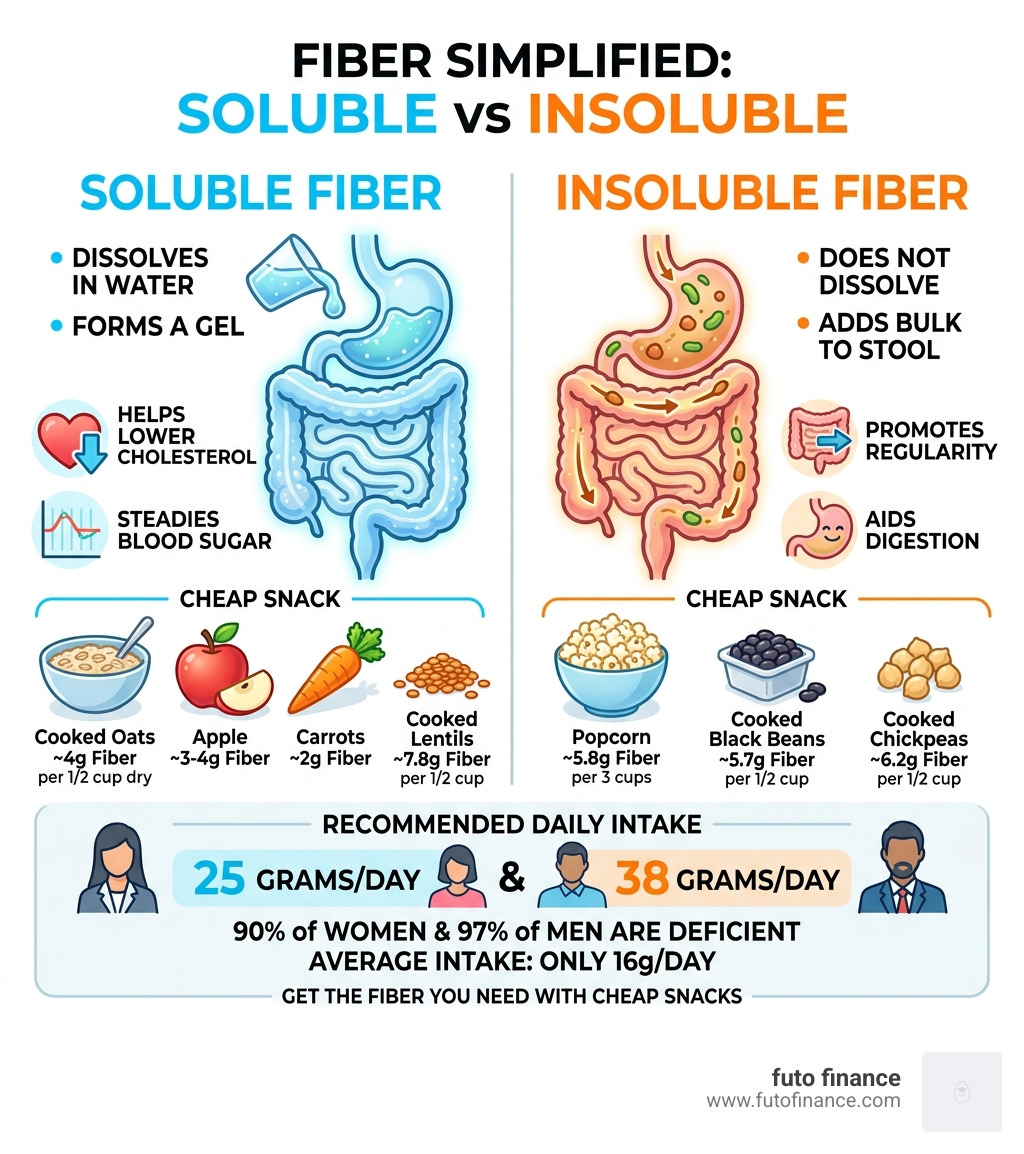
The catch? Most people aren’t getting nearly enough. An estimated 90% of women and 97% of men fall short of the recommended daily intake, with the average American eating only about 16 grams per day — roughly half the 25–38 grams experts recommend.
The good news: the highest-fiber foods on the planet are also some of the cheapest foods you can buy. Beans, oats, lentils, and popcorn cost pennies per serving and pack more fiber than most expensive packaged snacks.
This guide breaks down exactly which snacks give you the most fiber for the least money — including whole foods, store-bought picks, and simple dorm-friendly recipes.
The Science of Satiety: Why Students Need Fiber
As we navigate the academic year of April 2026, the pressure on students to perform has never been higher. Between back-to-back lectures and late-night study sessions, your digestive health often takes a backseat. However, fiber is more than just a “digestive aid”; it is your body’s personal trainer for sustained energy.
Fiber works through the “science of satiety.” Unlike simple sugars that cause a massive insulin spike followed by a crash, fiber slows down the absorption of sugar into your bloodstream. This leads to a steady release of energy, which is exactly what you need to survive a three-hour seminar without your stomach growling.
The global market for high-fiber snacks is currently booming, valued at over USD 28.4 billion, because people are finally realizing its benefits. Beyond keeping you full, a high-fiber habit is linked to a 15-30% lower risk of heart disease and improved blood pressure regulation.
For us students, the most important stats are the daily requirements. Most women need 25-28 grams, and men need 31-34 grams (up to 38g for younger adults). Since the average intake is only 16 grams, most of us are living in a “fiber gap.” Bridging this gap with cheap high fiber snacks can improve your focus, help with weight management, and keep your gut microbiome happy.
Top Whole-Food Cheap High Fiber Snacks Under $1
When you’re living on a budget, whole foods are your best friends. They are naturally vegan, minimally processed, and incredibly cost-effective. You don’t need fancy packaging to get your daily dose of roughage.
- Popcorn: This is the ultimate budget snack. Three cups of air-popped popcorn deliver 5.8g of fiber. If you buy kernels in bulk, it costs next to nothing per serving.
- Legumes (Beans and Lentils): A half-cup of cooked lentils provides a massive 7.8g of fiber. Beans like kidney beans (5.7g per half-cup) and chickpeas (6.2g per half-cup) are also powerhouses.
- Oats: Not just for breakfast! Oats contain beta-glucan, a soluble fiber that manages cholesterol. 100g of oats contains about 10.4g of fiber.
- Fruits and Veggies: Pears and apples are portable and high in fiber (about 4g each), especially if you eat the skin. Carrots and broccoli are also great for a crunch that satisfies.
Comparing Fiber-to-Price Ratios for cheap high fiber snacks
To get the most bang for your buck, we recommend looking at the unit price at the grocery store. Buying “generic” or store brands often saves you 30-50% without sacrificing nutrition.
| Food Item | Fiber (g) | Price per Serving | Fiber-to-Price Ratio (High is Better) |
|---|---|---|---|
| Bulk Dried Lentils | 7.8g | $0.15 | 52.0 |
| Bulk Popcorn Kernels | 5.8g | $0.10 | 58.0 |
| Store Brand Oats | 4.0g | $0.12 | 33.3 |
| Seasonal Apples | 4.0g | $0.50 | 8.0 |
| Canned Black Beans | 5.7g | $0.35 | 16.2 |
Buying in bulk from bins or choosing frozen vegetables (which are often flash-frozen at peak nutrition) can further drive down the cost of your cheap high fiber snacks.
Best Store-Bought Cheap High Fiber Snacks
Sometimes, you just don’t have time to boil lentils. We get it. When you’re sprinting from the library to your part-time job, convenience is king. Fortunately, there are several store-bought options that won’t break the bank.
Walmart and similar retailers offer high-value options. For instance, the (4 pack) Fiber One Chewy Bars, Oats and Chocolate provides a significant fiber boost. Each bar can offer up to 9g of fiber (32% of your daily value). You can also find these on Amazon.com.
Other great store-bought picks include:
- Fiber One 80 Calorie Bars: Options like Chocolate Peanut Butter or Chocolate Caramel & Pretzel are great for a sweet tooth.
- Whole-Grain Crackers: Look for brands that list “whole grain” as the first ingredient and offer at least 3g of fiber per serving.
- Roasted Chickpea Snacks: Often found in the health aisle, these provide protein and fiber in one crunchy package.
- Bran Cereals: Generic bran flakes are incredibly high in fiber and can be eaten dry as a snack mix.
Note for our vegan community: Always check the labels on Fiber One products, as many contain milk or whey protein.
Avoiding Hidden Costs in cheap high fiber snacks
Not all “high fiber” labels are created equal. Some products use “marketing traps” to hide high sugar content or ultra-processed ingredients.
- Check for Added Sugars: Some fiber bars have as much sugar as a candy bar. Aim for snacks with single-digit sugar grams.
- Look for Whole Foods: If the first five ingredients are unrecognizable chemicals, keep looking.
- The “Fiber-to-Sugar” Rule: A good rule of thumb is to ensure the grams of fiber are higher than the grams of added sugar.
- Watch Out for “Net Carbs”: Brands often use ingredients like chicory root or allulose to lower the net carb count. While these are fine for fiber, they can cause bloating if you eat too many at once.
Easy DIY High Fiber Recipes for Dorm Life

Making your own cheap high fiber snacks is the best way to ensure they are 100% vegan and budget-friendly. Most of these require zero fancy equipment.
Roasted Chickpeas
This is the ultimate student snack. Drain a can of chickpeas, pat them dry, toss with a little oil and salt (or chili powder), and bake or air-fry until crunchy. They are cheaper than chips and packed with 6g of fiber per serving.
No-Bake Energy Bites
Mix 1 cup of oats, 1/2 cup of peanut butter, and a tablespoon of chia seeds. Add a splash of maple syrup or some dairy-free chocolate chips. Roll them into balls and keep them in your mini-fridge. They are perfect for a quick pre-workout boost.
Chia Seed Pudding
Chia seeds are a fiber miracle, with about 10g per ounce. Mix 2 tablespoons of chia seeds with 1/2 cup of soy or almond milk. Let it sit overnight. Top with seasonal fruit in the morning for a refreshing, high-fiber treat.
5-Minute High-Fiber Toppings
Want to upgrade a boring snack? Sprinkle these on top of yogurt or toast:
- Hemp seeds: Good for healthy fats.
- Ground flaxseed: High in lignans and fiber.
- Pumpkin seeds: Great for a zinc boost.
- Sliced almonds: Adds crunch and 3.5g of fiber per ounce.
Frequently Asked Questions about Fiber

How much fiber do I need daily for peak academic performance?
For peak brain health and sustained energy, aim for the USDA guidelines: 25g for women and 38g for men. This prevents the “3 p.m. slump” and keeps your focus sharp during long study sessions. Remember to increase your intake gradually and drink plenty of water to avoid bloating.
What are the best high-fiber snacks for weight management?
Fiber-rich fruits like apples and pears, or vegetables like baby carrots, are excellent. Because fiber adds bulk to your diet without adding many calories, it helps you feel full on less food. This prevents mindless snacking on high-calorie, low-nutrient vending machine items.
Can I get enough fiber on a budget-friendly vegan diet?
Absolutely! In fact, a vegan diet is naturally positioned to be high in fiber. By focusing on “peasant foods” like brown rice, beans, lentils, and oats, you can easily exceed your daily fiber goals for just a few dollars a day. Veganism doesn’t have to be expensive if you stick to whole-food staples.
Conclusion
Mastering the art of finding and making cheap high fiber snacks is a game-changer for any university student. Not only does it save you money, but it also fuels your body and brain for the rigors of academic life. From the simplicity of air-popped popcorn to the convenience of a Fiber One Oats & Chocolate bar, there are endless ways to hit your 25-38g daily goal.
Remember to prioritize whole foods, read your labels carefully to avoid hidden sugars, and don’t be afraid to meal prep a batch of roasted chickpeas or energy bites on Sunday night. Your digestive system—and your wallet—will thank you.
Ready to take your plant-based cooking to the next level? Explore more affordable vegan recipes at Futo Finance and join our community of students eating well on a budget!

Melo Rodrigues is the founder of Futo Finance and a specialist in student-budget veganism. Having mastered the art of plant-based cooking in a university setting, Melo is dedicated to helping students achieve nutritional excellence without financial strain. Through Futo Finance, Melo shares lab-tested strategies for eating smart and living sustainably on a budget.
