
The Best Broccoli Pesto Vegan Recipe for Picky Eaters
The Easiest Way to Make Broccoli Pesto Vegan in 15 Minutes
Broccoli pesto vegan is a quick, budget-friendly sauce made by blending broccoli florets with basil, garlic, lemon, olive oil, and nutritional yeast — no dairy, no nuts required.
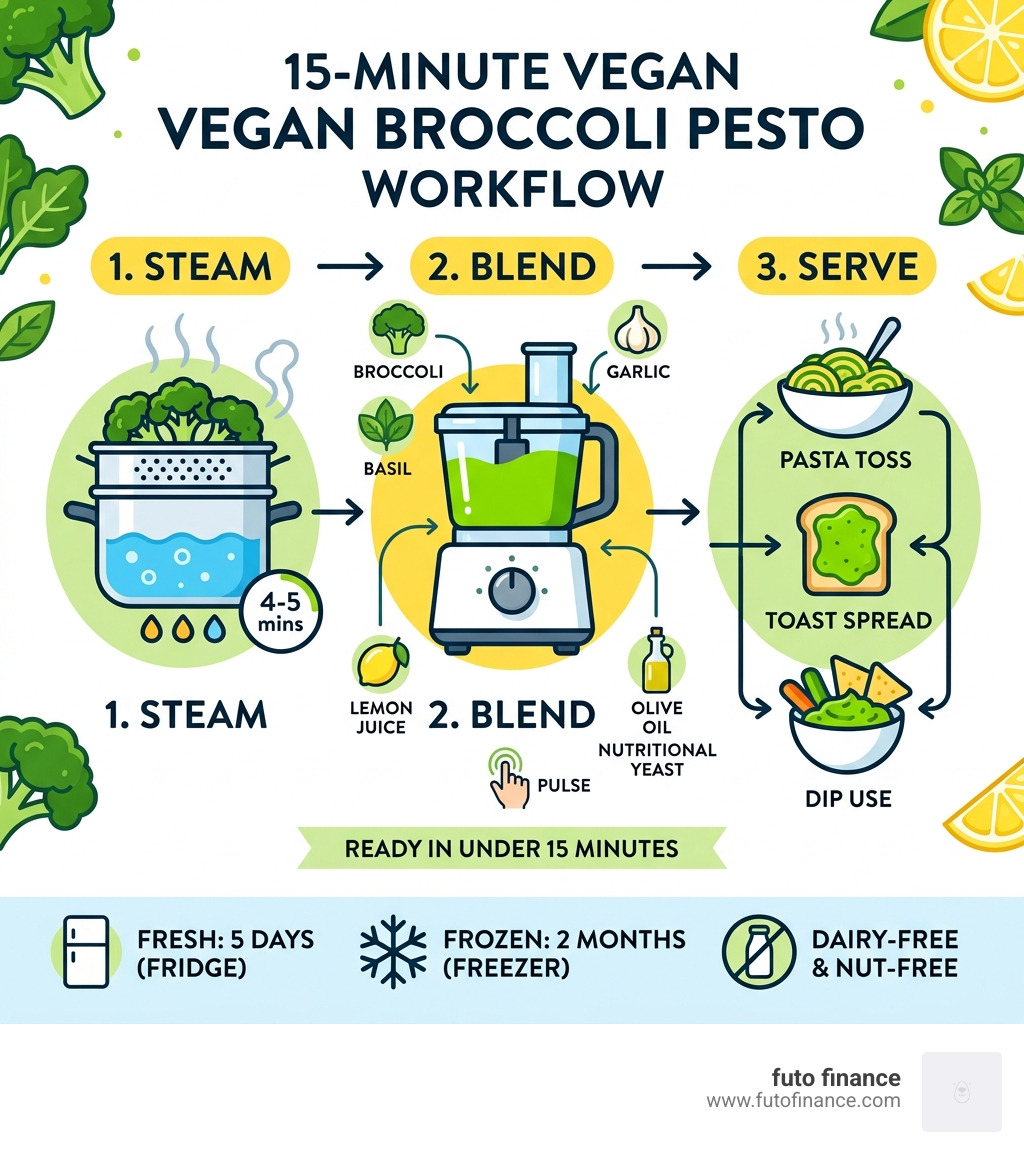
Here’s the core process at a glance:
- Prep — Blanch or steam broccoli florets for 4-5 minutes
- Blend — Pulse broccoli with basil, garlic, lemon juice, nutritional yeast, and olive oil in a food processor
- Season — Adjust salt, pepper, and lemon to taste
- Serve — Toss with pasta, spread on toast, or use as a dip
Ready in under 15 minutes. Keeps in the fridge for up to 5 days. Freezes for up to 2 months.
Pesto is one of those sauces that makes any meal feel more exciting — and this broccoli version is no exception. It’s cheaper than traditional pine nut pesto, packed with nutrients, and incredibly forgiving if you swap ingredients based on what’s in your kitchen.
The best part? Even people who don’t love broccoli tend to enjoy it. The blending process transforms the vegetable into something rich, green, and deeply savory — a genuinely sneaky way to eat more vegetables without noticing.
Whether you’ve got 10 minutes between lectures or need a meal-prep sauce for the week, this recipe fits your life.
Why You’ll Love This Broccoli Pesto Vegan Recipe
At Futo Finance, we are always looking for ways to make plant-based eating accessible for university students. This broccoli pesto vegan recipe is a powerhouse of nutrition and efficiency. Unlike traditional pesto, which relies heavily on expensive pine nuts and oil for volume, this version uses a whole head of broccoli to create a thick, satisfying base.
One of the biggest wins here is the nutritional density. Broccoli is a “superfood” loaded with Vitamin C, Vitamin K1, fiber, iron, and potassium. From a scientific perspective, it contains kaempferol, which has potent anti-inflammatory properties, and sulforaphane, a phytonutrient known for its antioxidative benefits. Research suggests that sulforaphane production is maximized when broccoli is chopped and allowed to sit for about 40 minutes before cooking, or when paired with mustard seeds.
Furthermore, this recipe is a champion of food waste reduction. Got some broccoli stems that look a bit sad? Throw them in! The food processor doesn’t care about aesthetics. By using the whole plant, you’re getting more bang for your buck and keeping scraps out of the bin. For a classic take on this green delight, you can also check out this Vegan broccoli pesto recipe – BBC Food.
Traditional vs. Budget-Friendly Pesto Comparison
| Feature | Traditional Pesto | Futo Finance Broccoli Pesto |
|---|---|---|
| Main Base | Basil (Expensive in bulk) | Broccoli (Cheap & Voluminous) |
| Fat Source | Pine Nuts & Heavy Oil | Walnuts/Seeds & Broccoli Fiber |
| Calories | ~568 kcal per serving | ~95–188 kcal per serving |
| Protein | Low | Higher (via Broccoli & Seeds) |
| Fiber | Minimal | High (1-3g per serving) |
Essential Ingredients and Student-Friendly Substitutions
To make a killer broccoli pesto vegan style, you don’t need a gourmet pantry. We’ve designed this list to be flexible enough for any student budget.
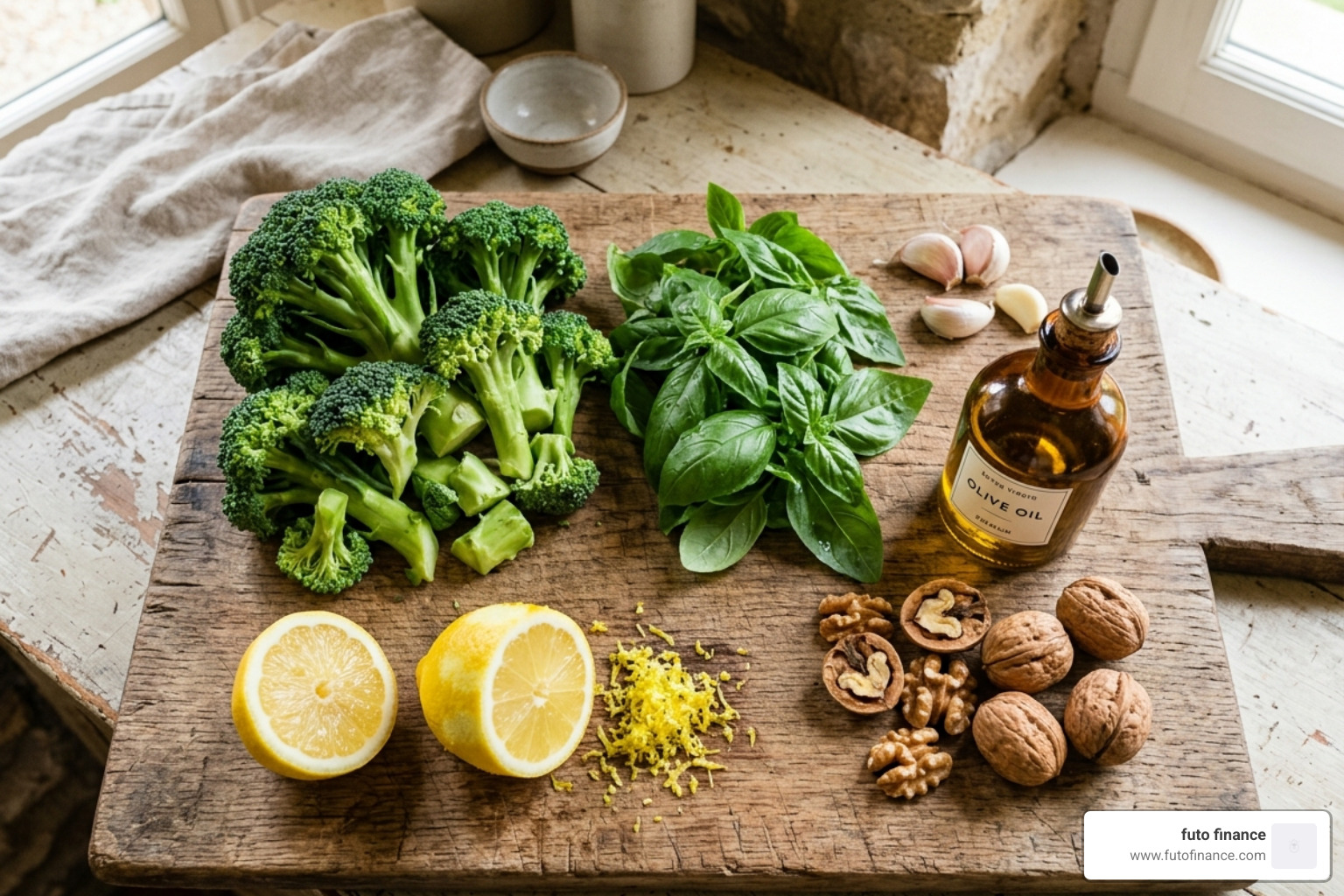
- Broccoli Florets: The star of the show. You can use fresh or frozen.
- Fresh Basil: Provides that classic “pesto” aroma. If basil is too pricey, half-and-half it with spinach or parsley.
- Garlic Cloves: Two large cloves usually do the trick, but measure with your heart.
- Lemon Juice & Zest: This provides the “zing” that cuts through the richness of the oil.
- Extra-Virgin Olive Oil: Essential for that silky mouthfeel. If you’re watching your budget, a standard vegetable oil works, though the flavor will be milder.
- Nutritional Yeast: Our secret weapon. This provides the cheesy, umami flavor that replaces Parmesan.
- Salt & Pepper: To taste.
Student-Friendly Swaps:
- Frozen Broccoli: Often cheaper than fresh and requires no chopping. Just thaw to room temperature before blending.
- Sunflower Seeds: A massive money-saver compared to pine nuts or walnuts.
- White Miso: If you don’t have nutritional yeast, a tablespoon of white miso adds a similar fermented, salty depth.
- Avocado: For a lower-oil version, replace half the olive oil with half a ripe avocado. It makes the pesto incredibly creamy!
Making Broccoli Pesto Vegan and Nut-Free
For those with allergies or those who find walnuts too expensive, making this recipe nut-free is simple. Sunflower seeds or pumpkin seeds (pepitas) are fantastic alternatives. They provide the necessary crunch and healthy fats without the high price tag.
Hemp hearts are another great addition for students; they are tiny but packed with protein and omega-3 fatty acids. Using seeds instead of nuts keeps your meal prep allergen-friendly, which is great if you’re sharing a kitchen in a dorm.
How to Prepare Your Broccoli for the Perfect Texture
The texture of your broccoli pesto vegan depends entirely on how you prep the “little trees.” There are four main schools of thought:
- The Raw Method: Simply chop the broccoli finely and blend. This maximizes nutrition (especially sulforaphane) but results in a coarser, more “earthy” texture.
- Blanching (Recommended): Drop florets into boiling water for 30–60 seconds, then immediately plunge them into an ice bath. This preserves a vibrant, neon-green color and softens the stalks just enough for a smooth blend.
- Steaming: Steam for 4-8 minutes until tender. This is a great middle-ground that keeps the pesto light and digestible.
- Roasting: Tossing broccoli in the oven at 400°F (200°C) for 15-20 minutes adds a smoky, nutty dimension. It’s a 2026 food trend we love because it adds “umami” without extra ingredients.

Expert Tip: If you’re using the blanching or steaming method, make sure to pat the broccoli dry before blending. Excess moisture can make your pesto watery rather than creamy.
Step-by-Step Instructions for Broccoli Pesto Vegan
Follow these steps for a foolproof sauce:
- Prep the Veg: Choose your method above (we suggest blanching for 30 seconds for the best color).
- The First Pulse: Place your broccoli and your choice of nuts or seeds into the food processor. Pulse until they look like coarse breadcrumbs.
- Add the Flavor: Add the basil, garlic, nutritional yeast, lemon juice, and zest.
- Emulsify: While the motor is running, slowly drizzle in the olive oil through the top chute. This creates a “loose hummus-like” paste that is perfectly emulsified.
- Adjust: If it’s too thick, add a tablespoon of water or reserved pasta water. Taste and add salt or more lemon as needed.
Creative Ways to Use and Store Your Pesto
One of the reasons we love broccoli pesto vegan is its versatility. It’s not just for pasta!
- The Classic Pasta Toss: Use chickpea pasta for a protein boost (approx. 21g protein per serving!).
- The Sandwich Upgrade: Spread it on a vegan breakfast wrap or a grilled cheese sandwich.
- The Pizza Base: Use it instead of tomato sauce for a “Pizza Verde.”
- The Veggie Dip: Serve it alongside carrot sticks or crackers for a healthy study snack.
Meal Prep Tips for Broccoli Pesto Vegan
In a busy university schedule, batch cooking is your best friend. This pesto stores beautifully.
- Fridge: Store in an airtight container for up to 5 days. To prevent browning, pour a thin layer of olive oil over the top to create a “seal” against oxygen.
- Freezer: This is where the magic happens. Spoon the pesto into ice cube trays. Once frozen, pop the cubes into a freezer bag. They stay fresh for 1-2 months.
- Reheating: Don’t microwave the pesto directly on high heat, as it can dull the flavor of the fresh basil. Instead, toss a frozen cube directly into hot, freshly drained pasta. The residual heat will melt the pesto perfectly.
Frequently Asked Questions
Can I use frozen broccoli for vegan pesto?
Absolutely! Frozen broccoli is a student staple. The key is to let it thaw completely at room temperature and then squeeze out any excess water using a clean kitchen towel. Since frozen broccoli is usually blanched before freezing, you don’t even need to cook it again—just blend and go.
How do I keep my pesto from turning brown?
Oxidation is the enemy of green sauce. To keep your broccoli pesto vegan looking vibrant, use plenty of lemon juice (the acidity helps). Blanching the broccoli also “sets” the chlorophyll. Finally, always store it with a thin layer of oil on top or pressed plastic wrap touching the surface of the sauce.
Is broccoli pesto healthier than traditional basil pesto?
While both have merits, broccoli pesto is generally higher in fiber and lower in calories. By using broccoli as the bulk, you reduce the amount of oil and nuts needed, making it a “volume eater’s” dream. You get more vitamins (specifically Vitamin K and Vitamin C) per spoonful than you would with oil-heavy traditional versions.
Conclusion
Making a delicious broccoli pesto vegan meal doesn’t have to be expensive or complicated. By focusing on simple prep methods like blanching and using budget-friendly swaps like sunflower seeds, you can enjoy a gourmet-tasting sauce on a student budget.
At Futo Finance, we believe that joyful, plant-based eating is the key to a healthy university experience. Whether you’re fueling up for a late-night study session or looking to reduce your food waste, this pesto is a recipe you’ll come back to time and time again.
Start your vegan journey with Futo Finance today for more affordable, student-focused recipes and nutrition tips!

Melo Rodrigues is the founder of Futo Finance and a specialist in student-budget veganism. Having mastered the art of plant-based cooking in a university setting, Melo is dedicated to helping students achieve nutritional excellence without financial strain. Through Futo Finance, Melo shares lab-tested strategies for eating smart and living sustainably on a budget.
