
The Best Affordable College Vegan Diets and Meal Plans
Eating Vegan in College Without Breaking the Bank
College vegan meal plans are more accessible and affordable than most students expect — even with mandatory dining halls, tiny dorm rooms, and a tight budget.
Here are some of the most budget-friendly vegan meals you can build your week around:
| Meal | Estimated Cost Per Serving |
|---|---|
| Peanut Butter Banana Oatmeal | $1.80 |
| One-Pot Lentil Chili | $2.50 |
| Chickpea Salad | $2.50 |
| Vegan Burrito Bowl | $3.00 |
A generation ago, vegan college students had it rough. Many were stuck eating the same two or three dining hall options on repeat until they could finally move off campus and cook for themselves. Today, things look very different.
The popularity of plant-based eating — especially among younger people — has pushed universities to expand their menus. The vast majority of colleges now offer a solid range of vegan options daily. Some, like Boston University, even have a dedicated fully vegan dining hall.
But even at schools with great options, eating well as a vegan student takes some planning. You’re juggling classes, a small budget, limited cooking space, and a busy schedule. The goal of this guide is simple: help you eat well, spend less, and stress less.
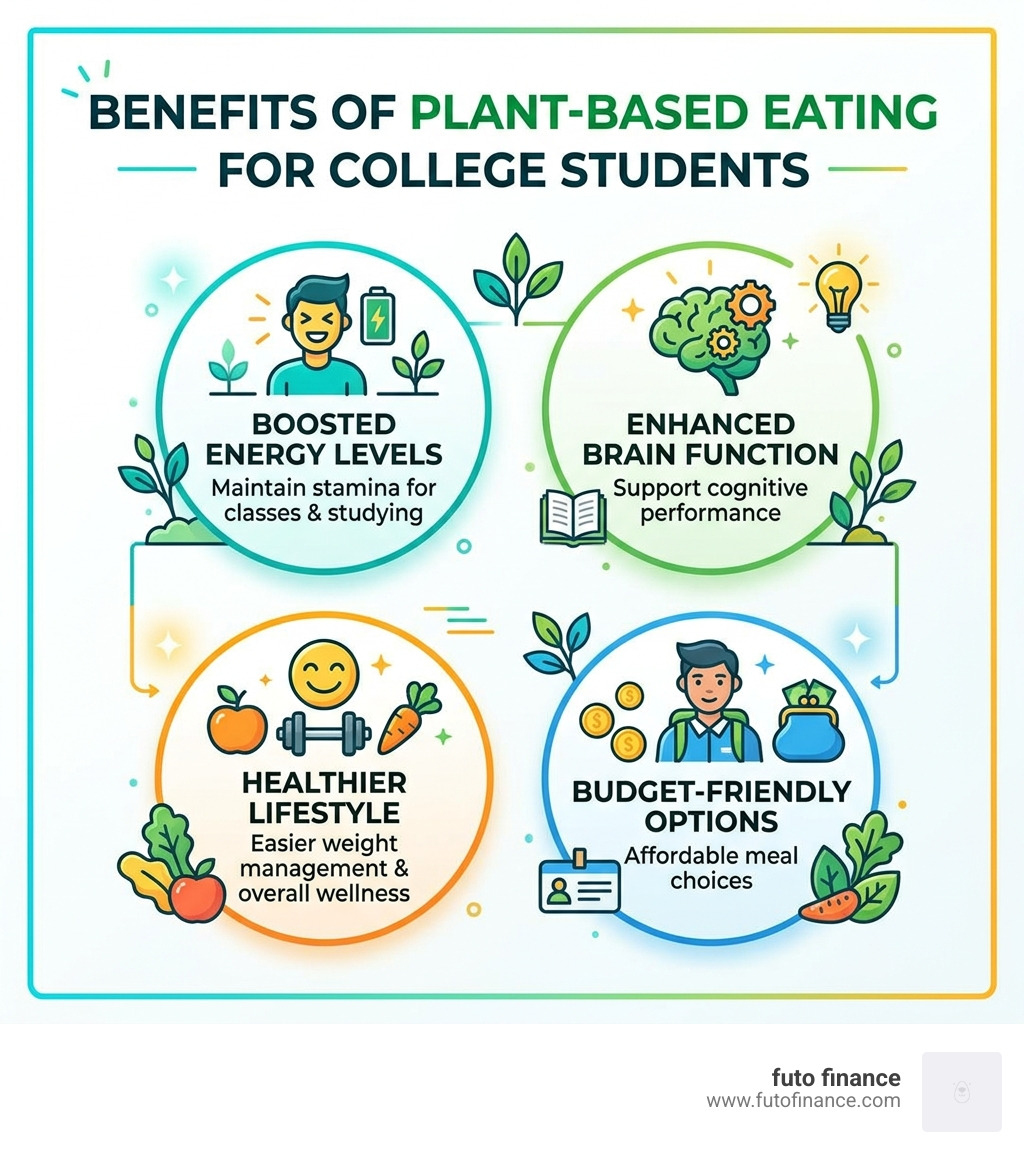
Assessing Campus Vegan-Friendliness Before You Apply
If you are currently in the process of applying to schools in April 2026, you have a unique opportunity to vet your future home for its “vegan vibes.” While academics and location are usually the top priorities, we believe that your ability to eat well shouldn’t be an afterthought.
Researching Dining Hall Menus
Most universities now host their dining menus online. This is the first place we recommend looking. Check for a dedicated nutrition page or a section on “special diets.” Look for transparency: Do they list every ingredient? Do they use clear college vegan meal plans icons?
For example, many top-tier schools provide a high level of detail. You can see an example of robust plant-based programming at Plant-Based Dining | Dining Services, where they even highlight an A+ rating from animal rights organizations for their vegan-friendliness.
Connecting with Student Organizations
Don’t just take the administration’s word for it. Search the university’s student life portal for animal rights groups or plant-based societies. Email them! Ask the current students: “How is the tofu scramble, really?” or “Does the dining hall actually have plant milk, or is it always empty?” These students are your best resource for the “real world” experience of being vegan on campus.
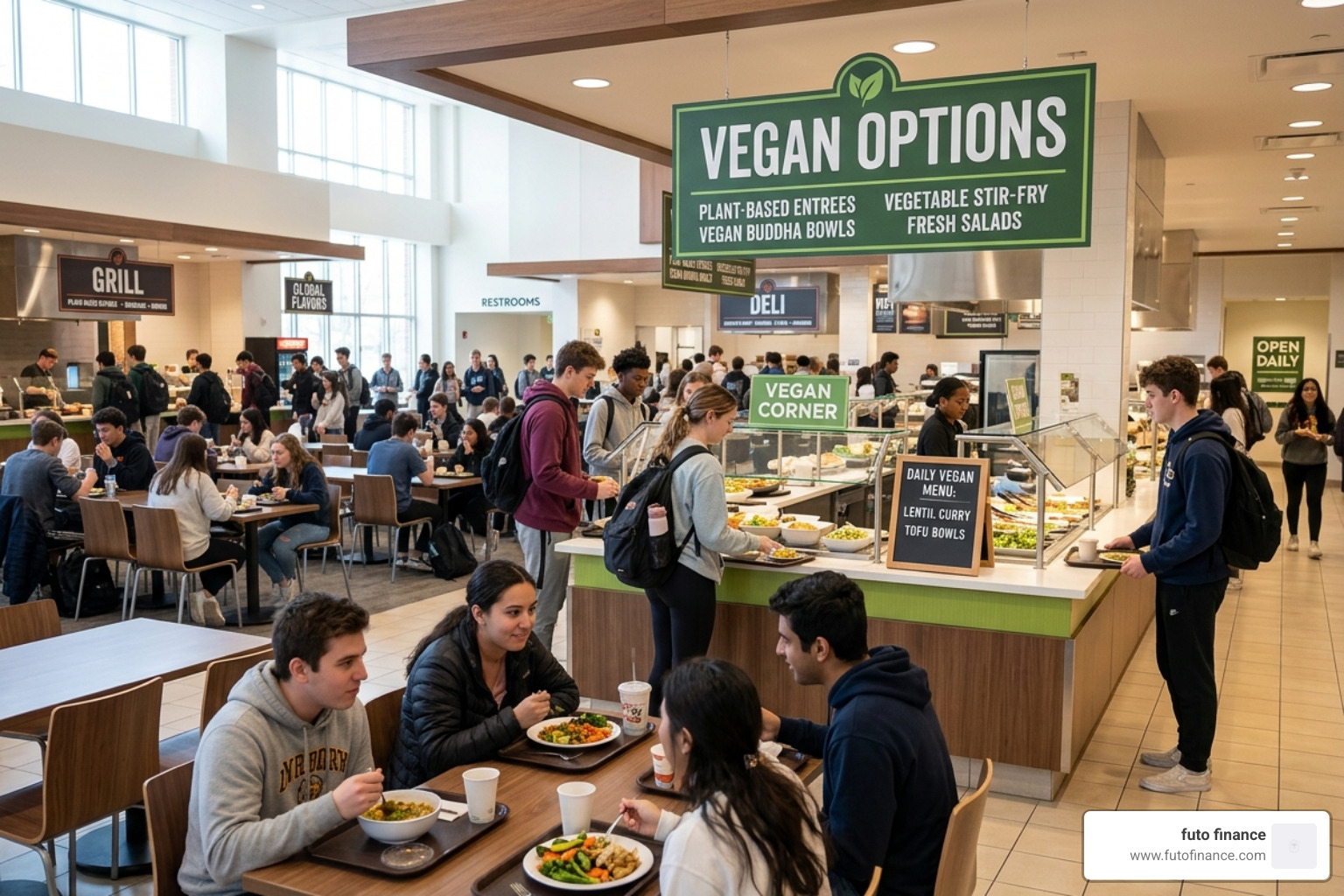
Navigating the Dining Hall with College Vegan Meal Plans
Once you’re on campus, you’ll likely be on a mandatory meal plan for your first year or two. This can feel like a “drag” if the options are mediocre, but with a little ingenuity, we can make it work.
Maximizing Your College Vegan Meal Plans
The secret to dining hall success is the “Build Your Own” approach. Don’t limit yourself to the pre-made vegan entree if it looks uninspiring.
- The Salad Bar Hack: This is your best friend. Use it for more than just lettuce. Grab chickpeas, sunflower seeds, beans, and tofu. If the main line is serving a pasta dish that isn’t vegan, take your own bowl of plain pasta and hit the salad bar for veggies and oil/vinegar to make your own “primavera.”
- “Just Ask” Policy: Many modern dining halls have a policy where you can ask the chef to customize a dish. If you see a stir-fry being made with chicken, ask if they can swap it for extra tofu or just double the veggies.
Identifying Vegan Options Daily
Universities like the University of Georgia have streamlined this process. They often use a yellow circle with a “V” symbol to denote vegan items across all stations—from the grill to the deli. You can see how they organize their daily offerings here: Vegetarian & Vegan Choices – UGA Dining Services.
We recommend checking the digital menu boards or the school’s dining app before you even walk through the doors. This saves you from the “hanger” of wandering around five different stations only to find out the vegan entree sold out ten minutes ago.
Dorm Room Essentials and Pantry Staples
Living in a dorm usually means you are working with a “kitchen” that consists of a micro-fridge and a desk. It’s not a five-star setup, but it’s enough to supplement your college vegan meal plans.
Budget-Friendly Staples for College Vegan Meal Plans
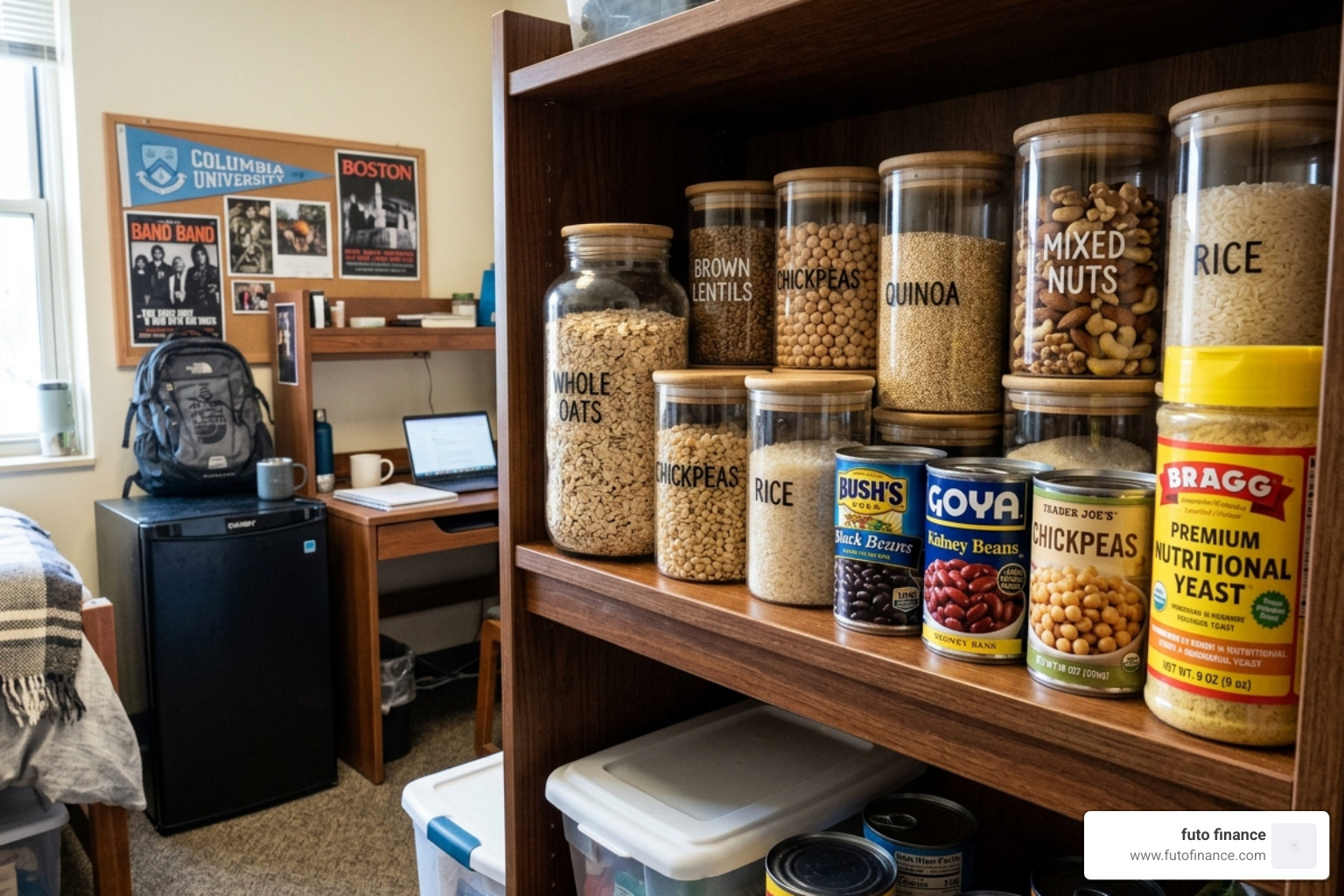
Keeping a “survival stash” in your room is essential for those late-night study sessions or days when the dining hall is closed. Focus on shelf-stable, high-protein items:
- Oats: The ultimate student fuel. A large container of oats is incredibly cheap and can be made in a microwave or as “overnight oats” in your mini-fridge.
- Canned Beans and Legumes: Chickpeas, black beans, and lentils are your protein powerhouses.
- Nutritional Yeast: We call this “nooch.” It’s a vegan’s best friend for adding a cheesy, savory flavor to popcorn, pasta, or even dining hall soup.
- Peanut Butter: High in healthy fats and protein, and it lasts forever.
Essential Dorm Cooking Equipment
Check your housing handbook first, as some schools are very strict about fire hazards. However, most allow these basics:
- Mini-Fridge: Essential for storing soy milk, vegan yogurt, and leftovers.
- Microwave: Not just for popcorn! You can cook entire meals, like steamed veggies or “baked” potatoes, in a microwave.
- Electric Kettle: Perfect for tea, coffee, and instant oatmeal or ramen.
- Airtight Containers: Essential for “borrowing” an extra apple or some carrot sticks from the dining hall for later.
Budget-Friendly Meal Ideas and Prep Strategies
A challenge of college life is time management. Between classes, labs, and social life, who has time to cook? This is where meal prepping becomes your secret weapon.
Easy Recipes for Busy Schedules
You don’t need a full kitchen to eat well. Here are three staples we love:
- One-Pot Lentil Chili: Estimated at just $2.50 per serving, this is a hearty meal that you can make in a dorm kitchen or even a slow cooker if allowed.
- Vegan Burrito Bowls: Use microwaveable rice, a can of black beans, some salsa, and avocado. It’s filling, healthy, and costs about $3.00.
- Chickpea Salad: Mash a can of chickpeas with some vegan mayo (or avocado), mustard, and spices. Eat it on bread or with crackers. It’s the vegan version of tuna salad and costs roughly $2.50 per serving.
Time-Saving Prep Tips
- Batch Cooking: If you have access to a communal kitchen, use it on Sunday. Cook a giant pot of rice or quinoa and roast a tray of vegetables. Store them in your mini-fridge to mix and match during the week.
- Seasonal Shopping: When you do go grocery shopping, look for what’s in season. Statistics show that shopping at farmer’s markets can save you about $1-$2 per pound on fruits and vegetables compared to traditional grocery stores.
- Frozen is Fine: Frozen fruits and veggies are just as nutritious as fresh ones, often cheaper, and they won’t rot in your fridge if you forget about them during finals week.
Maintaining Nutritional Balance and Well-being
Eating vegan is naturally healthy, but “Oreos are vegan” is a dangerous trap for students. To keep your brain sharp for exams, you need to focus on nutrient density.
Fueling Your Academic Performance
Studies show that vegan meals rich in fiber, protein, and antioxidants help improve memory, focus, and overall mental energy.
- B12 and Vitamin D: These are the two big ones. Most vegans should take a B12 supplement, as it’s hard to get from plants alone. If you’re at a school in a cloudy climate (looking at you, Pacific Northwest or New England), a Vitamin D supplement is also a good idea.
- Iron and Vitamin C: To maximize iron absorption from beans and greens, always eat them with a source of Vitamin C (like a squeeze of lemon or some bell peppers).
- Omega-3s: Flaxseeds, chia seeds, and walnuts are great for brain health. Throw a spoonful of ground flax into your morning oatmeal.
You can find more guidance on balancing these nutrients through university resources like the Vegetarian & Vegan | University of Wisconsin – Stout page, which offers dietitian-backed advice for student diners.
Beyond the Plate: General Wellness
- Hydration: Carry a reusable water bottle. It’s better for the planet and your wallet.
- Exercise: As Elle Woods said, exercise gives you endorphins. Whether it’s the school gym or just walking across a large campus, keep moving.
- Mental Health: College is stressful. Don’t let your diet become another source of anxiety. If you “mess up” and eat something non-vegan by accident, be kind to yourself.
Frequently Asked Questions about College Veganism
How can I eat vegan if my college has limited options?
First, don’t panic. Almost every dining hall has the “building blocks” of a vegan meal: pasta, rice, beans, and a salad bar. Use these to create your own bowls. Secondly, supplement with your dorm stash. If the dining hall only has plain white rice, bring a small container of your own beans and some hot sauce to give it life. Finally, use your voice! Most dining services are very responsive to student feedback. If you and ten friends ask for soy milk, they will likely start stocking it.
What are the best cheap vegan snacks for late-night studying?
- Hummus and Carrots: Crunchy, filling, and healthy.
- Popcorn with Nutritional Yeast: A savory, low-calorie snack.
- Apples and Peanut Butter: The classic combo for a reason.
- Roasted Chickpeas: You can buy these or make them yourself for a protein-packed crunch.
Is it possible to stay vegan on a mandatory meal plan?
Absolutely. It requires a bit more intentionality, but it is very doable. The key is to identify the “safe” daily staples (like the bean of the day or the salad bar) and get to know the staff. If you are polite and ask questions, the dining hall workers are often happy to help you find what you need or even plate a special meal for you.
Conclusion
At Futo Finance, we believe that being a student is hard enough without having to worry about where your next affordable, plant-based meal is coming from. By utilizing college vegan meal plans effectively, stocking a smart dorm pantry, and doing a little bit of prep, you can thrive on a vegan diet without spending a fortune.
This is a time for growth and discovery. Your diet is a way to fuel your body and mind for the incredible journey of university life. Stay curious, stay fed, and don’t be afraid to ask for that extra scoop of beans!

Melo Rodrigues is the founder of Futo Finance and a specialist in student-budget veganism. Having mastered the art of plant-based cooking in a university setting, Melo is dedicated to helping students achieve nutritional excellence without financial strain. Through Futo Finance, Melo shares lab-tested strategies for eating smart and living sustainably on a budget.
