
No Meat No Problem: Your Simple Vegan Grocery List
Your Simple Vegan Grocery List: The Essentials at a Glance
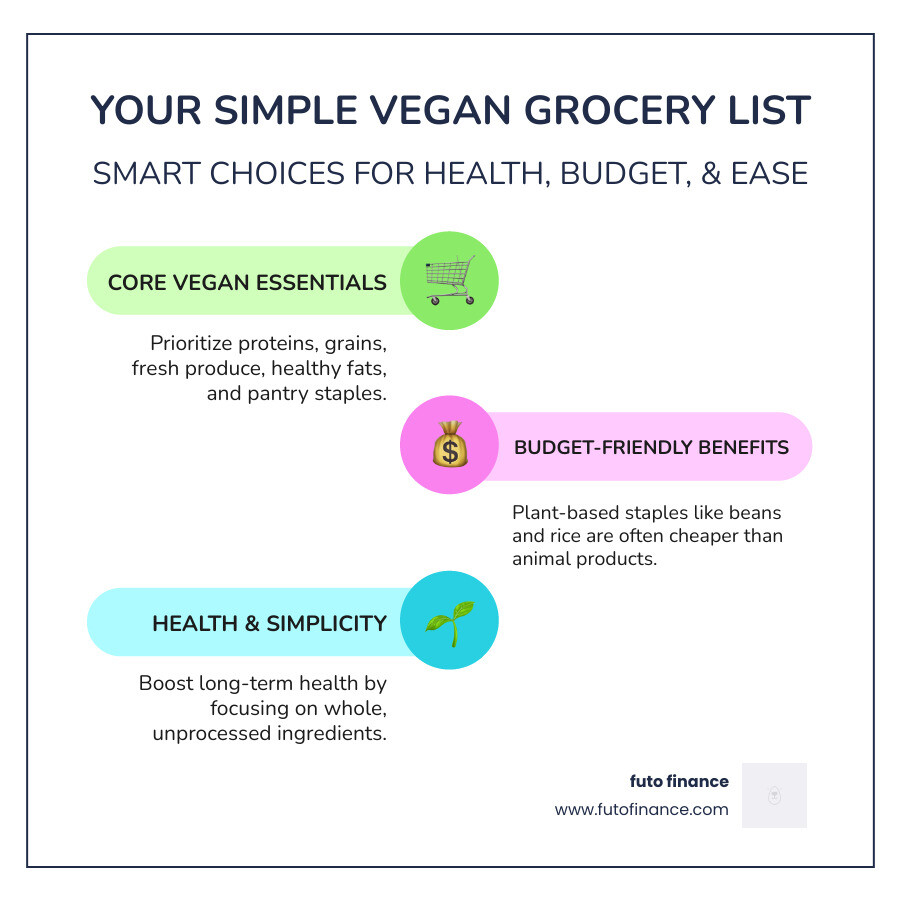
A simple vegan grocery list covers these core categories:
| Category | Key Items |
|---|---|
| Proteins | Lentils, chickpeas, tofu, tempeh, black beans |
| Grains | Brown rice, oats, quinoa, whole wheat pasta |
| Vegetables | Spinach, kale, sweet potatoes, bell peppers, broccoli |
| Fruits | Bananas, frozen berries, apples, oranges |
| Healthy Fats | Peanut butter, sunflower seeds, avocado |
| Pantry Staples | Nutritional yeast, canned tomatoes, soy sauce, olive oil |
| Plant Milks | Oat milk, soy milk, almond milk |
Starting a vegan diet as a student can feel like a lot. You open the fridge, it’s empty, and you have no idea where to begin.
Here’s the thing: a plant-based diet doesn’t have to be complicated or expensive. In fact, most vegans report spending less at the grocery store than before — not more. Whole-food staples like lentils, beans, rice, and oats are some of the cheapest items in any supermarket.
The key is knowing what to buy and how to build meals around it — without wasting food or blowing your budget.
This guide breaks it all down into simple, student-friendly steps.
Building Your Simple Vegan Grocery List Without Overwhelm
Walking into a supermarket in April 2026 can be a sensory overload. Between the flashing digital displays and the endless aisles of “plant-based” processed snacks, it’s easy to lose sight of the basics. We’ve all been there: you go in for a carton of oat milk and leave with three types of vegan jerky and a “cheese” made of fermented air, wondering where your budget went.
The secret to a simple vegan grocery list is starting with the perimeter of the store—the produce section—and then hitting the bulk aisles. By focusing on whole foods, you aren’t just saving money; you’re significantly improving your long-term health.
Research has shown that diet choices have a massive impact on our hearts. For instance, each 50 g/day higher intake of processed meat is associated with an 18% higher risk of coronary heart disease. Even unprocessed red meat isn’t off the hook, with a 50 g/day increase linked to a 9% higher risk of coronary heart disease. By swapping these for plant proteins, we are actively reducing our intake of saturated fats and cholesterol.
Strategies for the Savvy Student
To build your list without the stress, we recommend these beginner-friendly strategies:
- Shop with a Plan: Never go to the store hungry. We call that “danger shopping.” Sit down on a Sunday, look at your calendar, and plan five basic meals.
- Embrace “Value” Ranges: Most supermarkets have their own budget lines for pasta, rice, and canned beans. These are often identical in quality to name brands but half the price.
- Buy in Bulk: Grains, nuts, and dried legumes are significantly cheaper when bought in large quantities. Plus, it’s better for the planet!
- The 80/20 Rule: Aim to fill 80% of your cart with whole, unprocessed foods (the stars of your simple vegan grocery list) and leave 20% for those fun convenience items like vegan nuggets or ice cream. This keeps your diet sustainable and your soul happy.
Prioritizing Proteins and Grains in a Simple Vegan Grocery List
One of the biggest myths we hear is the “where do you get your protein?” question. Let’s set the record straight: the average vegan gets about 70% more protein than they actually need daily. Even omnivores over-consume it, getting about 80% more than required.
The beauty of plant proteins is that they usually come packed with fiber—something animal products completely lack. Take tempeh, for example. Just 3 ounces of tempeh contains 18g of protein and 6g of fiber. That’s a nutritional powerhouse that keeps you full during long lectures.
When building your simple vegan grocery list, prioritize these staples:
- Tofu & Tempeh: Tofu is the ultimate chameleon. You can scramble it like eggs, fry it for a stir-fry, or blend silken tofu into sauces. Tempeh is firmer and has a nutty, fermented flavor that works great in sandwiches.
- Lentils & Chickpeas: These are the workhorses of a student kitchen. Red lentils cook in 15 minutes and “melt” into delicious dahls, while chickpeas can be mashed into a “tuna” style salad or roasted for a crunchy snack.
- Seitan: Often called “wheat meat,” seitan is incredibly high in protein and has a chewy texture that satisfies even the most dedicated former meat-eaters.
- Whole Grains: Don’t just stick to white rice. Quinoa is a “complete” protein, meaning it has all nine essential amino acids. Buckwheat and farro add great texture to salads.
- Sprouted Bread: Brands like Ezekiel are fantastic because sprouting the grains makes the nutrients easier for your body to absorb and the bread easier to digest.
More info about vegan nutrition can help you understand how to balance these items to ensure you’re getting all your micronutrients, including B12 and iron.
Fresh and Frozen Produce for Your Simple Vegan Grocery List
If the proteins are the engine of your diet, produce is the fuel. We want a “rainbow on a budget.”
The Leafy Green Rule: We should aim for at least four servings of vegetables a day. Spinach and kale are nutritional heavyweights. A pro tip: buy the big bags of spinach. Even if it looks like a lot, we all know it wilts down to about a tablespoon once cooked!
Fresh vs. Frozen: Don’t sleep on the freezer aisle. Frozen fruits and vegetables are often frozen at peak freshness, meaning they can actually be more nutrient-dense than “fresh” produce that has been sitting on a truck for a week.
- Frozen Berries: Perfect for smoothies or topping your morning oats. They are much cheaper than fresh berries out of season.
- Sweet Potatoes: These are a student’s best friend. They last for weeks in a cool, dark place and are packed with Vitamin A.
- Bananas: Buy them in bulk. If they get too spotty, peel them and freeze them for “nice cream” or smoothies.
- Avocados: While they can be pricey, they provide essential healthy fats that are great for brain health during exam season.

Affordable Staples and Budget-Friendly Shopping Tips
Being vegan isn’t an “elitist” lifestyle—it’s actually one of the most economical ways to eat. Let’s look at the math. In April 2026, you might spend $10 on a small pack of chicken breasts that provides maybe four servings. For that same $10, you can buy ten cans of beans (or a massive bag of dried ones) that will yield 25+ servings.
| Protein Source | Approx. Cost per Serving | Servings per $10 |
|---|---|---|
| Chicken Breast | $2.50 | 4 |
| Canned Beans | $0.40 | 25 |
| Dried Lentils | $0.20 | 50 |
| Tofu | $0.75 | 13 |
To keep your simple vegan grocery list truly affordable, we recommend focusing on these “pantry heroes”:
- Nutritional Yeast: Affectionately known as “nooch,” this flaky yellow powder gives a cheesy, nutty flavor to everything. It’s also usually fortified with B12.
- Peanut Butter: A cheap source of protein and healthy fats. Just check the label to make sure it’s just peanuts and salt—no palm oil or added sugar.
- Flax and Chia Seeds: These are your “egg” replacements. Mix one tablespoon of ground flax or chia with three tablespoons of water, let it sit for five minutes, and you have a “flax egg” for baking.
- Store Brands: Always look at the bottom shelf. That’s where the store-brand canned tomatoes, pasta, and spices live.
- Unit Pricing: Look at the small text on the shelf tag that tells you the price per ounce or gram. Often, the larger bag is cheaper in the long run, even if the initial price is higher.
For a deeper dive into how these choices affect your long-term wellness, check out this Scientific research on the health benefits of plant-based diets.
How to Read Labels and Avoid Hidden Animal Products
As you build your simple vegan grocery list, you’ll start to realize that some animal products are masters of disguise. The “Ingredients” list is your best friend.
Here are the most common “hidden” non-vegan ingredients to watch out for:
- Whey and Casein: Derived from milk, often found in protein bars and “non-dairy” creamers that aren’t actually vegan.
- Gelatin: Made from animal bones/skin, found in gummy candies and some yogurts.
- Lanolin: Sheep’s wool grease, often used as a source for Vitamin D3 in fortified cereals.
- Carmine: A red dye made from crushed beetles (yikes!). Look for it in red candies or juices.
- Confectioner’s Glaze (Shellac): Made from beetle secretions, used to make candies shiny.
- Honey: While some people have different views, strict veganism excludes honey. Look for agave or maple syrup instead.
The “Accidentally Vegan” Joy: On the flip side, many things are vegan without trying to be! Many brands of dark chocolate, spicy chips, and even some refrigerated biscuits are vegan. Also, keep an eye out for the “V” symbol or “Certified Vegan” labels, which make shopping much faster.
Maximizing Shelf Life and Minimizing Food Waste
There is nothing more tragic than buying a beautiful head of kale only to find it turned into a slimy mess three days later. As students, we can’t afford to throw money in the trash.
Minimizing waste isn’t just good for our wallets; it’s vital for the planet. Did you know that meat-heavy diets cause 40% more climate emissions than plant-based ones? By eating what we buy, we further reduce our environmental footprint.
Freshness Hacks
- Nut and Seed Storage: Dry nuts and seeds can last up to 6 months when stored in the fridge, compared to just a few weeks in a warm pantry where their oils can go rancid.
- Reviving Vegetables: If your carrots or broccoli look a bit limp, trim the ends and place them in a glass of water in the fridge. They’ll soak up the moisture and crisp right back up!
- Leafy Green Care: Wash your greens, spin them dry, and store them in a container with a damp paper towel. This keeps them fresh for up to a week.
- Airtight Containers: Invest in a few good glass jars. They keep pests out of your grains and keep your pantry looking like a Pinterest board.
- The Freezer is Your Friend: If you notice veggies are about to turn, chop them up and freeze them. They’re perfect for a future soup or stir-fry.
Quick Meal Ideas Using Your Grocery Haul
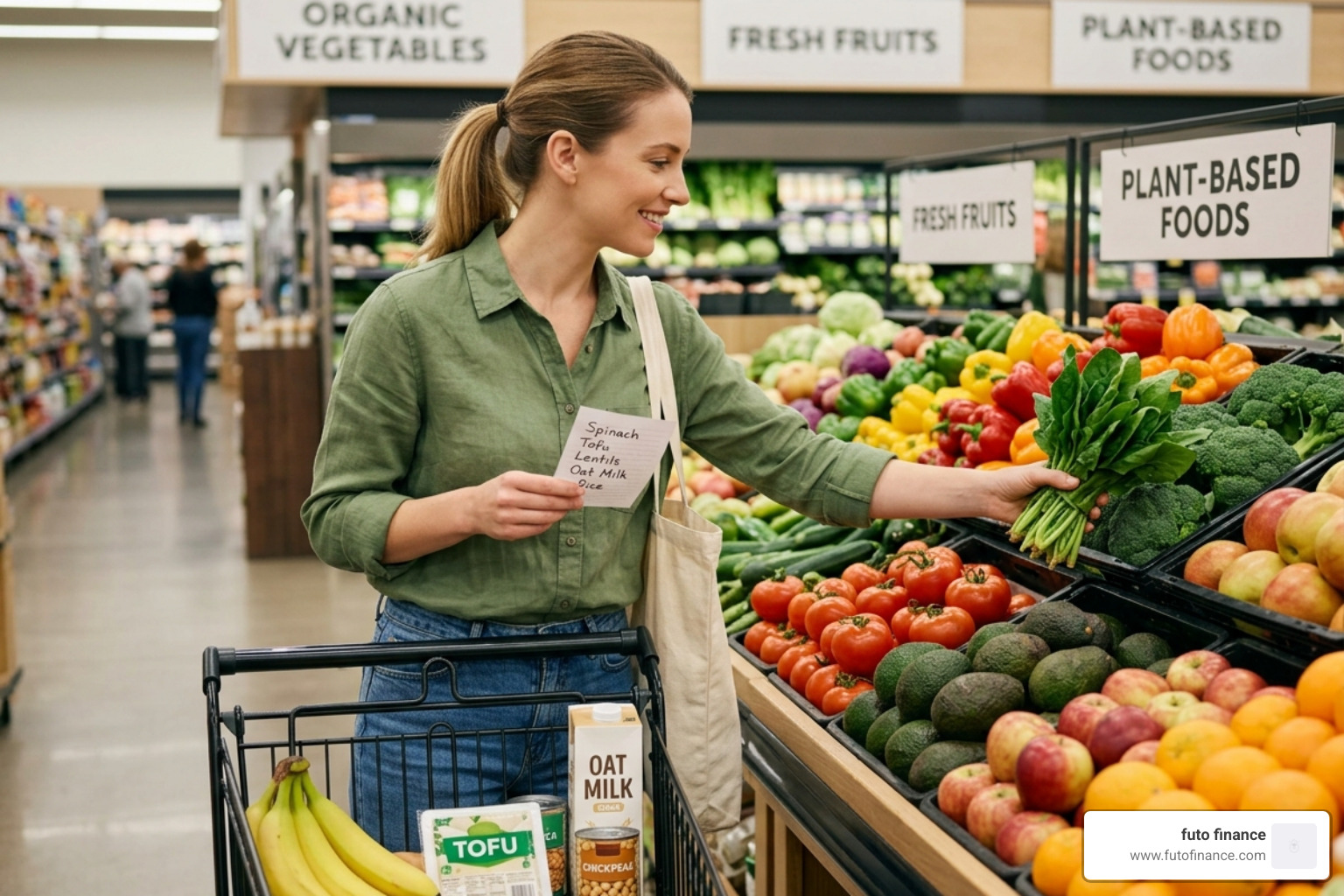
Now that we have our simple vegan grocery list sorted, what do we actually cook? Here are five meals you can whip up in a dorm or small apartment in under 20 minutes:
- The 15-Minute Grain Bowl: Use that batch-cooked quinoa or brown rice as a base. Top with canned black beans, frozen corn (thawed), fresh spinach, and a big dollop of hummus or salsa.
- Chickpea “Tuna” Sandwiches: Mash a can of chickpeas with a fork. Mix in vegan mayo, a splash of lemon juice, some mustard, and chopped pickles. Put it on sprouted bread with some greens.
- Lentil Bolognese: Sauté some onions and garlic, add a jar of marinara sauce and a can of brown lentils (drained). Serve over whole wheat pasta with a heavy sprinkle of nutritional yeast.
- Sheet Pan Fajitas: Slice up bell peppers and onions. Toss them with strips of tofu or seitan, olive oil, and taco seasoning. Bake at 400°F (200°C) for 20 minutes. Serve in tortillas.
- Overnight Oats: Before bed, mix 1/2 cup oats with 1/2 cup oat milk, a spoonful of chia seeds, and some frozen berries. In the morning, you have a grab-and-go breakfast that’s creamy and delicious.
Frequently Asked Questions about Vegan Shopping
Is a vegan diet more expensive for university students?
Absolutely not! While “luxury” vegan items like high-end steaks or artisanal cheeses can be pricey, the core of a vegan diet—beans, rice, oats, and seasonal produce—is significantly cheaper than meat and dairy. By shopping store brands and buying in bulk, most students find they save $20-$40 a week on groceries.
How do I ensure I get enough protein without meat?
By eating a variety of plant foods! If you include a source of protein in every meal—like beans in your lunch and tofu in your dinner—you will easily meet your requirements. Even vegetables like broccoli and spinach contain protein!
What are the absolute must-have pantry essentials for beginners?
If we had to pick just five, they would be:
- Canned or dried chickpeas (versatile and cheap).
- Brown rice or Quinoa (a solid base for any meal).
- Nutritional yeast (for that cheesy fix).
- Peanut butter (for quick energy and snacks).
- Soy sauce or Tamari (to add “umami” flavor to your cooking).
Conclusion
Transitioning to a plant-based lifestyle in April 2026 is easier than it has ever been. By using a simple vegan grocery list, you’re not just saving money; you’re investing in your health and the future of the planet.
At Futo Finance, we believe that being a student shouldn’t mean surviving on instant noodles (unless they’re vegan and topped with fresh veggies!). Our mission is to provide you with the tools, recipes, and tips to make veganism affordable and accessible.
Ready to level up your kitchen game? Start your vegan challenge today and join a community of students proving that no meat really is no problem. Whether you’re in it for the animals, your heart health, or your bank account, we’re here to support every step of your journey.
Happy shopping, and even happier eating!

Melo Rodrigues is the founder of Futo Finance and a specialist in student-budget veganism. Having mastered the art of plant-based cooking in a university setting, Melo is dedicated to helping students achieve nutritional excellence without financial strain. Through Futo Finance, Melo shares lab-tested strategies for eating smart and living sustainably on a budget.
