
Microwave Vegan Breakfast Potatoes: The Lazy Chef’s Secret Weapon
The Fastest Way to Make Microwave Vegan Breakfast Potatoes
Microwave vegan breakfast potatoes are one of the quickest, cheapest breakfasts a student can make — ready in under 20 minutes, start to finish.
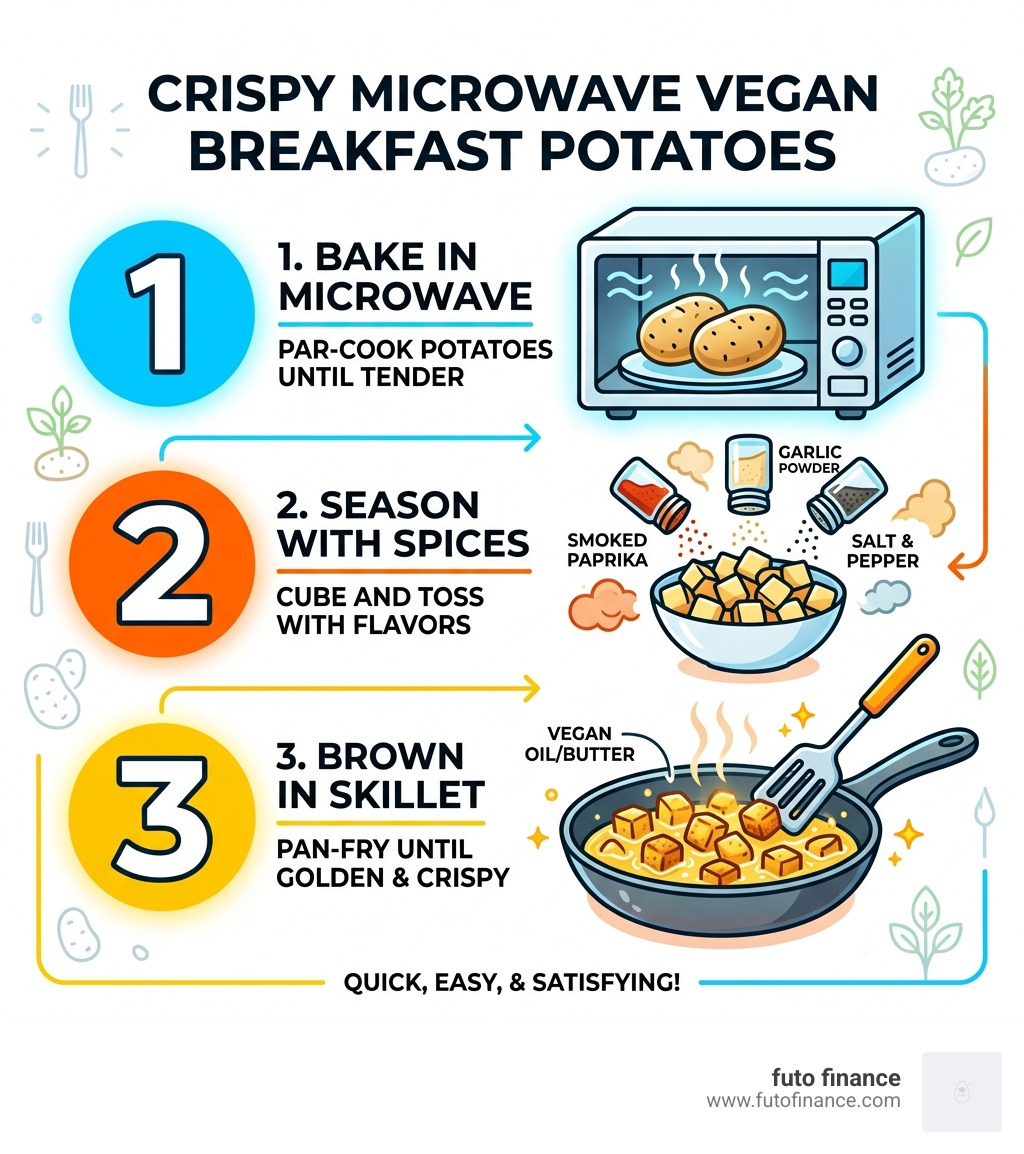
Here’s the fastest method:
- Pierce potatoes all over with a fork
- Microwave on high for 4-6 minutes (flip halfway through)
- Cut into bite-sized cubes
- Season with garlic powder, smoked paprika, salt, and pepper
- Brown in a skillet with vegan butter or oil for 2-4 minutes per side
Total time: ~20 minutes. Traditional oven method: 30-60 minutes.
Most breakfast potato recipes assume you have half an hour to spare. You don’t. Between lectures, deadlines, and a tight budget, you need something fast, filling, and cheap.
The trick? Par-cooking your potatoes in the microwave first. This one step cuts your total cooking time in half — and the results are just as crispy and satisfying as anything you’d get at a diner.
Potatoes are also genuinely nutritious — packed with fiber, Vitamin K, and complex carbs to keep you going through a long morning. And at under $2 a serving, they’re hard to beat.
Why Microwave Vegan Breakfast Potatoes are a Student Game-Changer
In university living, time is the ultimate currency. We’ve all been there: waking up ten minutes before a 9:00 AM seminar with a stomach that’s growling louder than the professor’s lecture. This is where microwave vegan breakfast potatoes step in as the ultimate hero.
Efficiency is the name of the game here. While a traditional oven-baked potato can take anywhere from 45 to 60 minutes to reach peak tenderness, the microwave achieves this in roughly 10% of the time. By the time you’ve finished brushing your teeth and finding a clean pair of socks, your “base” potato is already cooked and ready for a quick crisp-up.
Beyond speed, potatoes are a nutritional powerhouse that often gets an unfair reputation. They are a fantastic source of complex carbohydrates, providing the sustained energy needed for long study sessions. According to Scientific research on potato health benefits, they are naturally fat-free, cholesterol-free, and low in sodium. Even better for us plant-based eaters, they are an excellent source of Vitamin C and Vitamin B6.
One of the most overlooked benefits of the humble potato is its Vitamin K content, which plays a crucial role in bone health. When we keep the skins on—which we highly recommend for that rustic breakfast feel—we also maximize our fiber intake. This keeps us full for hours, preventing that mid-morning vending machine raid.
From a budget perspective, potatoes are the undisputed kings of the grocery aisle. Whether you prefer the fluffy texture of a Russet, the creamy “buttery” feel of a Yukon Gold, or the natural sweetness of a sweet potato, you can usually buy a massive bag for the price of a single fancy coffee.
Step-by-Step Guide to the Perfect Spud
Achieving the perfect texture—fluffy on the inside and “crack-like” crispy on the outside—requires a specific technique. We don’t just throw a potato in a box and hope for the best; we follow a process that ensures even cooking and safety.
1. Preparation and Washing
Start by scrubbing your potatoes under cold running water. Since we aren’t peeling them (to save time and nutrients!), you want to make sure all the dirt from the farm is gone. Pat them dry with a clean towel.
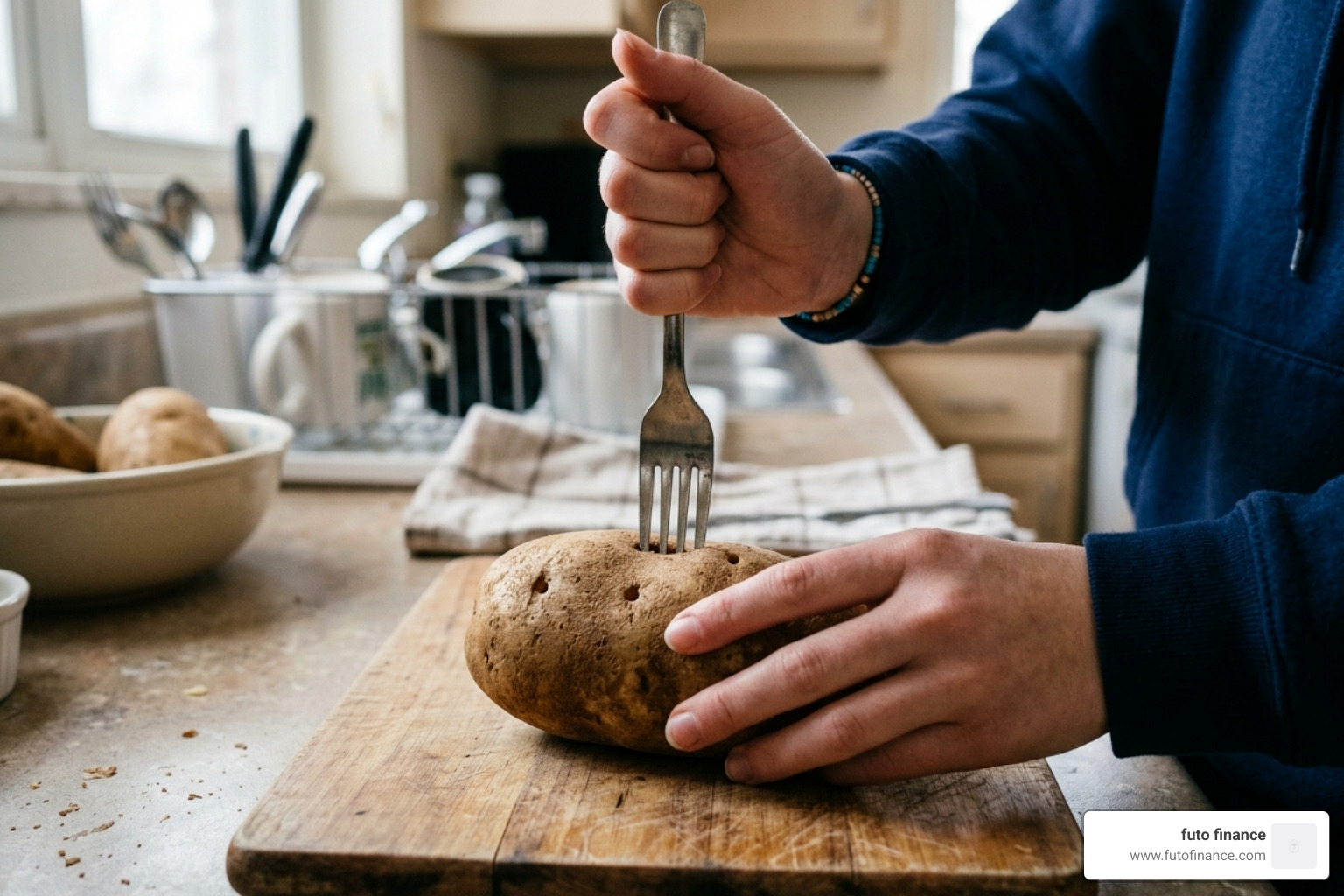
2. The Great Piercing
This is the most critical safety step. Use a fork to poke holes all over the potato—aim for about 6 to 8 deep pricks. This allows steam to escape. Without these vents, the internal pressure can build up, leading to a “potato explosion” that will leave your microwave looking like a starch-filled crime scene.
3. The Damp Paper Towel Trick
For the best results, wrap each potato in a damp paper towel. This creates a mini-steaming environment, ensuring the skin doesn’t get tough and leathery while the inside stays moist.
4. Microwaving
Place your potatoes on a microwave-safe plate.
- For 1-2 medium potatoes: Microwave on high for 4-6 minutes.
- For larger potatoes (around 350g each): You may need up to 10 minutes total.
- Crucial Tip: Always flip the potatoes halfway through the cooking time to ensure the bottom doesn’t get hard or overcooked.
5. The Fork Test
You know they are done when a fork or knife slides into the center with zero resistance. If you’re a kitchen nerd with a thermometer, you’re looking for an internal temperature of about 200°F (93°C).
Prepping Your Microwave Vegan Breakfast Potatoes
Once your potatoes are par-cooked and slightly cooled, it’s time to prep them for the skillet.
Choosing Your Variety:
- Russet Potatoes: These are the classic choice. They have a high starch content, which results in a very fluffy interior and a skin that crisps up beautifully.
- Yukon Gold: These are our personal favorites for a “lazy” morning. They have a naturally buttery flavor and a thinner skin that doesn’t really need peeling.
- Red Potatoes: These are waxy and hold their shape extremely well. If you like distinct, firm cubes in your breakfast hash, go with red.
To Peel or Not to Peel? We are firmly in the “skin-on” camp. Not only does it save you five minutes of tedious work, but the skin contains more than half of the total fiber and a significant portion of the nutrients. Plus, the skin provides a wonderful textural contrast once browned.
Uniform Dicing: For the best microwave vegan breakfast potatoes, consistency is key. Aim for 3/4-inch to 1-inch cubes. If the pieces are too small, they might turn into mash in the pan; if they are too large, they won’t get that golden-brown crust on all sides quickly enough.
Achieving Maximum Crispiness and Flavor
The microwave does the heavy lifting of cooking the starch, but the skillet provides the soul of the dish. To get that diner-style crunch, you need to transition from the microwave to the stove.
| Method | Prep Time | Cook Time | Total Time | Texture Result |
|---|---|---|---|---|
| Traditional Oven | 5 mins | 45-60 mins | 50-65 mins | Crispy but slow |
| Microwave Only | 2 mins | 6-10 mins | 8-12 mins | Soft/Steamed |
| The Futo Secret (Hybrid) | 5 mins | 15 mins | 20 mins | Ultra-Crispy & Fluffy |
The Browning Process
Heat a skillet (cast iron is best, but non-stick works too) over medium-high heat. Add your fat of choice. For a rich flavor, use a tablespoon of vegan butter. For a high-heat sear, avocado oil or a neutral vegetable oil is excellent.
If you are looking for more info about vegan nutrition, choosing heart-healthy oils like olive or avocado oil can add beneficial fats to your morning routine.
Seasoning Profiles
Don’t be shy with the spices! Because potatoes are neutral, they can carry almost any flavor profile:
- The Standard: Salt, black pepper, garlic powder, and smoked paprika.
- Southwest Style: Add cumin, chili powder, and a pinch of cayenne for a “bada-bing” kick.
- Mediterranean: Use dried oregano, rosemary, and a squeeze of fresh lemon juice at the end.
- The “Cheesy” Route: Toss with a generous amount of nutritional yeast for a nutty, savory finish.
Serving Suggestions
These potatoes aren’t just a side dish; they are the foundation of a great meal. Pair them with:
- A silken tofu scramble with spinach and peppers.
- Sliced avocado and a drizzle of sriracha.
- Vegan “bacon” bits or sautéed seitan.
- A dollop of vegan sour cream or a quick homemade salsa.
The Secret to Crispy Microwave Vegan Breakfast Potatoes
The biggest mistake students make is “pan-fiddling.” We get it—you’re hungry and you want to move things around. But the secret to a golden crust is patience.
Once you drop your cubed potatoes into the hot oil or butter, spread them out so they aren’t crowded. If the pan is too full, the potatoes will steam instead of fry. Leave them undisturbed for at least 4-5 minutes. This allows the sugars to caramelize and form that glorious crust.
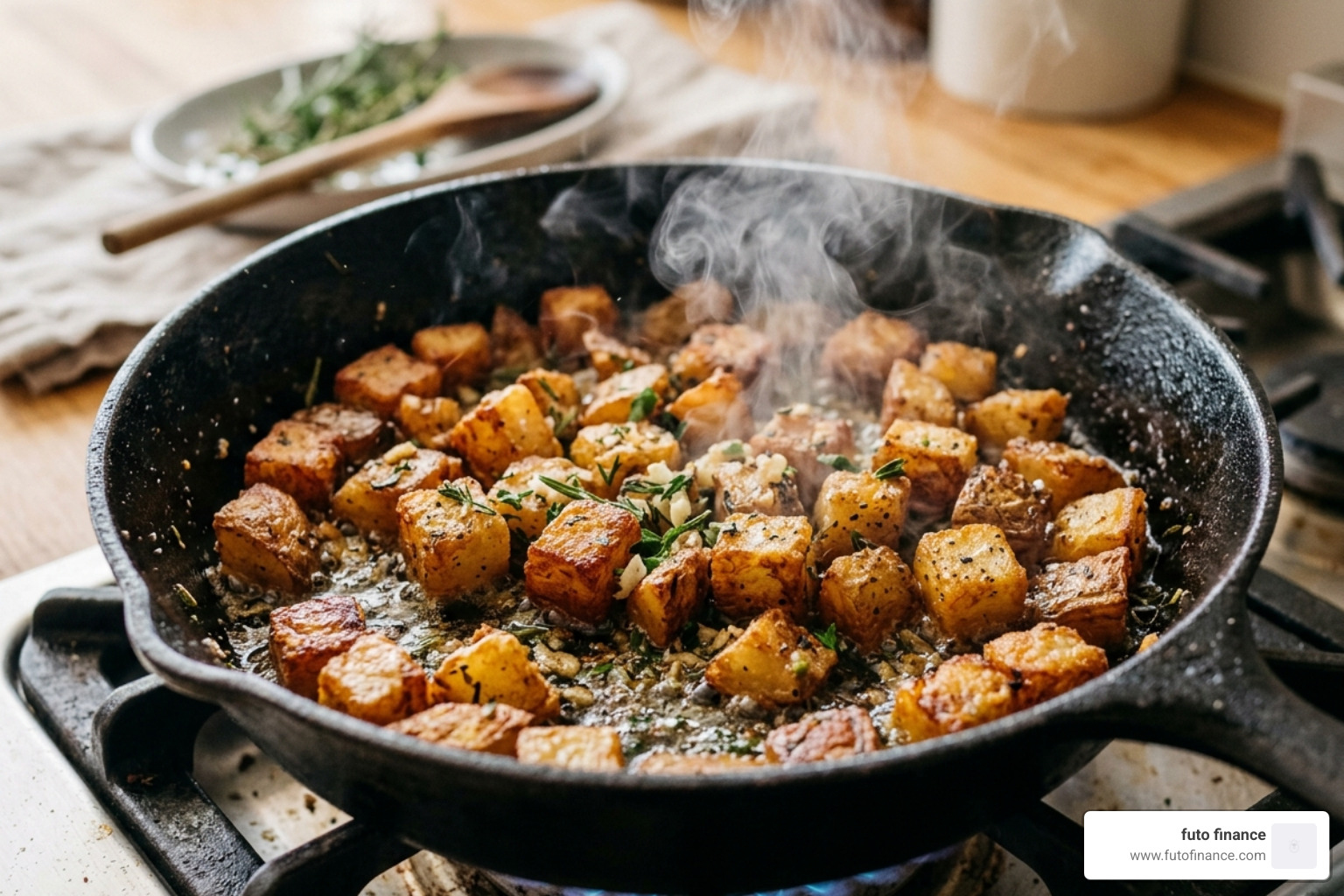
Flip them once they are brown on the bottom, and repeat for another 3-4 minutes. If you want them “extra,” you can spray the tops with a little bit of avocado oil before flipping to help the seasonings stick and the edges shatter.
Frequently Asked Questions
How do I prevent potatoes from exploding?
As mentioned earlier, the “Great Piercing” is your best defense. Use a fork or a sharp knife to create at least half a dozen deep vents. This allows the steam pressure to release. Also, avoid overcooking; start with 4 minutes and check the tenderness before adding more time in 1-minute increments.
Can I make these potatoes oil-free?
Yes! If you are following a Whole Foods Plant-Based (WFPB) diet or just trying to cut back on fats, you have options. Instead of oil, you can toss your par-cooked cubes in a little bit of aquafaba (the liquid from a can of chickpeas) or vegetable stock. This provides enough moisture for the spices to stick.
For the browning stage, use a high-quality non-stick pan or an air fryer. If using an oven, line your tray with parchment paper to prevent sticking without the need for grease.
How should I store and reheat leftovers?
If you’re a meal-prep master, you can make a giant batch of these on Sunday. Store them in an airtight container in the fridge for up to 5-7 days.
To maintain that crispiness when reheating, avoid the microwave. While the microwave was our friend for the initial cook, it will make leftovers soggy. Instead, toss them in an air fryer at 375°F (190°C) for 5-6 minutes, or throw them back into a hot skillet for a few minutes until they “wake up” and get crunchy again.
Conclusion
Mastering the microwave vegan breakfast potatoes technique is a rite of passage for any plant-based student. It proves that you don’t need a massive budget or hours of free time to eat like royalty. By leveraging the speed of the microwave and the high-heat finish of the skillet, you get a meal that is nutritious, incredibly cheap, and satisfying enough to get you through the toughest exams.
At Futo Finance, we believe that university life should be about more than just surviving on instant noodles. With a few simple tricks and the right “secret weapons” in your kitchen, you can thrive on a vegan diet without breaking the bank. For more info about student finance and how to live your best vegan life on a budget, stick with us for more tips and recipes.
Now, go grab a spud and get cooking—your 9:00 AM self will thank you!

Melo Rodrigues is the founder of Futo Finance and a specialist in student-budget veganism. Having mastered the art of plant-based cooking in a university setting, Melo is dedicated to helping students achieve nutritional excellence without financial strain. Through Futo Finance, Melo shares lab-tested strategies for eating smart and living sustainably on a budget.
