
How to Survive University on a Vegan Diet
Eating Vegan at University Is Easier Than You Think
Easy vegan recipes university students can actually make — even in a tiny dorm room with just a microwave — include:
- Overnight oats — mix oats, plant milk, and toppings the night before; no cooking needed
- Black bean tacos — ready in 20 minutes using canned beans and a microwave
- Hummus veggie wraps — no cooking, just assemble and eat
- Peanut butter banana oatmeal — under $2 per serving, takes 5 minutes
- Chickpea salad — canned chickpeas, veggies, lemon juice; no heat required
- Microwave sweet potato chili — filling, cheap, and done in under 15 minutes
- Lentil dhal — one pot, store-cupboard ingredients, freezes well
Juggling lectures, deadlines, and a social life is hard enough. Adding “cook healthy food on a tiny budget” to that list can feel overwhelming.
But here’s the thing: eating vegan at university might actually be the easiest — and cheapest — way to feed yourself well.
Around 14% of college students now follow a plant-based diet, compared to just 4% of American adults overall. Students are leading the shift, and for good reason.
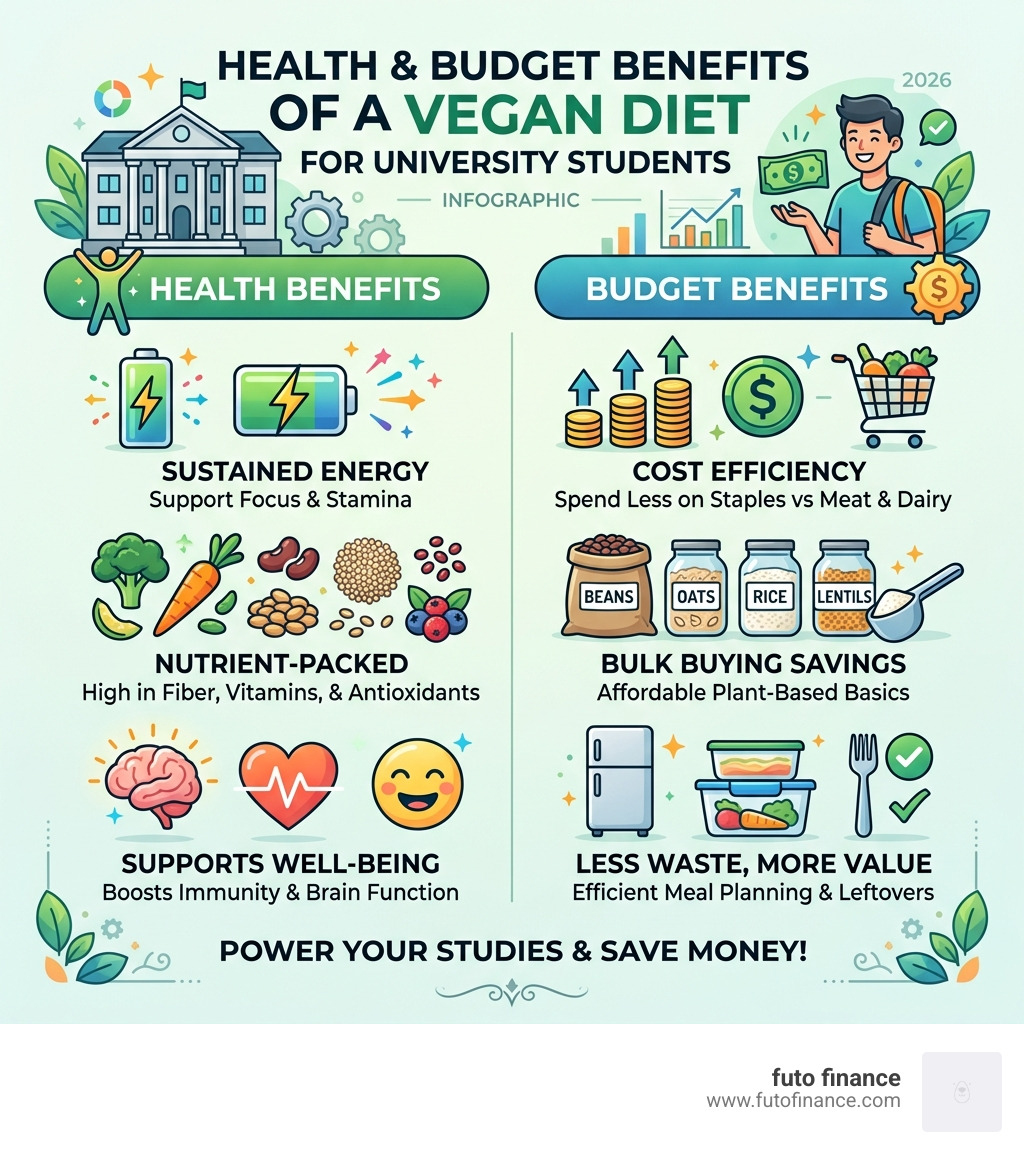
Plant-based staples like beans, lentils, oats, and rice cost less than meat or dairy. They’re also packed with fiber, protein, and nutrients that support focus and energy — exactly what you need during exam season.
The challenge isn’t the diet itself. It’s knowing which recipes actually work in a dorm room with no oven, limited counter space, and maybe just a microwave.
That’s exactly what this guide covers.
Why Choose Easy Vegan Recipes for University Life?
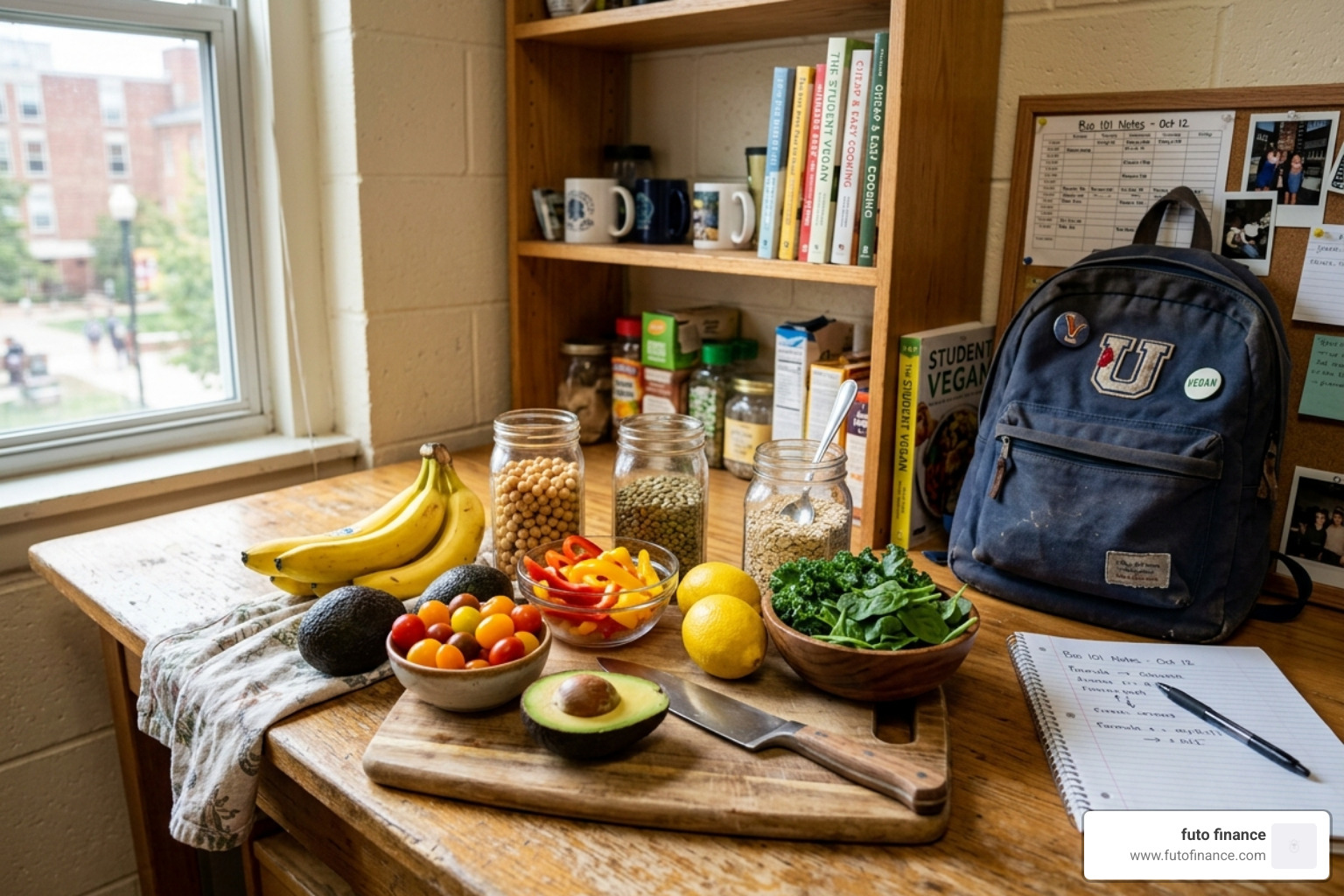
Adopting a plant-based lifestyle in April 2026 isn’t just a trend; it’s a strategic move for your health and your wallet. When we look at the cost of meat and dairy compared to bulk staples like dried lentils or canned chickpeas, the savings are undeniable. For many of us, the “starving student” trope is all too real, but easy vegan recipes university students can master prove that you don’t have to sacrifice nutrition for price.
Boosting Your Brain Power
Your brain is the most demanding organ in your body, especially when you’re pulling an all-nighter or sitting through a three-hour seminar. Research from Harvard Health shows that plant-based diets rich in antioxidants, fiber, and protein can significantly improve memory, focus, and overall mental energy. Unlike heavy, meat-based meals that can lead to a “food coma” in your 2:00 PM lecture, plant-based meals provide long-lasting energy by stabilizing your blood sugar.
Health and Immunity
Living in close quarters like dorms means germs spread fast. A balanced vegan diet is naturally low in saturated fat and high in vitamins and minerals that give your immunity a much-needed boost. By focusing on nutrient-dense ingredients, we aren’t just filling our stomachs; we’re investing in our long-term wellness.
Essential Tools and Pantry Staples for Dorm Cooking
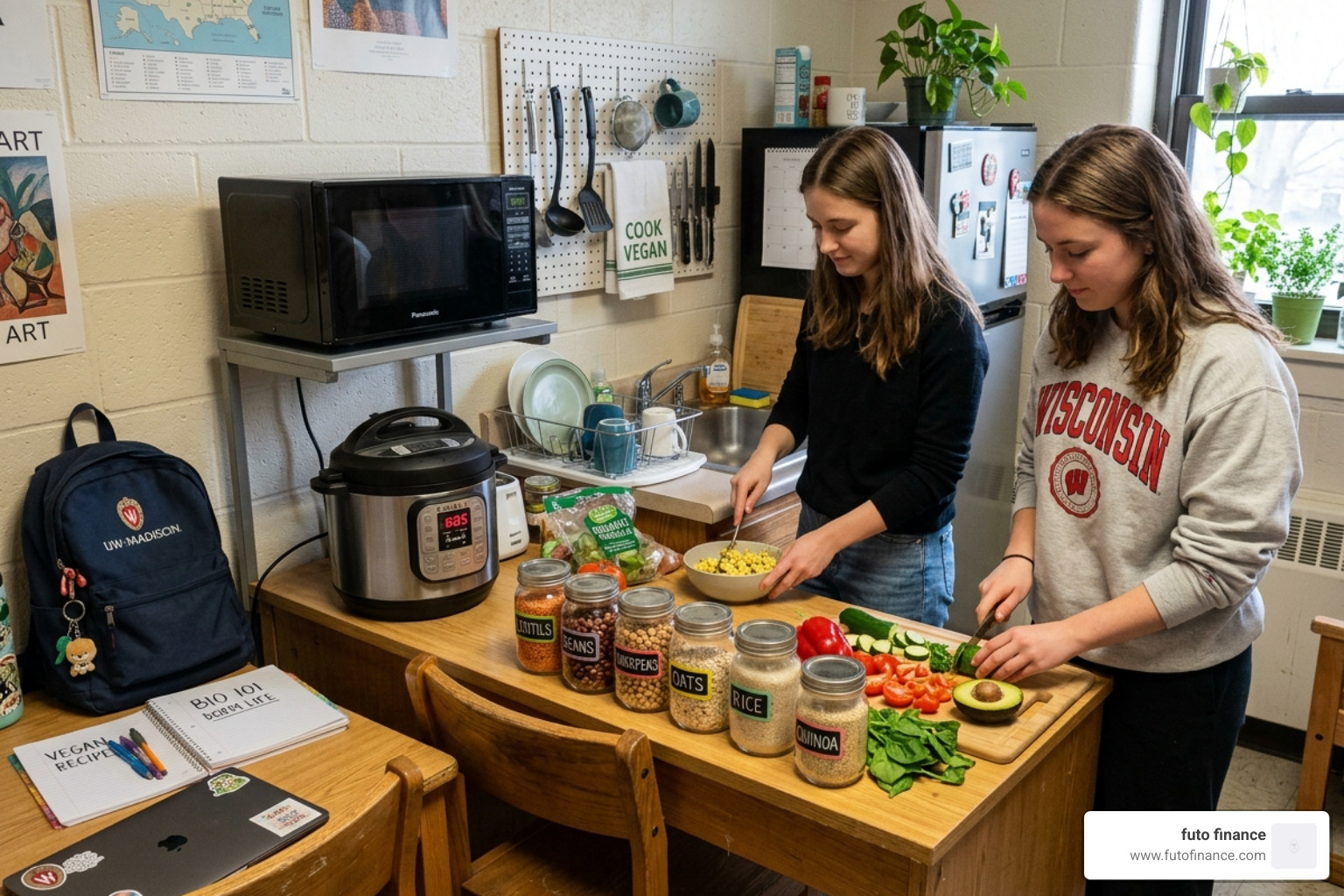
Cooking in a dorm room is like playing a game of Tetris—you have to make every inch of space count. While some lucky students have access to a full communal kitchen, many of us are working with a desk and a dream.
To succeed with easy vegan recipes university style, we recommend investing in a few versatile “holy grail” appliances:
- Electric Multi-cooker (Instant Pot): This is the MVP. It can sauté, pressure cook beans in minutes, and even bake cakes.
- Microwave: Essential for everything from “baking” potatoes to making 90-second mug cakes.
- Mini-fridge: Crucial for storing leftovers and fresh produce.
- Slow Cooker: Perfect for setting a chili in the morning and coming home to a hot meal after classes.
- Blender: A small bullet-style blender is great for smoothies and quick sauces.
Don’t forget the basics: a sturdy can opener, a few microwave-safe bowls, and plenty of food storage containers. Storing leftovers is the secret to surviving a busy week.
Stocking Your Easy Vegan Recipes University Pantry
A well-stocked pantry is your insurance policy against expensive takeout. Keep these items on hand:
- Grains and Legumes: Dry beans, red lentils (they cook fast!), quinoa, and brown rice.
- The “Flavor Makers”: Soy sauce, sriracha, nutritional yeast (for that cheesy flavor), and vegetable broth.
- Healthy Fats: Nut butters (peanut or almond) and flax seeds for Omega-3s.
- Quick Bases: Rolled oats for breakfast and whole-wheat tortillas for wraps.
For more detailed guides on building your student-friendly kitchen, check out more info about vegan nutrition. Having these items ready means you’re always only 15 minutes away from a meal.
Quick and Easy Vegan Recipes University Students Love
When the library is calling, you need meals that are “no-fuss.” We love no-cook methods and microwave hacks because they require zero cleanup of pots and pans.
The 15-Minute Favorites
- 20-Minute Black Bean Tacos: Drain a can of black beans, season with cumin and chili powder, and heat in the microwave. Serve in charred tortillas with avocado.
- Hummus Veggie Wraps: Spread hummus on a wrap, pile on spinach, shredded carrots, and cucumber. It’s fresh, crunchy, and requires zero heat.
- Quinoa Slaw Bowl: Use pre-cooked quinoa pouches, mix with a bag of pre-shredded slaw mix, and toss with a simple peanut dressing.
The Ramen Upgrade
Forget the “sad” ramen packets. Toss the MSG-heavy flavor packet and use the noodles as a base. Add frozen peas, sliced tofu, and a homemade sauce made of almond butter, sriracha, and lime juice. It takes your ramen from “broke student” to “gourmet dorm chef” in five minutes.
| Appliance | Best For | Typical Cook Time |
|---|---|---|
| Microwave | Sweet potatoes, mug cakes, steaming veg | 2–10 mins |
| Instant Pot | Dried beans, stews, rice pilaf | 20–40 mins |
| Slow Cooker | Oatmeal, soups, ratatouille | 4–8 hours |
| No-Cook | Salads, wraps, chia pudding | 5–15 mins |
Breakfast: Fueling Early Lectures
Breakfast is often the first thing students skip, but it’s vital for focus.
- Overnight Oats: The ultimate time-saver. Mix oats and plant milk in a jar at night, and it’s ready when your alarm goes off.
- Tropical Slow-Cooker Oatmeal: Throw steel-cut oats, coconut milk, and dried mango into your slow cooker before bed. You’ll wake up to the best-smelling room on the floor.
- Tofu Scramble: If you have a hot plate, crumble firm tofu with turmeric and nutritional yeast for a high-protein start.
Easy Vegan Recipes University Snacks and Desserts
Studying requires fuel—and sometimes that fuel needs to be chocolate.
- Mug Cakes: A few tablespoons of flour, cocoa powder, sugar, and plant milk in a mug. Microwave for 60 seconds.
- Roasted Chickpeas: Toss canned chickpeas with spices and air-fry or bake until crunchy. They are way better for you than potato chips.
- Fruit Sushi: Spread nut butter on a tortilla, place a whole peeled banana inside, roll it up, and slice into “sushi” rounds.
For more inspiration on quick bites, see more info about vegan snacks.
Mastering Meal Prep and Dining Hall Navigation
Meal prepping is the difference between eating a balanced meal and eating cereal for dinner for the third night in a row. We recommend “Batch Cooking” on Sundays. Make a huge pot of chili or dhal and portion it out for the week.
Dining Hall Hacks
If you have a mandatory meal plan, don’t panic. Most universities, thanks to initiatives from providers like Sodexo and Aramark, are drastically increasing plant-based options.
- The Salad Bar is Your Friend: Don’t just look at the lettuce. Look for chickpeas, sunflower seeds, and beets.
- Combine Sides: If there’s no vegan main, combine a side of rice, a side of steamed veggies, and beans from the salad bar.
- Bring Your Own Sauce: Dining hall food can be bland. Keep a small bottle of sriracha or nutritional yeast in your bag to level up any meal.
Sourcing Ingredients on a Student Budget
- Frozen is Gold: Frozen vegetables are often more nutritious and cheaper than fresh ones, and they won’t rot in your fridge.
- Bulk Bins: Buy your grains and nuts from bulk bins to save on packaging costs.
- Food Pantries: Many campuses now have food pantries that offer staples like rice and beans for students in need.
Frequently Asked Questions about Veganism at College
How do I get enough protein as a vegan student?
This is the most common question we get! It’s actually quite easy. Focus on “The Big Three”: beans, lentils, and tofu. Quinoa is also a complete protein. Even a peanut butter sandwich on whole-grain bread packs a significant protein punch. If you’re worried, keep high-protein snacks like roasted edamame or pumpkin seeds in your backpack.
Can I cook vegan meals with only a microwave?
Absolutely. You can “bake” a sweet potato in about 6 minutes, steam bags of frozen broccoli, and even cook pasta in a large microwave-safe bowl with enough water. Microwave nachos using black beans and vegan cheese shreds are a classic late-night study snack.
How can I eat vegan at the university dining hall?
The key is communication. Ask the staff about ingredients—sometimes the “vegetable soup” is made with chicken stock, or the “roasted potatoes” are cooked in butter. Most dining halls are happy to accommodate if you ask. Also, get creative: use the sandwich station to make a massive veggie sub with mustard and avocado instead of mayo and meat.
Conclusion
At Futo Finance, we believe that your budget shouldn’t dictate your health. Adopting easy vegan recipes university students can actually afford is a powerful way to take control of your wellness and your finances. By focusing on simple tools, pantry staples, and a bit of weekly prep, you can thrive academically while staying true to your values.
University is a time for growth, and building sustainable eating habits now will serve you for decades to come. You don’t need a five-star kitchen to eat like a king—you just need a can of beans, a few spices, and a bit of creativity.
Ready to start your plant-based journey? Join our mailing list for free recipes and student tips and become part of our growing community of healthy, budget-conscious students!

Melo Rodrigues is the founder of Futo Finance and a specialist in student-budget veganism. Having mastered the art of plant-based cooking in a university setting, Melo is dedicated to helping students achieve nutritional excellence without financial strain. Through Futo Finance, Melo shares lab-tested strategies for eating smart and living sustainably on a budget.
