
How to Master Your Vegan Weekly Meal Prep
Why Every Student Should Try Meal Prep Vegan This Week
Meal prep vegan cooking is one of the smartest habits a busy, budget-conscious student can build. Done right, it means spending a couple of hours once a week — and eating well every single day without stress.
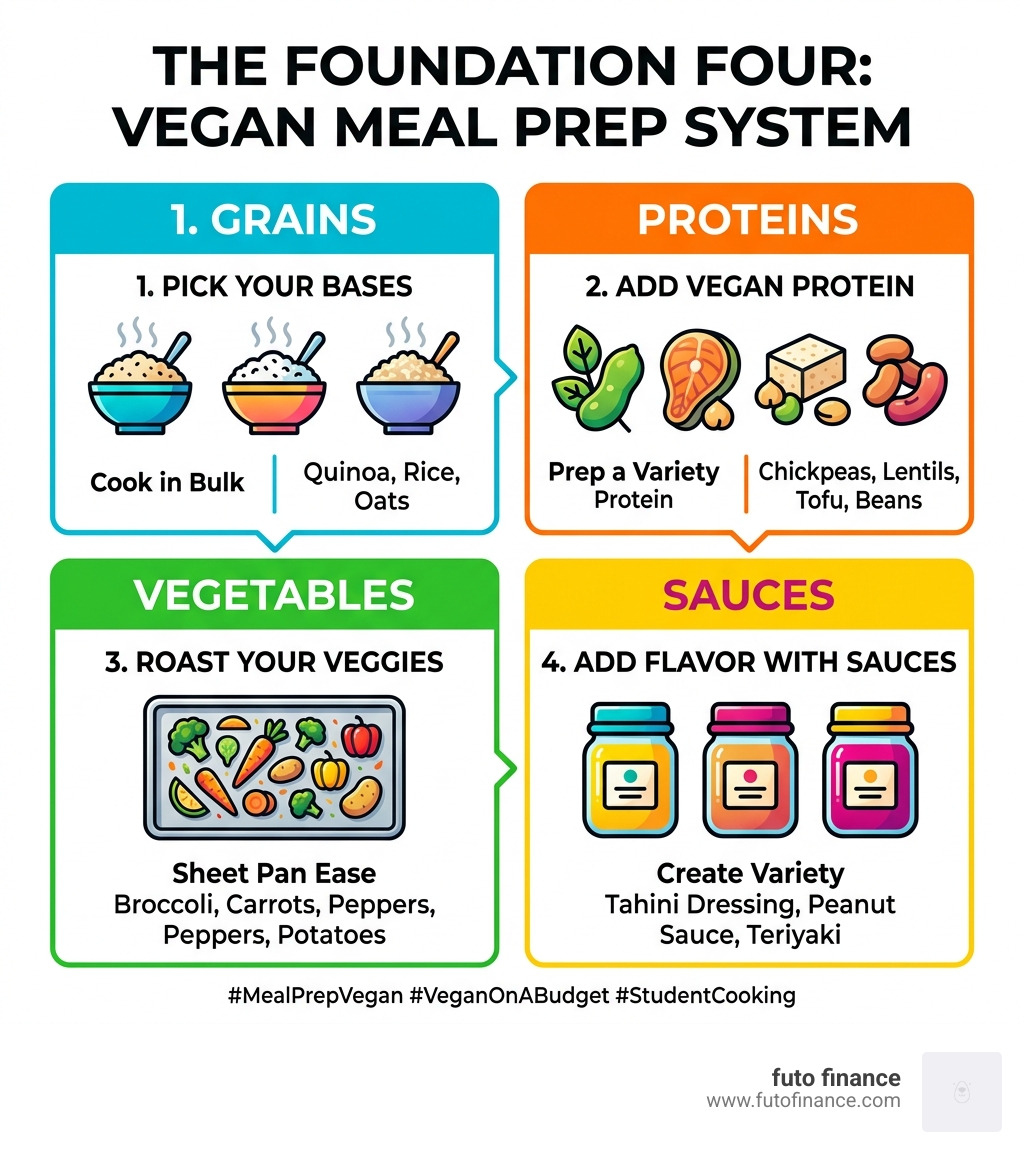
Here’s a quick overview of how vegan meal prep works:
| Step | What to Do |
|---|---|
| 1. Pick your bases | Cook a grain like rice or quinoa in bulk |
| 2. Add protein | Prep lentils, chickpeas, or tofu for the week |
| 3. Roast vegetables | Sheet pan roast 2-3 veggie types at once |
| 4. Make a sauce | Tahini, peanut, or teriyaki sauce adds variety |
| 5. Store smart | Portion into airtight containers, fridge up to 5 days |
Most people don’t struggle with vegan eating because they lack willpower. They struggle at 6pm on a Tuesday when there’s nothing ready and takeout is one tap away.
A simple weekly prep session fixes that.
And for students on a tight budget, it gets even better. Meal prepping plant-based food can bring your cost down to around $4 per meal — compared to $20 or more when eating out.
This guide walks you through everything: what to prep, how to store it, how to keep it interesting, and how to do it all in under three hours.
Why You Should Start a Meal Prep Vegan Routine
As we head into mid-2026, the trend toward plant-based eating has never been stronger, especially on university campuses. We’ve found that the biggest hurdle for students isn’t a lack of interest in veganism; it’s the perceived “hassle” of cooking every day between lectures and social life.
Cost Efficiency and the Student Budget
Let’s talk money. The average US household wastes about $1,866 per year on discarded groceries. For a student, that’s a small fortune. When we adopt a meal prep vegan strategy, we drastically reduce this waste by buying only what we need for our planned recipes.
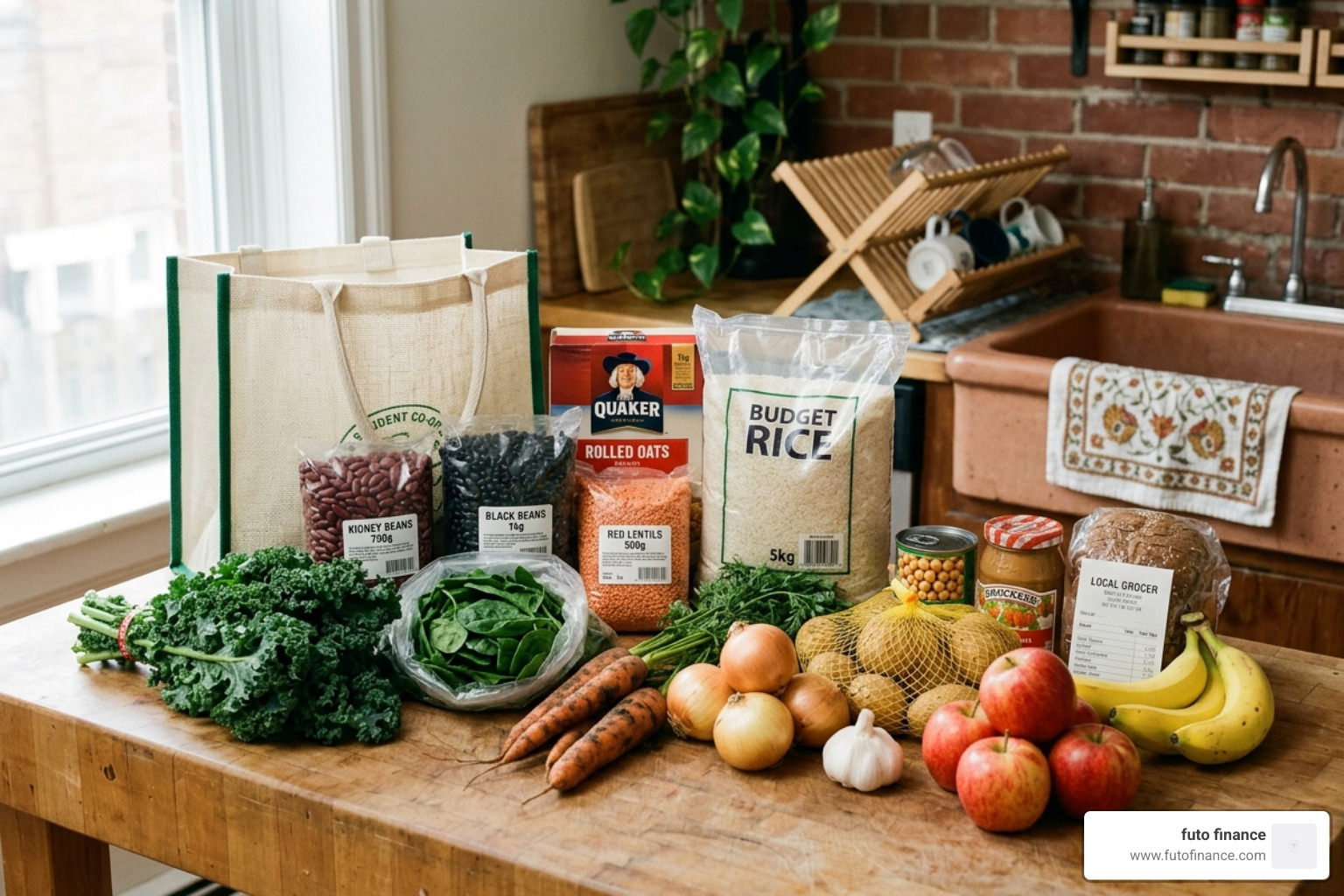
Research shows that plant-based meals generally cost 40% less than those containing meat or fish. By batch-cooking staples like dried beans (which cost about $0.15 per serving compared to $0.33 for canned), we can drive our per-meal cost down significantly. Imagine saving nearly $4,000 a year just by switching from daily takeout to a structured prep routine!
Time Management and Stress Reduction
We know your schedule is packed. By dedicating a “Power Hour” or a Sunday afternoon to prepping, we eliminate the “What’s for dinner?” panic. A full week’s worth of meals can often be prepped in under three hours. This means no more 11 PM ramen sessions because you were too tired to cook after the library.
Nutritional Consistency
It’s easy to miss out on key nutrients when you’re eating on the fly. A planned Full Week Vegan Meal Prep: Complete Guide ensures we hit our targets for fiber, protein, and vitamins. In fact, plant-based diets have been shown to help manage weight and even reduce the risk of Type 2 diabetes by up to 30%. In 2026, staying healthy is about being proactive, not restrictive.
Essential Components of a Balanced Plant-Based Bowl
To keep ourselves full and focused during exams, we need to move beyond “just a salad.” A truly satisfying vegan meal follows a specific architecture. We like to aim for bowls that provide between 500-600 calories, ensuring we have enough energy to power through the day.
The Anatomy of a Perfect Bowl
- Complex Carbohydrates: These are our slow-burn energy sources. Think brown rice, quinoa, or farro. Quinoa is a particular favorite of ours because it’s a complete protein.
- Roasted Vegetables: Roasting at high heat (around 425°F) caramelizes the natural sugars in veggies like broccoli, sweet potatoes, and zucchini, making them taste incredible even on day four.
- Healthy Fats: These help us absorb vitamins and keep us satiated. Avocado is the gold standard, but nuts, seeds, and tahini-based dressings are excellent alternatives.
- The “Zinc and Iron” Boosters: Adding a handful of pumpkin seeds or a drizzle of lemon juice (to help iron absorption) can make a huge difference in how we feel.
| Component | Example | Protein (per serving) | Fiber (per serving) |
|---|---|---|---|
| Lentils | Red or Green | 18g | 15g |
| Tofu | Extra Firm | 15-20g | 1g |
| Chickpeas | Roasted or Stewed | 12g | 7g |
| Quinoa | Cooked | 8g | 5g |
Best Plant-Based Proteins for Meal Prep Vegan
Protein is the most common question we get. The good news? Plant proteins are incredibly shelf-stable and often reheat better than animal proteins.
- Extra Firm Tofu: This is the workhorse of meal prep vegan life. It lasts 4-5 days in the fridge and can be baked, air-fried, or sautéed.
- Tempeh: With a nutty flavor and firm texture, tempeh lasts up to 5 days once cooked. It’s excellent for those who find tofu too soft.
- Red Lentils: These cook in just 20-25 minutes and are perfect for soups and “bolognese” style sauces. They stay fresh for about 5 days.
- Seitan: Often called “wheat meat,” seitan has a very high protein content and a chewy texture that mimics chicken or beef, making it a great choice for stir-frys.
- Edamame: We love keeping a bag of frozen edamame in the freezer. You can toss them into any bowl for an instant 8-10g protein boost.
Time-Saving Strategies for Meal Prep Vegan
Efficiency is the name of the game. We don’t want to spend our entire weekend in the kitchen.
- The Power Hour: This is a 90-minute session where we run the oven, stovetop, and Instant Pot simultaneously. While the rice cooks in the pot, the veggies roast in the oven, and the tofu sears on the stove.
- Mise en Place: This is just a fancy French way of saying “get your stuff together.” Wash and chop all your vegetables before you turn on a single burner. It prevents that mid-cooking panic when you realize you haven’t diced the onions yet.
- Frozen Rice Hacks: If you’re really short on time, high-quality frozen brown rice can be microwaved in 2-3 minutes. It’s a lifesaver during finals week.
- Sheet Pan Roasting: You can often fit an entire meal’s worth of veggies and protein (like chickpeas or tofu) on one large baking sheet. Less cleanup, more flavor.
Storage Guidelines and Kitchen Equipment Essentials
Proper storage is what separates a “soggy mess” from a “delicious lunch.” If we want our meal prep vegan food to last, we need to treat it right.
Fridge and Freezer Safety
Most cooked vegan meals stay fresh for 4-5 days in the refrigerator, provided they are stored at 40°F or below. If we’re prepping for the full seven days, we recommend freezing half of the portions on Sunday. Most vegan stews, chilis, and grains freeze beautifully for 2-3 months.
Pro Tip: Let your food cool for about 30 minutes before putting it in the fridge. Putting piping hot containers in a cold fridge can raise the internal temperature of the fridge, potentially leading to bacterial growth.
Essential Gear for the Student Kitchen
You don’t need a professional kitchen, but a few tools make a world of difference:
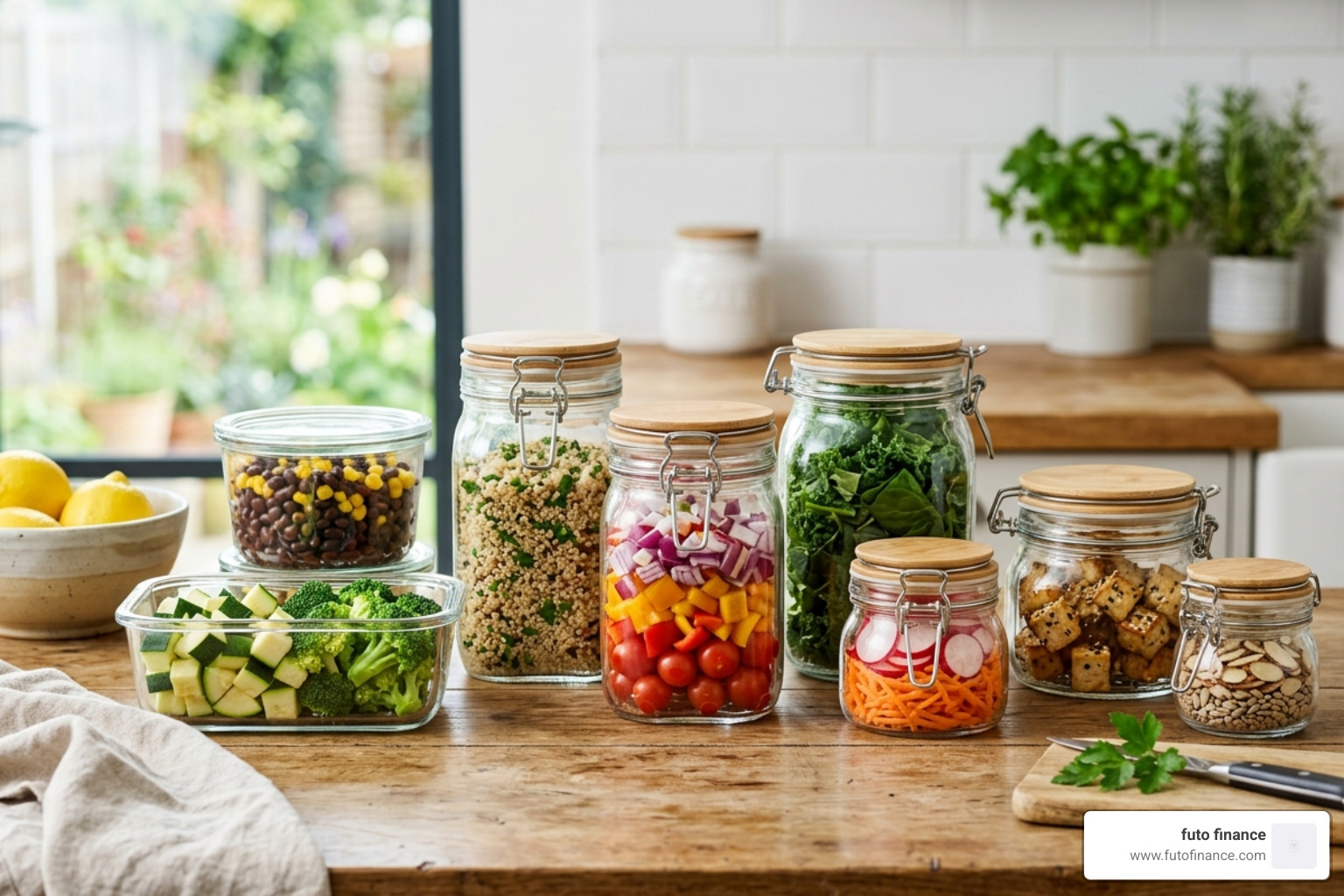
- Glass Containers: We prefer glass over plastic. It doesn’t stain, it’s microwave-safe, and it keeps food tasting fresher. Look for “locking lids” to prevent backpack leaks.
- A Sharp Chef’s Knife: A dull knife is actually more dangerous and makes chopping a chore. Invest in one decent 8-inch knife.
- Instant Pot or Slow Cooker: These are “set it and forget it” miracles. You can cook dried beans from scratch in 30 minutes without soaking.
- Silicone Bags: Great for storing snacks or freezing individual portions of smoothies.
How to Prevent Boredom with the Mix-and-Match System
The biggest mistake people make with meal prep vegan is cooking five identical containers of “broccoli, rice, and beans.” By Wednesday, you’ll be staring at that container with pure resentment. Instead, we use a component-based system.
The “Sauce is Boss” Rule
We recommend prepping 2-3 different sauces to vary your flavors throughout the week. You can use the same base of roasted sweet potatoes and chickpeas but change the entire vibe with a different dressing.
- Mexican Style: Use a lime-cilantro or avocado crema sauce.
- North African Style: Try a harissa tahini dressing with a squeeze of lemon.
- Asian Style: A simple peanut or ginger-soy sauce (using tamari for a gluten-free option).
Ingredient Overlap
To save money, we choose recipes where at least 50% of the ingredients overlap. For example, if we buy a large bag of spinach, we’ll use it fresh in a Monday Buddha bowl, sauté it into a Wednesday pasta, and blend the rest into a Friday soup.
The Fresh Factor
Always keep your “wet” and “dry” components separate. Store your sauce in a small jar on the side and add fresh elements like sliced avocado, sprouts, or fresh herbs right before you eat. This keeps the crunch alive and prevents that dreaded “meal prep sogginess.”
Frequently Asked Questions about Vegan Prepping
How long do prepared vegan meals stay fresh in the fridge?
Generally, you’re looking at 4 to 5 days. Cooked grains like rice and quinoa are solid for 5 days. Roasted vegetables are at their peak for the first 3 days but are perfectly safe until day 5. Soups and stews actually tend to taste better on day 2 or 3 as the flavors have more time to mingle!
Can I make my meal prep gluten-free or soy-free?
Absolutely. For a gluten-free meal prep vegan routine, swap soy sauce for tamari or coconut aminos. Use grains like quinoa, buckwheat, or brown rice. For a soy-free diet, move away from tofu and tempeh and focus on “pulses” like chickpeas, black beans, and lentils. Pumpkin seeds and hemp hearts are also great soy-free protein boosters.
Is it cheaper to meal prep as a university student?
Yes, by a landslide. When we buy in bulk — especially dry goods like oats, rice, and beans — we save a massive amount of money. Eating out can easily cost $15-$20 per meal. By prepping, we can eat high-quality, organic-leaning food for about $4 per meal. Following the 80/20 rule (80% whole foods, 20% fun/processed vegan snacks) keeps the budget in check while allowing for the occasional treat.
Conclusion
Mastering meal prep vegan cooking is a journey, not a sprint. Don’t worry if your first few attempts take a little longer than 90 minutes. As you get faster with your knife skills and more comfortable with your stovetop “economies of scale,” you’ll find that prepping becomes a relaxing ritual rather than a chore.
At Futo Finance, we believe that being a student shouldn’t mean sacrificing your health or your values. By taking control of your kitchen, you’re taking control of your budget and your energy levels. Ready to dive deeper into plant-based living? You can master your student budget with meal prep vegan recipes and find more tips on our main site.
Happy prepping, and enjoy those delicious, stress-free lunches!

Melo Rodrigues is the founder of Futo Finance and a specialist in student-budget veganism. Having mastered the art of plant-based cooking in a university setting, Melo is dedicated to helping students achieve nutritional excellence without financial strain. Through Futo Finance, Melo shares lab-tested strategies for eating smart and living sustainably on a budget.
