
How to Make Easy Vegan Chili on a Budget
The Ultimate Easy Vegan Chili Budget Meal for Students
Easy vegan chili budget cooking doesn’t get simpler — or cheaper — than this.
A big pot of vegan chili can cost as little as $1.65 per serving, takes under 30 minutes to make, and runs on pantry staples you probably already own.
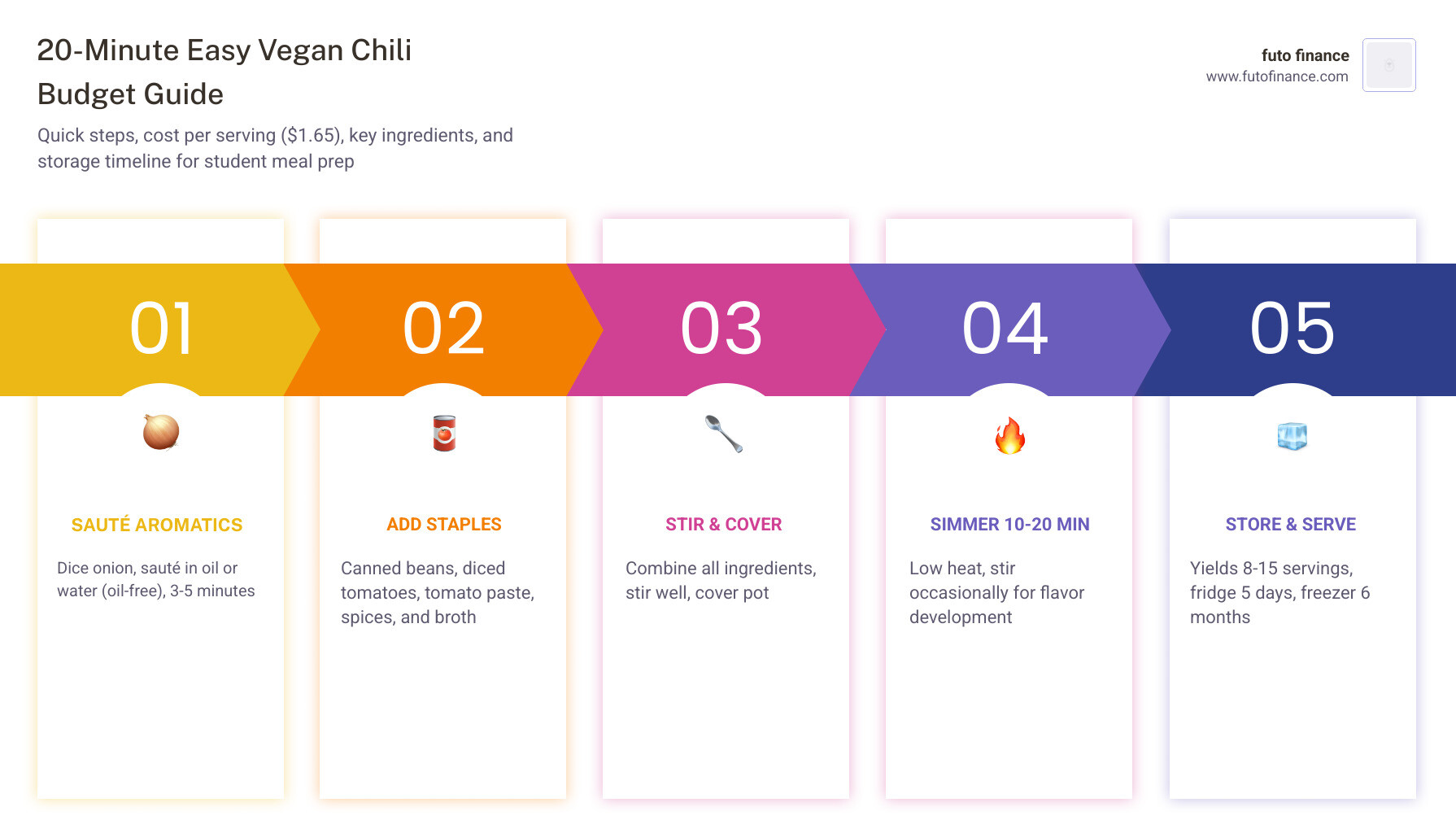
Here’s the quick answer for how to make it:
- Sauté diced onion in oil (or water for oil-free) over medium-high heat
- Add canned beans, diced tomatoes, salsa or tomato paste, and spices
- Stir everything together and cover
- Simmer for 10-20 minutes, stirring occasionally
- Serve with your choice of budget-friendly toppings
A single batch can yield 8-15 servings for roughly $10-$15 total — that’s less than the price of one takeout meal.
The secret is simple: canned beans and tomatoes do the heavy lifting. No soaking, no long prep, no expensive ingredients.
Whether you have 20 minutes on a Tuesday night or want to meal prep for the whole week, this is one of the most practical meals in a student’s cooking rotation.
Why Vegan Chili is the Ultimate Easy Vegan Chili Budget Meal
When we talk about university survival food, we usually think of instant ramen. But we’re here to argue that an easy vegan chili budget plan is actually the superior choice for your wallet and your health. In April 2026, with grocery prices always on our minds, finding a meal that hits the “cheap, fast, and healthy” trifecta is like winning the lottery.
The Real Cost Breakdown
Let’s look at the numbers. Research shows that a hearty vegetarian chili recipe can cost as little as $9.93 for an entire pot. When you break that down into six generous portions, you’re looking at just $1.65 per serving. Even if you go for a massive batch of 15 servings to feed a crowd or stock your freezer, the cost rarely exceeds $1.90 per serving. Compared to a $15 burrito bowl from a local shop, you’re saving enough money to cover your internet bill for the month.
Debunking the “Vegan is Expensive” Myth
There is a common misconception that eating plant-based requires a massive bank account and frequent trips to high-end health food stores. We’re here to tell you that’s simply not true. A famous Oxford University study found that eating plant-based can actually be significantly cheaper than a meat-heavy diet in the US and UK.
The “expensive vegan” stereotype often comes from people including non-food costs like fancy kitchen gadgets or specialty “mock meats” in their calculations. When we stick to whole foods like beans, lentils, and canned tomatoes, we are eating some of the cheapest calories on the planet.
Nutrient Density and Satiety
Why does chili keep us full for so long? It’s the fiber-protein punch.
- Protein: A single serving can provide between 13g and 20g of plant-based protein.
- Fiber: With roughly 13g to 19g of fiber per serving, this meal supports digestion and keeps your blood sugar stable, meaning you won’t be reaching for a snack an hour after dinner.
- Nutrients: You’re getting a massive dose of Vitamin A, Vitamin C, Iron, and Potassium from the tomatoes, onions, and peppers.
Essential Pantry Staples for an Easy Vegan Chili Budget
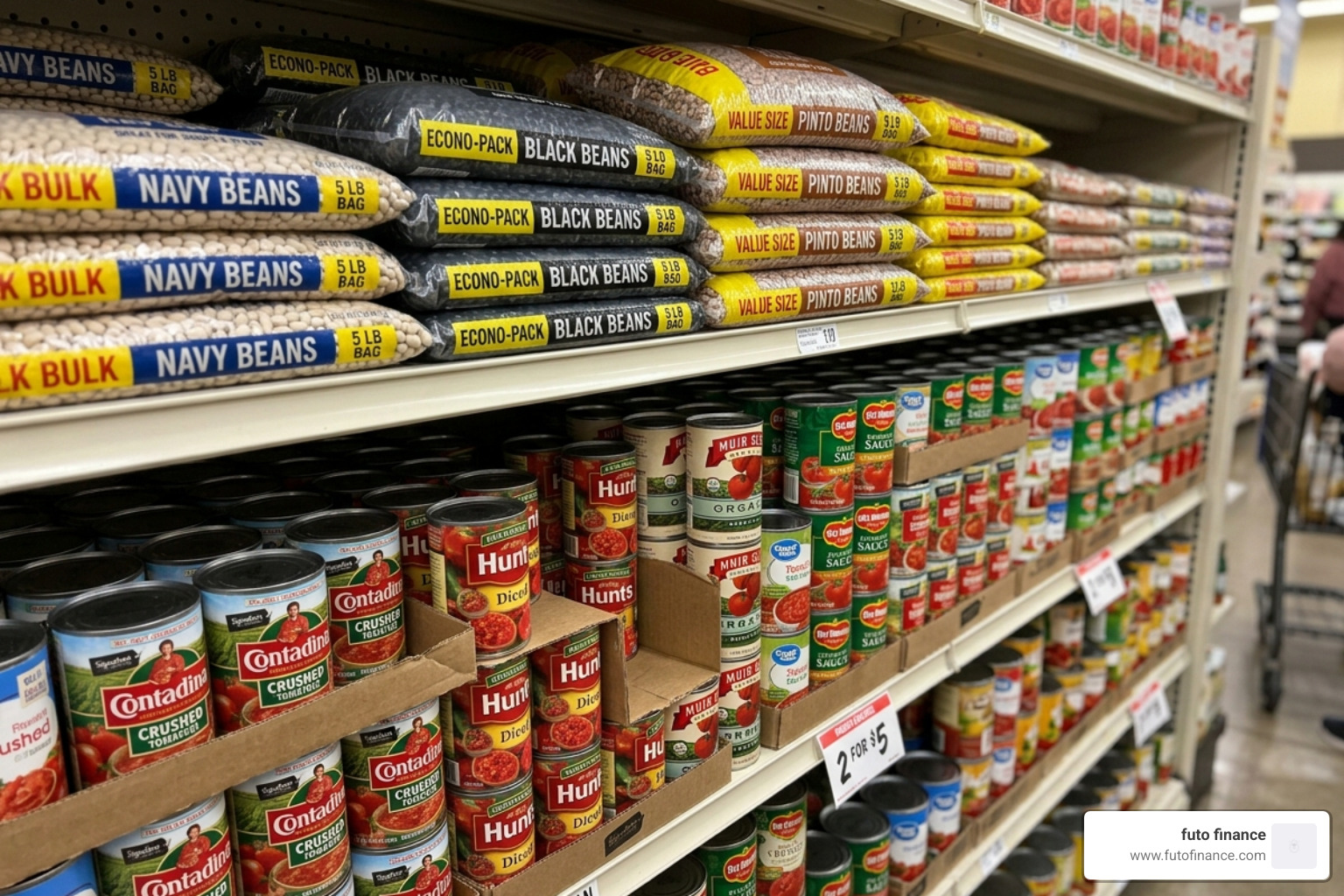
To master the easy vegan chili budget lifestyle, your pantry needs to be your best friend. Shopping for store brands and buying in bulk are the two most effective ways to slash your grocery bill.
The Bean Trio
Beans are the backbone of any good chili. For the best texture and flavor, we recommend a mix:
- Kidney Beans: These provide that classic chili look and a sturdy texture.
- Black Beans: These add a creamy consistency and a slightly sweeter flavor.
- Pinto Beans: These are soft and excellent for thickening the sauce.
Canned vs. Dried: The Great Debate
If you are on an extreme budget, dried beans are the way to go. However, for most students, the convenience of canned beans is worth the slight price increase.
| Feature | Canned Beans | Dried Beans |
|---|---|---|
| Cost | ~$0.80 – $1.00 per can | ~$0.15 – $0.25 per serving |
| Prep Time | 0 minutes (just rinse) | 8-12 hours soaking + 1 hour cooking |
| Convenience | High – great for 20-minute meals | Low – requires planning |
| Texture | Consistent | Often superior if cooked correctly |
Tomatoes and Aromatics
- Diced Tomatoes: Buy the large cans. Fire-roasted tomatoes add a smoky depth for just a few cents more.
- Tomato Paste: This is essential for thickness. Pro tip: if you don’t use the whole can, freeze the leftovers in tablespoon-sized dollops.
- Vegetable Broth: Look for bouillon cubes or powders (like mushroom bouillon) rather than cartons of liquid broth to save money and storage space.
- Onions and Garlic: Buy these in bulk bags. They last for weeks and form the “flavor base” for almost every savory meal you’ll cook.
Affordable Meat Substitutes and Fillers
If you want that “meaty” texture without the price tag of brand-name plant-based crumbles, we have a few secrets for you.
- Textured Vegetable Protein (TVP): This is our “good buddy.” TVP is made from soy flour and has a texture remarkably similar to ground beef once rehydrated. It’s incredibly shelf-stable and dirt cheap. You can throw it directly into the chili with a bit of extra broth, and it will soak up all the spices.
- Brown Lentils: When cooked down, lentils soften and blend into the sauce, providing a thick, “meaty” consistency.
- Diced Mushrooms: If you sauté finely diced mushrooms with your onions, they provide an “umami” (savory) boost and a chewy texture that mimics meat.
- Frozen Corn: It’s cheap, adds a nice crunch, and provides a pop of sweetness to balance the heat.
- Walnuts: If you have them on hand, finely crushed walnuts add an earthy richness and a great “bite.”
Step-by-Step: How to Cook Easy Vegan Chili Budget Recipes
One of the best things about an easy vegan chili budget recipe is that it’s almost impossible to mess up. Whether you have a fancy kitchen or a single burner in a dorm, you can make this work.
The Stovetop Method (The 20-30 Minute Classic)
This is the fastest way to get food into your stomach.
- The Base: Heat a tablespoon of oil (or water) in a large pot. Add one diced onion and cook until soft and translucent (about 5 minutes).
- The Spices: Add your garlic and dry seasonings (chili powder, cumin, smoked paprika). Toasting them for 1-2 minutes with the onions releases the oils and makes the flavor much more intense.
- The Bulk: Pour in two cans of beans (rinsed), one large can of diced tomatoes, and a cup of vegetable broth.
- The Simmer: Bring to a boil, then reduce the heat. Let it simmer for 15-20 minutes. The longer it simmers, the better the flavors meld, but 20 minutes is plenty for a delicious meal.
The Instant Pot Method (The “Set and Forget” Speedster)
- Use the “Sauté” function to cook your onions and spices.
- Add all other ingredients and stir well.
- Lock the lid and set to “Manual High Pressure” for 5-10 minutes (if using canned beans) or 30 minutes (if using unsoaked dried beans).
- Allow for a natural pressure release for 10 minutes before opening.
The Crockpot Method (The “Class-Day” Savior)
- Throw everything into the slow cooker in the morning before you head to campus.
- Set it to “Low” for 6-8 hours or “High” for 3-4 hours.
- When you walk through the door after a long day of lectures, your apartment will smell amazing, and dinner will be ready.

Customizing Your Easy Vegan Chili Budget for Different Diets
We know that everyone has different dietary needs and preferences. Luckily, chili is the ultimate “chameleon” food.
Oil-Free Cooking
If you’re following a Whole Food Plant-Based (WFPB) diet or just trying to cut back on fats, you can easily make this recipe oil-free. Simply sauté your onions in 2-3 tablespoons of water or vegetable broth. If the onions start to stick, add another splash of liquid. This technique, called “deglazing,” actually helps caramelize the onions and builds a deep flavor without a single drop of oil.
Adjusting the Spice Level
Chili doesn’t have to be “blow-your-head-off” spicy.
- For Mild: Use a mild salsa as your base and stick to “regular” chili powder, which is usually more about flavor than heat.
- For Spicy: Add diced jalapeños (with the seeds!), a pinch of cayenne pepper, or a few dashes of your favorite hot sauce.
- For Smoky: Use “Dark” chili powder or smoked paprika.
Gluten-Free and Soy-Free
Most basic chili recipes are naturally gluten-free. Just double-check your vegetable broth and soy sauce labels. If you need to stay soy-free, skip the TVP and use extra lentils or beans as your protein source.
Flavor Hacks to Make Cheap Ingredients Taste Expensive
This is where you go from “basic student cook” to “culinary genius.” These small additions cost pennies but add layers of flavor that make people think you spent hours in the kitchen.
- The Molasses Secret: Adding a tablespoon of molasses provides a dark, rich sweetness that balances the acidity of the tomatoes. It adds a “warmth” to the dish that is hard to replicate.
- Cocoa Powder and Cinnamon: It sounds weird, but trust us. A teaspoon of unsweetened cocoa powder and a pinch of cinnamon add a “freaking scrumptious” depth of flavor often found in authentic Mexican mole or Cincinnati-style chili.
- Chipotles in Adobo: A small can costs about $2 and lasts forever in the fridge. One finely chopped chipotle pepper adds a professional-level smokiness and heat.
- Soy Sauce or Worcestershire: A splash of soy sauce (or vegan Worcestershire) adds “umami”—that savory, meaty depth that plant-based dishes sometimes lack.
- Acidity at the End: Always squeeze a bit of lime juice or add a teaspoon of apple cider vinegar right before serving. The acid cuts through the richness and “wakes up” all the other flavors.
Thickening Methods
Nobody likes a watery chili. If yours is looking a bit thin, try these budget hacks:
- The Mash: Take a potato masher or a fork and smash about 1/4 of the beans directly in the pot.
- The Blend: Scoop out two cups of the chili, run it through a blender (or use an immersion blender), and pour it back in. This creates a thick, creamy base.
- Masa Harina: Stirring in a tablespoon of corn flour (Masa Harina) adds a lovely corn flavor and thickens the sauce instantly.
Meal Prep, Storage, and Freezing for Maximum Savings
Batch cooking is the secret weapon of the easy vegan chili budget warrior. If you’re going to spend 30 minutes cooking, you might as well make enough for the week.
Storage Guidelines
- Refrigerator: Store in an airtight container for 3-5 days. Many people argue that chili actually tastes better on day two or three because the spices have had more time to mingle.
- Freezer: Chili is one of the best freezer meals in existence. It stays fresh for 4-6 months.
- Freezing Tip: Freeze your chili flat in gallon-sized freezer bags. This saves massive amounts of space in a cramped dorm freezer and allows the chili to thaw much faster.
Stretching the Budget with Leftovers
Don’t just eat a bowl of chili five days in a row. Get creative:
- Chili Mac: Mix your leftover chili with some nutritional yeast and pasta.
- Chili Baked Potato: Pour a hot ladle of chili over a cheap microwave-baked potato.
- Chili Nachos: Use it as a topping for tortilla chips with some pickled jalapeños.
- Taco Salad: Serve it cold or room temperature over greens with some crushed chips and salsa.
Affordable Topping Ideas and Serving Suggestions
Toppings are “almost the best part” of the meal, but they can get pricey if you aren’t careful. Skip the expensive vegan cheeses and try these:
- Pickled Red Onions: Slice an onion thin and soak it in vinegar and a pinch of sugar for 30 minutes. It looks fancy and tastes amazing.
- Oyster Crackers or Fritos: These provide a salty crunch for a fraction of the price of “artisan” crackers.
- Nutritional Yeast: This “nooch” provides a cheesy, nutty flavor and a boost of B-vitamins.
- Fresh Cilantro: A whole bunch usually costs less than a dollar and adds a fresh, bright finish.
- Homemade Cornbread: Flour, cornmeal, and a bit of plant milk make a huge batch of cornbread for pennies.
Frequently Asked Questions about Budget Vegan Chili
How much does a batch of budget vegan chili actually cost per serving?
Depending on where you shop, a standard batch costs between $1.65 and $1.90 per serving. Shopping at budget-friendly stores like Walmart, Grocery Outlet, or buying in bulk can bring that price down even further.
Can I make vegan chili in under 30 minutes?
Absolutely. By using canned beans and pre-diced tomatoes, your active “prep” time is only about 10 minutes. A 20-minute simmer is enough to create a delicious, hearty meal. If you’re in a massive rush, you can even eat it after 10 minutes of simmering, though the texture will be slightly thinner.
How do I thicken my chili without expensive ingredients?
The cheapest way to thicken chili is to simmer it without a lid for an extra 10 minutes to let the liquid evaporate. Alternatively, mashing some of the beans with a fork or stirring in a bit of leftover mashed potatoes or refried beans works wonders.
Conclusion
Mastering the easy vegan chili budget is a rite of passage for any savvy student. It’s a meal that respects your time, your wallet, and your health. By leaning on pantry staples like beans and tomatoes and using clever flavor hacks like cocoa powder or molasses, you can eat like royalty on a student’s budget.
At Futo Finance, we believe that a university lifestyle shouldn’t mean sacrificing nutrition for affordability. Plant-based living is the most sustainable way to fuel your studies and your future. For more tips on how to navigate affordable, student-focused vegan cuisine, check out our other resources.
More info about vegan student meal planning

Melo Rodrigues is the founder of Futo Finance and a specialist in student-budget veganism. Having mastered the art of plant-based cooking in a university setting, Melo is dedicated to helping students achieve nutritional excellence without financial strain. Through Futo Finance, Melo shares lab-tested strategies for eating smart and living sustainably on a budget.
