
Bursting with Flavor Vegan and Gluten Free Blueberry Pancakes
The Easiest Gluten Free Vegan Blueberry Pancakes You’ll Ever Make
Gluten free vegan blueberry pancakes are a quick, affordable breakfast you can make in one bowl in about 30 minutes — no eggs, no dairy, no gluten required.
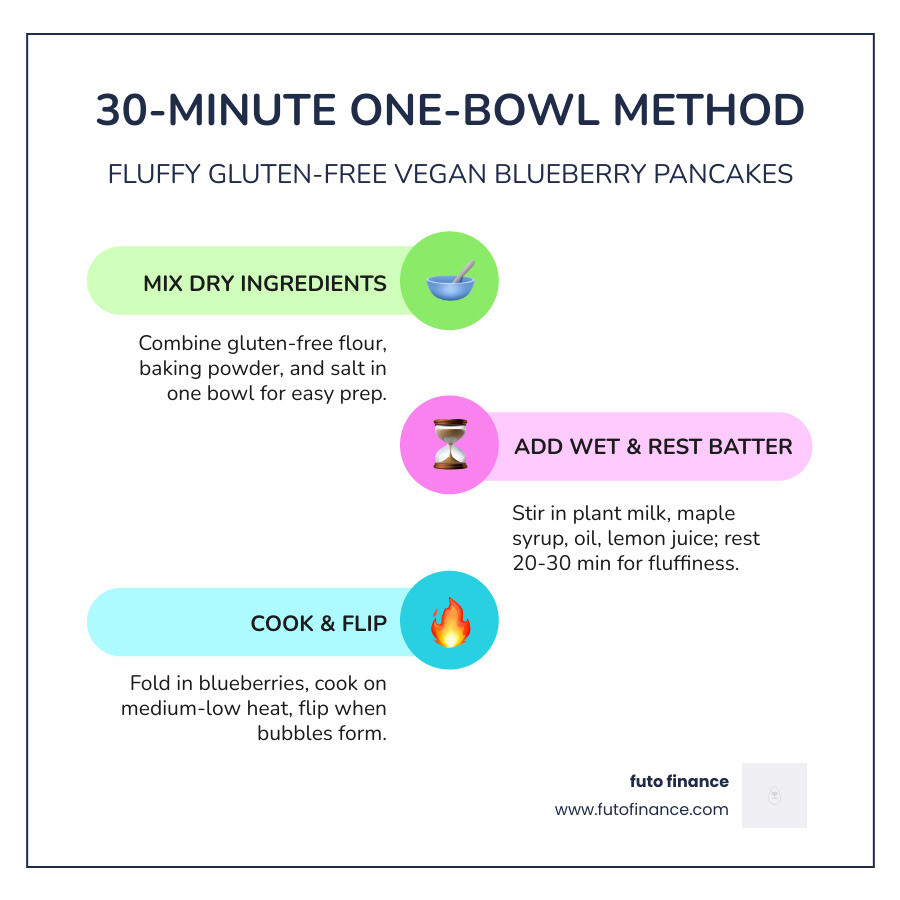
Here’s the basic method:
- Mix dry ingredients (gluten-free flour, baking powder, salt) in one bowl
- Add wet ingredients (plant-based milk, maple syrup, oil, lemon juice)
- Stir gently — do not overmix
- Rest the batter for 20-30 minutes
- Fold in blueberries
- Cook on a lightly oiled non-stick pan over medium-low heat
- Flip when bubbles form and edges look set
These pancakes are fluffy, naturally sweet, and honestly hard to tell apart from the traditional kind.
For students especially, this recipe ticks every box: cheap ingredients, minimal cleanup, and ready before your first lecture. A batch of 8-12 pancakes can be made ahead and reheated all week — saving both time and money.
The secret to getting them actually fluffy without eggs or gluten comes down to two things: the right flour blend and a simple acid-and-baking-soda reaction. More on that below.
Essential Ingredients for Gluten Free Vegan Blueberry Pancakes
When we talk about gluten free vegan blueberry pancakes, the magic starts with the pantry staples. As students, we know that buying twenty different specialty flours isn’t realistic for the budget or the tiny dorm kitchen cupboard. Fortunately, you only need a few key players to achieve that “undetectably vegan” texture.

The Flour Foundation
Not all gluten-free flours are created equal. Since we don’t have gluten to provide elasticity, we need a blend that offers structure without becoming a hockey puck.
- Gluten-Free All-Purpose Blends: Look for “1-to-1” or “Measure for Measure” blends. These usually contain rice flour, potato starch, and sorghum. Brands like King Arthur or Bob’s Red Mill (the red bag) are highly reliable.
- Oat Flour: This is a student’s best friend. You can make it yourself by blending gluten-free rolled oats in a dry blender until they reach a fine powder. It adds a wholesome, slightly sweet flavor and great “lift.”
- Almond Flour: If your budget allows, adding a bit of almond flour provides a buttery softness and healthy fats that mimic the richness of eggs.
| Flour Type | Texture Result | Cost Level | Best For |
|---|---|---|---|
| All-Purpose GF Blend | Classic, “White” pancake feel | Medium | Most like traditional recipes |
| Homemade Oat Flour | Hearty, fluffy, and thick | Low | Budget-conscious students |
| Almond Flour | Moist, tender, and “cakey” | High | Adding richness and protein |
| Chickpea Flour | Soft and dense | Low | High-protein savory-sweet notes |
The Wet Ingredients
To keep things plant-based, we swap dairy for any plant-based milk. Soy milk and oat milk are our favorites at Futo Finance because they have a higher protein content, which helps with browning. For sweetness, maple syrup is the gold standard—it pairs perfectly with blueberries and keeps the recipe refined sugar-free.
Fresh vs. Frozen Blueberries
This is the age-old debate.
- Fresh Blueberries: These are less likely to dye your batter purple. They create “jammy” pockets of flavor when they burst on the pan.
- Frozen Blueberries: These are often much cheaper for students. The trick? Do not thaw them. If you thaw them, they release juice that turns your entire stack of gluten free vegan blueberry pancakes a murky grey-blue. Add them to the batter while still frozen, or better yet, drop them onto the pancake once the batter is already in the pan.
Binding Agents (The “Egg” Factor)
Since we aren’t using eggs, we need a binder.
- Flax Eggs: 1 tablespoon of ground flaxseed meal mixed with 3 tablespoons of water. Let it sit for 5 minutes until it becomes “gloopy.” It adds fiber and omega-3s.
- Applesauce: A quarter cup of unsweetened applesauce adds moisture and a natural sweetness.
- Aquafaba: This is the liquid from a can of chickpeas. If you want “gourmet” fluffiness, you can whip this into stiff peaks and fold it in. However, for a quick Tuesday morning breakfast, a flax egg or even just a good flour blend is usually enough.
The Science of Fluffiness: Making Pancakes Without Eggs or Gluten
How do we get air into a pancake without the structural support of gluten or the leavening power of eggs? It comes down to a bit of kitchen chemistry.
The Acid-Base Reaction
In most of our gluten free vegan blueberry pancakes recipes, we use a combination of baking powder and baking soda. But baking soda needs an “activator.” This is where lemon juice or apple cider vinegar comes in. When you mix an acid (lemon juice) with a base (baking soda), it creates carbon dioxide bubbles. These bubbles get trapped in the batter, creating that airy, light texture we crave.
Pro Tip: Add your lemon juice at the very end, just before you’re ready to cook, to ensure the reaction is at its peak when the heat hits the pan.
Avoiding the “Gummy” Trap
Gluten-free baking is notorious for being gummy or rubbery. This usually happens for three reasons:
- Too much liquid: Gluten-free flour absorbs moisture differently than wheat flour.
- Lack of Xanthan Gum: Most blends include this, but if yours doesn’t, a tiny pinch helps hold the structure together.
- Under-cooking: Because these pancakes are moist, they need a “low and slow” approach to ensure the center is fully set.
Beyond just tasting great, these pancakes are a nutritional powerhouse. Using blueberries provides a significant boost to your morning. According to scientific research on the health benefits of blueberries, these “superfoods” are packed with antioxidants and can help with heart health and brain function—perfect for those long study sessions.
Step-by-Step Guide to Perfect Texture and Flavor
Preparing the Batter for Gluten-Free Vegan Blueberry Pancakes
We are big fans of the one-bowl method because, let’s be honest, no one in a shared student house wants to do extra dishes.
- Whisk the Dry: Start by whisking your flour, baking powder, and a pinch of salt. Sifting isn’t strictly necessary, but it helps if your flour is clumpy.
- Add the Wet: Create a well in the center and pour in your milk, maple syrup, oil, and vanilla.
- The “Spoon-and-Level” Method: When measuring flour, don’t scoop the measuring cup directly into the bag. This packs the flour down and leads to dense pancakes. Instead, spoon the flour into the cup and level it off with a knife.
- The Big Rest: This is the most important step. Let the batter sit for 20 to 30 minutes. This allows the gluten-free starches to fully hydrate. You’ll notice the batter thickens significantly during this time.

Cooking and Flipping for Even Browning
Cooking gluten free vegan blueberry pancakes requires a bit more patience than traditional ones.
- The Pan: A non-stick skillet is easiest, but a well-seasoned cast iron gives the best crispy edges.
- The Heat: Keep it at medium-low. If the pan is too hot, the outside will burn before the inside is cooked.
- The Oil: Use a tiny bit of coconut oil or a neutral vegetable oil. Avoid vegan butter for the actual frying, as the milk solids in the butter can burn quickly.
- The Indicators: Watch for bubbles. When bubbles form in the center and the edges look “matte” (not shiny anymore), it’s time to flip.
- The Flip: Be confident! Slide a thin spatula all the way under and flip in one quick motion.
Customization, Storage, and Serving Suggestions
Variations for Gluten-Free Vegan Blueberry Pancakes
One of the best things about this recipe is how adaptable it is.
- Nut-Free: Simply use oat milk or soy milk and stick to an oat-based flour blend.
- Refined Sugar-Free: Use mashed overripe bananas in the batter for sweetness instead of maple syrup.
- The “Everything” Pancake: Swap half the blueberries for dark chocolate chips or chopped walnuts.
When it comes to toppings, don’t just stop at syrup. We love adding a dollop of coconut whipped cream, a sprinkle of hemp seeds for protein, or a quick fruit compote made by simmering frozen berries with a splash of water.
Meal Prep: Storing and Reheating
We know student life is hectic. You don’t have time to whip up a fresh batter every morning.
- Fridge: Store cooked pancakes in an airtight container for up to 5 days.
- Freezer: This is a game-changer. Place a piece of parchment paper between each pancake so they don’t stick together, then put them in a freezer bag. They stay fresh for up to 2 months.
- Reheating: Skip the microwave if you can—it can make them a bit soggy. Instead, pop them in a dry frying pan on low heat or use a toaster. It brings back that slightly crisp exterior perfectly.
Frequently Asked Questions about Vegan GF Pancakes
Why is my gluten-free pancake batter gummy?
Gumminess is usually caused by the starches not being fully cooked or an imbalance of moisture. Make sure you are resting your batter for at least 20 minutes so the flour can absorb the liquid. Also, ensure you are cooking them “low and slow.” If you flip them too early, the middle stays gooey.
Can I use frozen blueberries instead of fresh?
Absolutely! Frozen blueberries are often more affordable for students and just as nutritious. Just remember: don’t thaw them. Add them directly to the pan on top of the poured batter to prevent the “blue streak” effect throughout your entire batch.
How long should I rest the batter and why?
Aim for 20-30 minutes. In gluten-free baking, the flours (like rice or oat) take longer to soak up liquid than wheat flour. Resting the batter ensures a thicker consistency, which leads to a taller, fluffier pancake rather than a flat crepe.
Conclusion
Mastering gluten free vegan blueberry pancakes is a rite of passage for any plant-based student. It’s a recipe that feels like a luxury weekend brunch but costs pennies to produce. By focusing on a solid flour blend, allowing the batter to rest, and using the simple science of lemon juice and baking soda, you can create a stack that is light, airy, and bursting with flavor.
At Futo Finance, we believe that eating vegan shouldn’t be complicated or expensive. Whether you’re fueling up for an exam or hosting a Sunday morning brunch with roommates, these pancakes are the perfect solution. Give them a try this weekend—your taste buds (and your budget) will thank you!

Melo Rodrigues is the founder of Futo Finance and a specialist in student-budget veganism. Having mastered the art of plant-based cooking in a university setting, Melo is dedicated to helping students achieve nutritional excellence without financial strain. Through Futo Finance, Melo shares lab-tested strategies for eating smart and living sustainably on a budget.
