
How to survive college on cheap vegan meals
Eating Well Without Breaking the Bank: The Student Vegan Dinner Guide
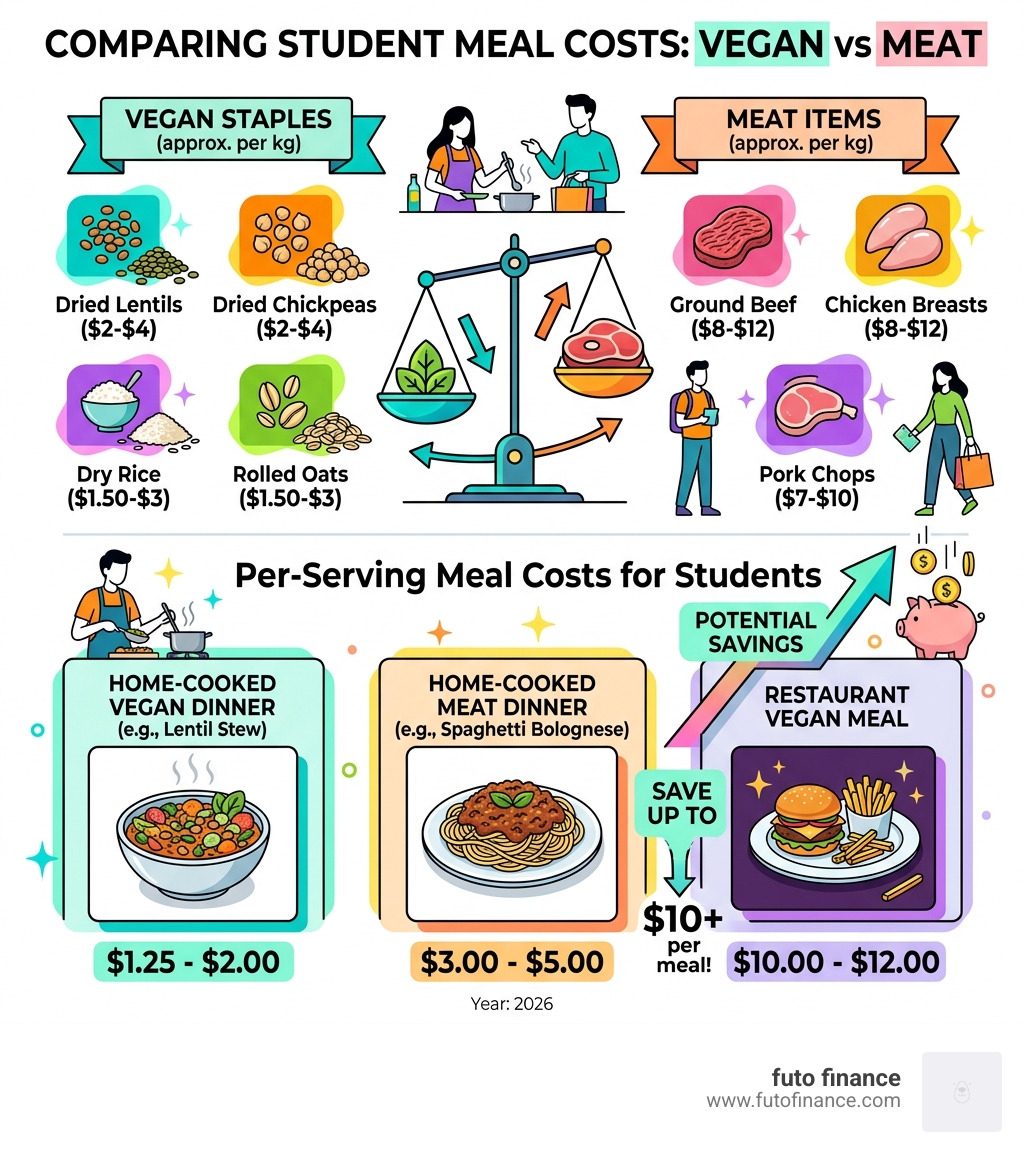
Cheap student vegan dinners are easier to pull off than most people think — and they can cost as little as $1.25 to $2 per serving.
Here are some of the best options to get started:
- 99p Veggie Stir Fry — frozen veg, noodles, soy sauce; ready in 10 minutes
- Spicy Lentil & Bean Bowl — one pan, no chopping, under 15 minutes
- One-Pan Mexican Quinoa — ~$2 per serving, great for weekly leftovers
- Vegan Fajita Bowls — 15 minutes, makes 4 servings, ideal for meal prep
- Vegan Buddha Bowl — chickpeas, sweet potato, brown rice; under $5
There’s a widespread belief that eating vegan as a student is expensive and complicated. It’s not.
The truth is, plant-based staples — beans, lentils, rice, frozen vegetables — are among the cheapest foods you can buy. A homemade veggie bowl costs around $2–3 per serving, compared to $10–12 at a restaurant.
The real challenge for most students isn’t the cost. It’s knowing which recipes to make, what to keep in your pantry, and how to prep meals when you’re juggling classes, deadlines, and a tight budget.
That’s exactly what this guide covers.
Mastering the Art of Cheap Student Vegan Dinners
As we head into April 2026, the cost of living remains a top concern for university students. However, we’ve found that shifting toward a plant-based lifestyle isn’t just a win for the planet and your health—it’s a massive win for your bank account. To master the art of cheap student vegan dinners, you need to shift your mindset from buying “vegan products” (like expensive branded meat alternatives) to buying “vegan ingredients.”

The first rule of budget veganism is embracing bulk buying. Grains like brown rice and quinoa, along with dried legumes, are significantly cheaper when bought in large bags. When you’re at the store, always look at the price-per-ounce or price-per-gram on the shelf tag. Often, the larger bag of rice looks more expensive upfront, but it will last you a month and cost half as much per meal as the small boxes.
Another secret weapon? Frozen vegetables. Contrary to popular belief, frozen veggies are often just as nutritious as fresh ones because they are frozen at peak ripeness. They won’t wilt in the back of your fridge, which eliminates food waste—a major “hidden” cost for students.
| Meal Type | Restaurant Cost | Homemade Cost | Savings Per Meal |
|---|---|---|---|
| Veggie Burger Bowl | $11.00 | $2.50 | $8.50 |
| Mexican Quinoa Bowl | $12.50 | $2.00 | $10.50 |
| Stir Fry | $10.00 | $1.25 | $8.75 |
| Lentil Dhal | $13.00 | $1.50 | $11.50 |
By cooking at home, we can save enough money over a semester to cover textbooks or even a weekend trip. It’s about being smart with store brands and planning around seasonal produce. In April, look for spring greens and root vegetables that are still in stock.
Essential Pantry Staples for Budget Plant-Based Cooking
To whip up cheap student vegan dinners on the fly, you need a solid foundation. If your pantry is stocked with these essentials, you’re always 15 minutes away from a hot meal.
- Nutritional Yeast: Affectionately known as “nooch,” this is a must-have. It’s a complete protein source, packed with B vitamins and iron. It gives a cheesy, nutty flavor to everything from pasta to popcorn.
- Legumes (Chickpeas, Black Beans, Lentils): These are the backbone of vegan protein. Lentils are incredibly nutritionally dense, offering high fiber and protein for pennies. Canned beans are convenient, but dried beans are even cheaper if you have the time to soak them.
- Grains (Brown Rice, Quinoa): These provide the complex carbohydrates needed for long study sessions. Quinoa is particularly great because it contains all nine essential amino acids.
- Flavor Boosters: Soy sauce, sriracha, and peanut butter can transform bland grains into a gourmet meal. Peanut butter isn’t just for toast; whisk it with soy sauce and lime for a quick satay sauce.
- Flax Seeds: Great for adding Omega-3s to your morning oats or acting as an “egg” in baking.
Quick and Easy Recipes for Busy Campus Life
When you have a lecture at 9 AM and a club meeting at 6 PM, you don’t have hours to spend over a stove. We love one-pan meals because they minimize cleanup and maximize flavor.
One of our favorites is One-Pan Mexican Quinoa. You literally throw quinoa, black beans, corn, canned tomatoes, and vegetable broth into a single pan. In 20 minutes, you have a high-protein meal that yields enough leftovers for three days. At roughly $2 per serving, it beats any campus burrito.
If you’re craving comfort food, try a Jackfruit Bolognese. Jackfruit has a “shredded” texture that mimics meat perfectly. When simmered with onions, garlic, and a jar of marinara sauce, it provides a hearty dinner that can count for up to five of your recommended 5-a-day vegetable servings.
For a quick 15-minute win, Vegan Fajita Bowls are the way to go. Sauté bell peppers, onions, and black beans with fajita seasoning. Serve it over rice with a dollop of salsa. This recipe typically makes four servings, making it a meal-prep champion. The key is high-heat cooking—keep those veggies moving in the pan so they stay crisp and charred rather than soggy.
15-Minute Cheap Student Vegan Dinners for Finals Week
Finals week is the ultimate test of your budget and your patience. You need brain power, and you need it fast.
- 99p Student Stir Fry: Use a bag of frozen stir-fry veggies, some rice noodles, and a quick sauce made of soy sauce, brown sugar, and sriracha. It’s ready in 10 minutes and costs less than a pound.
- Spicy Lentil & Bean Bowl: This is a “no-chopping” miracle. Combine a tin of taco beans with a pouch of precooked lentils and a tin of chopped tomatoes. Heat it through and serve. It provides about 24g of protein and 18g of fiber, keeping you full through midnight library sessions.
- Microwave Sweet Potatoes: Prick a sweet potato with a fork and microwave for 5-7 minutes. Stuff it with canned black beans and salsa for a 5-minute dinner that hits all the nutritional marks.
Dorm-Friendly Cheap Student Vegan Dinners Using Minimal Tools
Living in a dorm with nothing but a microwave and a mini-fridge? We’ve been there. You can still avoid the “instant noodle trap.”
Microwave Vegan Mac and Cheese is possible! You can cook pasta in water in the microwave, then stir in nutritional yeast, a splash of plant milk, and a little garlic powder for a creamy, “cheesy” fix.
Another dorm hack is Chickpea Tuna Salad. Mash a can of chickpeas with a fork, mix in some vegan mayo (or avocado), mustard, and chopped pickles. No stove required! Serve it in a wrap or with crackers.
Don’t underestimate your tools. An electric kettle can “cook” couscous or soak rice noodles in minutes. You can even grow a small herb garden on your windowsill to add fresh basil or cilantro to your meals, saving you $3 per bunch at the store. Finally, don’t be shy about the dining hall—if you have a meal plan, grab extra fruit, spinach, or peanut butter packets to supplement your dorm-room cooking.
Meal Prepping Strategies to Save Time and Money
Meal prepping is the difference between a stressful week and a smooth one. We recommend “Sunday Batch Cooking.” Spend two hours on Sunday afternoon preparing your bulk components.
- The Component Method: Instead of making full meals, prep ingredients. Cook a big pot of rice, roast a tray of sweet potatoes, and simmer a batch of beans.
- Storage Matters: Use glass jars or airtight containers. If you’re making Vegetarian Burger Bowls, store the fresh veggies, the protein (like lentils or tofu), and the sauce separately. This prevents everything from turning into a soggy mess by Wednesday.
- Portion Control: Divide your meals into individual containers immediately. This ensures you don’t accidentally eat three “servings” in one sitting and leave yourself short for Thursday’s lunch.
Research shows that meal planning significantly improves nutritional intake because you’re less likely to reach for processed snacks when a healthy, pre-made meal is waiting in the fridge.
Ensuring Nutritional Balance on a Student Budget
A common worry is that cheap student vegan dinners might lack protein or essential vitamins. However, plant-based diets can be incredibly balanced if you focus on variety.
To ensure satiety and energy, aim for the “Plate Method”: half your plate should be vegetables, one-quarter complex carbohydrates (like brown rice), and one-quarter protein (like beans or tofu).
- Iron and Vitamin C: Plant-based iron (non-heme) is absorbed better when eaten with Vitamin C. Add a squeeze of lime to your bean chili or serve your lentil dhal with some steamed broccoli.
- B12: This is the one vitamin you won’t find naturally in plants. Look for fortified foods like nutritional yeast or plant milks, or take a cheap weekly supplement.
- Fiber: One of the perks of a vegan diet is the massive amount of fiber. A single Spicy Lentil Bowl can provide 80% of your RDA of Vitamin B1 and nearly half your Vitamin C.
Frequently Asked Questions about Vegan Student Cooking
How much does the average cheap vegan student dinner cost?
Most of the recipes we’ve discussed cost between $1.25 and $2.00 per serving. By focusing on bulk staples like dried beans and rice, and utilizing frozen vegetables, you can keep your daily food cost lower than a single latte at a campus cafe.
What are the best vegan protein sources for students?
Lentils and chickpeas are the champions of the student budget. They are shelf-stable and incredibly versatile. Tofu is also an excellent option; it’s often cheaper than chicken and can be frozen to change its texture to be “meatier.” Nutritional yeast and quinoa are great “bonus” proteins to add to any meal.
Can I cook vegan meals in a dorm without a stove?
Absolutely. Between microwave-safe grains, canned beans, and no-cook options like wraps and salads, you can eat a diverse vegan diet. Using a microwave to “steam” veggies or an electric kettle to prep noodles makes dorm cooking surprisingly efficient.
Conclusion
Surviving college on a vegan diet doesn’t require a massive budget or a chef’s kitchen. By focusing on cheap student vegan dinners like one-pan stir-fries, hearty bean bowls, and creative dorm-room hacks, you can eat better than your peers while spending less.
At Futo Finance, we believe that culinary independence is a vital part of the university experience. Learning to nourish yourself with affordable, plant-based ingredients is a skill that will serve you (and your wallet) long after graduation.
Hungry for more tips on affordable student living? Check out more info about vegan student life to keep your health and your bank account in peak condition!

Melo Rodrigues is the founder of Futo Finance and a specialist in student-budget veganism. Having mastered the art of plant-based cooking in a university setting, Melo is dedicated to helping students achieve nutritional excellence without financial strain. Through Futo Finance, Melo shares lab-tested strategies for eating smart and living sustainably on a budget.
