
The Best Cheap Tempeh Stir Fry You Will Ever Make
The Cheapest, Most Filling Stir Fry You Can Make Tonight
Affordable tempeh stir fry is one of the best meals a student can have in their cooking rotation — ready in under 30 minutes, packed with protein, and easy on the wallet.
Here is what you need to know upfront:
- Cost: One 8-ounce package of tempeh costs around $2-3 and feeds 3-4 people
- Time: 10 minutes prep, 18-20 minutes cook time
- Protein: ~20 grams per serving — more than most takeout meals
- Shelf life: Leftovers keep for 4-5 days in the fridge
Most stir-fry ingredients — soy sauce, garlic, ginger, frozen vegetables — are already cheap pantry staples. Put them together with a block of tempeh and you have a meal that costs a fraction of takeout, with more nutrition per bite.
Tempeh is a fermented soy product with a firm, nutty texture. It absorbs sauces extremely well, which means even a simple homemade sauce makes it taste rich and satisfying. No fancy skills needed.
This guide walks you through everything: prepping tempeh, building a budget sauce, picking the cheapest vegetables, and storing leftovers like a pro.
Why Tempeh is the Ultimate Affordable Tempeh Stir Fry Protein
When we look for the perfect protein for a student budget in April 2026, tempeh consistently sits at the top of the list. While many people gravitate toward tofu because it is more familiar, tempeh is actually the secret weapon of the plant-based world.

What is Tempeh?
Originating in Indonesia in the early 1800s, tempeh is a fermented soy product. Unlike tofu, which is made from soy milk, tempeh is made from whole, cooked, and dehulled soybeans that are inoculated with a specific mold (Rhizopus oligosporus). The beans are incubated until they are bound together by a dense, white mycelium, creating a firm, cake-like block.
Nutritional Powerhouse
Because it uses the whole bean, tempeh is incredibly dense in nutrients. It provides about 20 grams of protein per 84g (3oz) serving. It is also a rich source of prebiotic fiber, which is essential for gut health, and contains significant amounts of iron and calcium. The fermentation process is like “weird science” for your stomach—it actually makes the nutrients more available for your body to absorb.
Value for Money
In April 2026, an 8-ounce package of tempeh typically retails for $2.00 to $3.00. Since one package can easily serve three to four people when bulked out with vegetables and grains, your protein cost per serving is less than a dollar.
| Feature | Homemade Tempeh Stir Fry | Chinese Takeout (Vegan Option) |
|---|---|---|
| Average Cost | ~$1.75 per serving | ~$12.00 – $15.00 per serving |
| Protein Content | ~20g – 23g | ~8g – 12g |
| Sodium Levels | Controlled (Low-sodium options) | Usually Very High |
| Prep Time | 28-30 Minutes | 45 Minutes (Delivery/Pickup) |
By choosing an affordable tempeh stir fry over a delivery app, you aren’t just saving money; you’re fueling your brain with high-quality, sustainable fuel that won’t result in a “salt crash” during your late-night study sessions.
Prepping and Sourcing Your Ingredients
Preparation is the difference between a “meh” meal and a “wow” meal. Tempeh is often described as a “porous flavor sponge.” This means it has an incredible ability to soak up whatever sauce you throw at it, but it also means you need to handle it correctly to get the best texture.

Removing the Bitterness
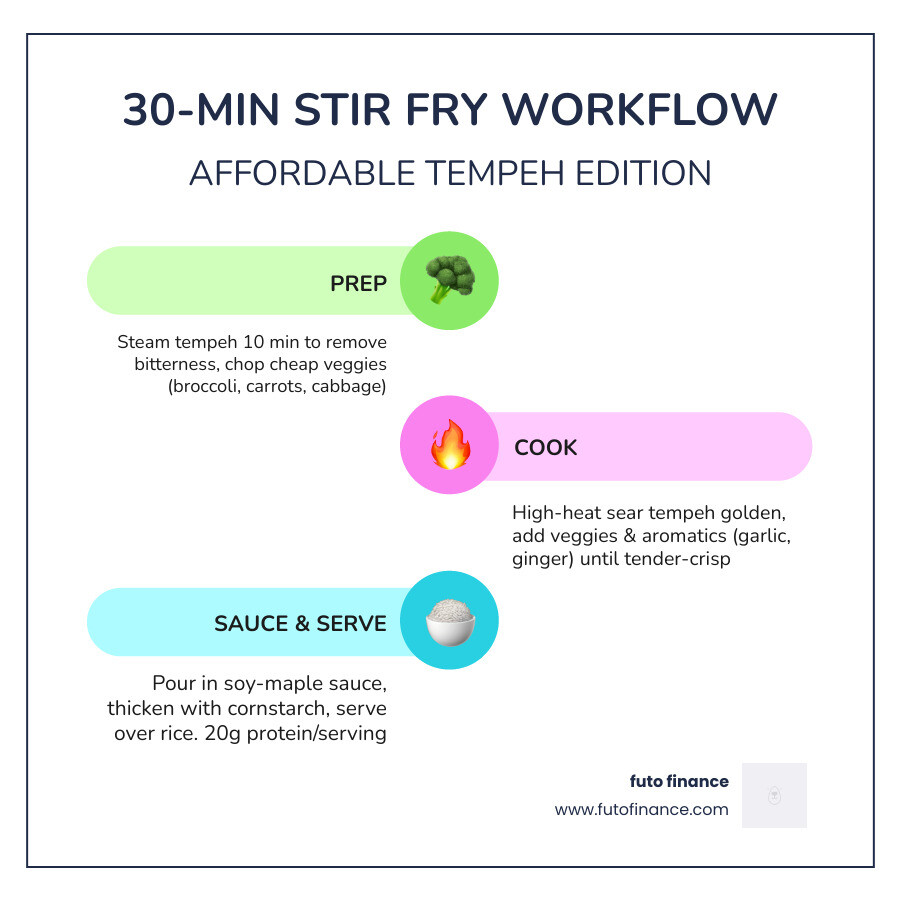
Some people find tempeh has a slightly bitter or earthy aftertaste. If you are sensitive to this, we recommend a quick “steam bath.” Simply slice or cube your tempeh and steam it over simmering water for 8 to 10 minutes before you start the stir-fry. This softens the texture and opens up the “pores” of the tempeh, allowing it to absorb even more sauce.
Softening the Texture
If you don’t want to steam, another great hack is simmering the tempeh in a flavored liquid. Putting your tempeh cubes in a pan with a little water and a splash of soy sauce for 10 minutes before frying will season it all the way through and ensure it isn’t too tough.
Sourcing on a Budget
To keep this an affordable tempeh stir fry, we need to be smart about where we shop.
- Buy in Bulk: Grains like brown rice or quinoa are significantly cheaper when bought from the bulk bins.
- Pantry Staples: Items like soy sauce, rice vinegar, and sesame oil might seem like an investment upfront, but they last for months and bring the cost of individual meals down to pennies.
- The “Clear Out the Fridge” Method: Stir-fries are the ultimate way to use up that half-carrot or wilted kale sitting in your crisper drawer.
Essential Ingredients for an Affordable Tempeh Stir Fry
You don’t need exotic ingredients to make this taste like a restaurant-quality dish. Here is our “budget-bestie” list of essentials:
- Tempeh: One 8oz block, cubed or sliced into thin strips.
- Aromatics: Fresh garlic and ginger. Pro-tip: Buy a large ginger root, peel it, and keep it in the freezer. You can grate it directly into the pan while frozen!
- Vegetables: Broccoli, carrots, and cabbage are the “big three” of budget produce. They stay fresh for a long time and provide a great crunch.
- Frozen Mixes: If fresh produce is too expensive this week, a bag of frozen stir-fry vegetables works perfectly and requires zero chopping.
- The Crunch: Sliced green onions or a sprinkle of sesame seeds adds a professional finish for very little cost.
Scientific research on soy protein shows that it is a complete protein, containing all nine essential amino acids. This makes it an ideal staple for students who might not be eating a wide variety of expensive meats.
The 30-Minute Cooking Method
The beauty of a stir-fry is the speed. Once the chopping is done, the actual cooking happens in a flash.
Step 1: Sear the Tempeh
Heat a large non-stick skillet or wok over medium-high heat with a tablespoon of high-heat oil (like avocado or canola). Add your tempeh pieces. The secret to great tempeh is not moving it too much. Let it sit for 3-5 minutes per side until it develops a deep, golden-brown crust. This caramelization is where the flavor lives. Once browned, remove the tempeh from the pan and set it aside.
Step 2: The Veggie Flash
In the same pan, add a bit more oil if needed. Toss in your harder vegetables first (like carrots and broccoli). If the pan gets too dry, don’t just add more oil—add a tablespoon of water. This creates steam that cooks the vegetables through while keeping them “tender-crisp” and vibrant.
Step 3: Aromatics
Add your minced garlic and ginger during the last 2 minutes of vegetable cooking. If you add them too early, they will burn and turn bitter.
Step 4: The Big Finish
Return the tempeh to the pan and pour in your sauce. Toss everything together for 1-2 minutes until the sauce bubbles and thickens, coating every single piece of tempeh and broccoli in a glossy glaze.
Mastering the Affordable Tempeh Stir Fry Sauce
You don’t need bottled sauces filled with preservatives. You can whisk this together in a small bowl in 60 seconds:
- Soy Sauce (3 tbsp): Use reduced-sodium if you can, as it gives you more control over the saltiness.
- Maple Syrup or Agave (1-2 tbsp): This balances the salt and helps the sauce caramelize.
- Rice Vinegar (1 tbsp): Adds the necessary “zing” and acidity.
- Toasted Sesame Oil (1 tsp): A little goes a long way for that authentic nutty aroma.
- Cornstarch (1 tsp): This is the magic ingredient. It thickens the sauce so it sticks to the food instead of pooling at the bottom of the bowl.
- Red Pepper Flakes: Add as much as your spice tolerance allows!
Budget Hacks, Storage, and FAQs
One of the best ways to survive university life is to master the art of the “leftover.”
Storage and Reheating
This affordable tempeh stir fry is a meal prep dream. It keeps in an airtight container in the fridge for 4 to 5 days.
- Reheating: Use a microwave for speed, but if you have an extra 5 minutes, reheating it in a pan with a splash of water or broth will help revive the texture of the vegetables.
- Pairing: To keep costs low, serve your stir-fry over a big bed of brown rice or white rice. If you want to get fancy, quinoa or even cheap ramen noodles (minus the flavor packet) work beautifully.
How do I make tempeh taste less bitter?
As mentioned, steaming is the #1 method. However, a strong marinade also helps. If you have time, let your tempeh sit in the sauce for 15-20 minutes before cooking. The acidity in the vinegar and the sweetness in the syrup help neutralize those earthy notes.
Can I freeze tempeh stir fry?
Yes! You can freeze the cooked tempeh and sauce for up to one month. However, be warned that vegetables like bell peppers can get a bit mushy after freezing. For the best results, freeze the cooked tempeh and sauce, then just stir-fry some fresh (or frozen) veggies when you’re ready to eat.
What are the best cheap substitutions?
- Tofu: If tempeh is sold out, extra-firm tofu is a great sub, though you’ll need to press the water out first.
- Peanut Butter: Add a tablespoon of peanut butter to your sauce for a “Satay” style flavor that is incredibly filling.
- Seasonal Greens: Use whatever is on sale. Shredded cabbage is often the cheapest “green” in the grocery store and adds amazing volume to the meal.
For more tips on how to eat well without breaking the bank, check out More vegan cooking tips.
Conclusion
Eating a plant-based diet as a student shouldn’t feel like a sacrifice. By mastering the affordable tempeh stir fry, you are taking control of your health, your budget, and your environmental footprint. This dish is proof that with $5 and 30 minutes, you can create a meal that rivals any restaurant in town.
At Futo Finance, we believe that sustainable habits start in the kitchen. Whether you are a seasoned vegan or just trying to save a few dollars by skipping meat on Mondays, this stir-fry is a guaranteed win. Grab a block of tempeh, fire up the stove, and see for yourself why this is the only stir-fry recipe you’ll ever need.
Start your vegan journey with Futo Finance

Melo Rodrigues is the founder of Futo Finance and a specialist in student-budget veganism. Having mastered the art of plant-based cooking in a university setting, Melo is dedicated to helping students achieve nutritional excellence without financial strain. Through Futo Finance, Melo shares lab-tested strategies for eating smart and living sustainably on a budget.
