
Your Weekly Low Budget Vegan Bowls and Snack Prep Manual
Why a Budget Vegan Prep Guide Is the Smartest Move You Can Make This Week
A budget vegan prep guide helps you eat healthy, plant-based meals for as little as $20–$30 per week by focusing on whole foods, batch cooking, and smart shopping.
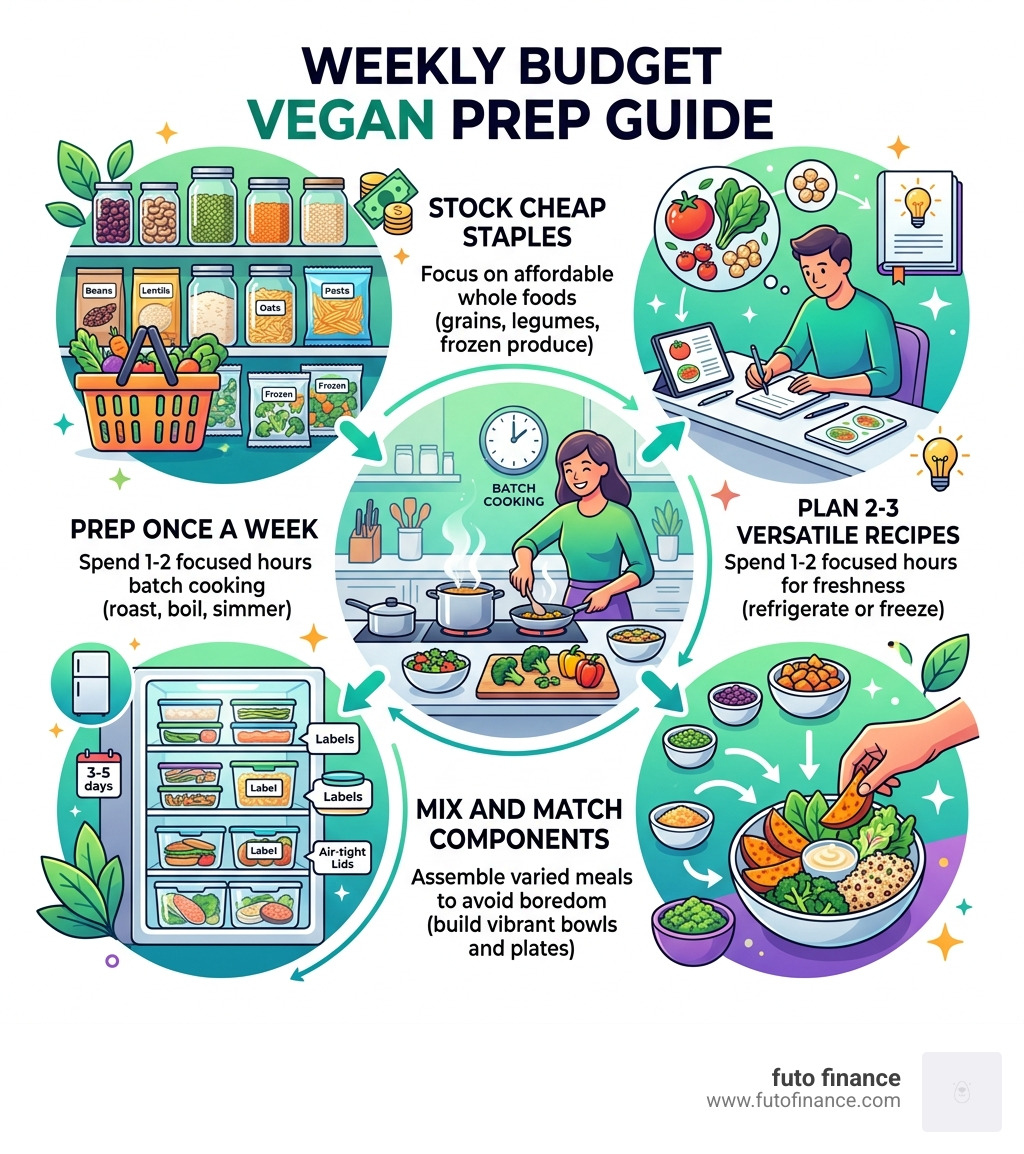
Here’s the quick version of how it works:
- Stock cheap staples — beans, lentils, rice, oats, frozen veggies
- Pick 2–3 versatile recipes with overlapping ingredients
- Prep once a week in 1–2 hours
- Mix and match components throughout the week to avoid boredom
- Store safely — most meals last 3–5 days in the fridge, months in the freezer
You’re juggling classes, deadlines, and a tight budget. The last thing you need is to figure out dinner at 9pm after a full day.
Here’s the reality: most people don’t fail at eating well because they lack willpower. They fail because there’s nothing ready when hunger hits.
The good news? A whole week of nutritious vegan meals can cost under $30 — and take just one focused session to prepare. Budget vegan staples like dried lentils cost as little as $0.03 per gram of protein, compared to $0.15 for ground beef. Frozen broccoli gives you twice the quantity of fresh for the same price.
This isn’t about pasta and ketchup. It’s about building a simple, repeatable system that saves you time, money, and the daily stress of “what am I eating today?”
The Economics of a Budget Vegan Prep Guide
One of the biggest myths we hear at Futo Finance is that eating vegan is a “luxury” reserved for those with deep pockets. In April 2026, with inflation still a hot topic, people often point to $8 vegan cheeses or $10 meat-alternative patties as proof. But here is the secret: those aren’t staples; they’re treats.

The true foundation of a budget vegan prep guide is whole foods. When we strip away the fancy packaging, plant-based eating is actually the most affordable diet on the planet. Research shows that plant-based meals can cost up to 40% less than those centered around meat or fish. Why? Because you aren’t paying for the high production and storage costs associated with animal products.
Price Comparison: Plants vs. Animals
To put this into perspective, let’s look at the cost per gram of protein. While meat and dairy are often subsidized, making them appear cheaper than they should be, they still can’t compete with the humble legume.
| Protein Source | Estimated Cost per Gram of Protein |
|---|---|
| Dried Lentils | $0.03 |
| Dried Chickpeas | $0.04 |
| Peanut Butter | $0.05 |
| Chicken Breast | $0.12 |
| Ground Beef | $0.15 |
| Salmon | $0.25 |
Where to Find the Best Deals
To keep your costs down, we recommend a “multi-stop” strategy:
- Bulk Bins: This is where the magic happens. Buying your rice, beans, and oats in bulk isn’t just eco-friendly; it slashes the unit price.
- Ethnic Markets: Never sleep on your local Indian, Korean, or Mexican markets. You’ll find spices for a fraction of supermarket prices, along with affordable mushrooms, tofu, and specialty grains.
- Discount Grocers (like ALDI): You can often grab a week’s worth of produce and staples for around $22.
- Seasonal Shopping: Buying a watermelon in January is expensive and tastes like cardboard. Stick to the seasons to save money and get better nutrition.
For a deeper dive into the logistics, check out this Full Week Vegan Meal Prep: Complete Guide.
Pantry Inventory and Smart Shopping Strategies
Before you even step foot in a store, you need a plan. The average household wastes nearly $1,900 a year on discarded groceries. As students, we can’t afford that!
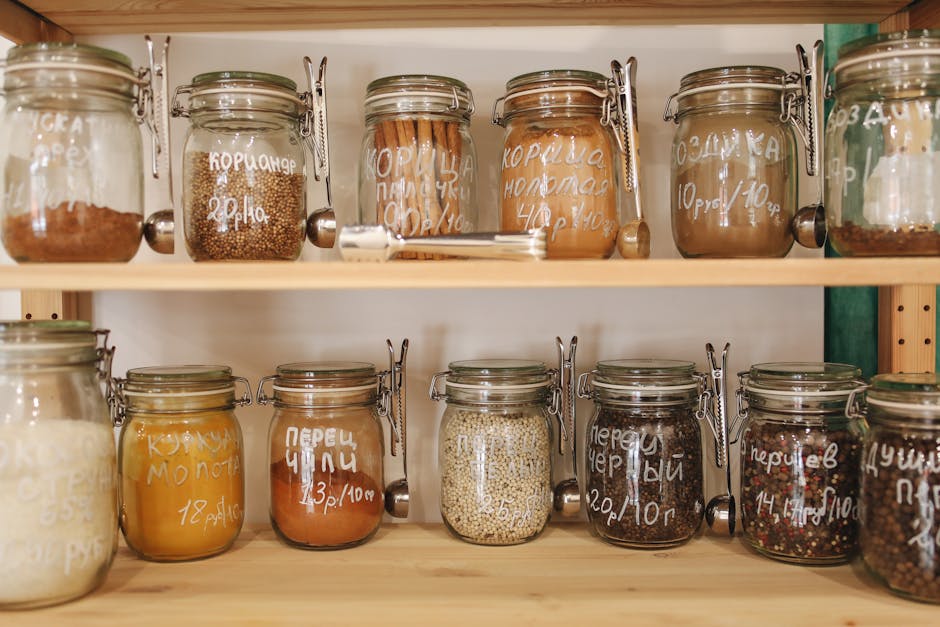
Step 1: The Inventory Check. Look in your cupboards. Do you have half a bag of quinoa? Three cans of tomatoes? Build your weekly plan around what you already own.
Step 2: The Categorized List. Don’t just write “food” on a scrap of paper. Organize your list by category: Grains, Proteins, Fresh Produce, Frozen, and “Flavor Boosters.” This keeps you from wandering aimlessly into the snack aisle where impulse buys happen.
Step 3: Unit Pricing. Always look at the small print on the shelf tag that says “Price per Ounce” or “Price per Pound.” Sometimes the “family size” is a deal, but other times, two smaller bags are cheaper.
Essential Staples for Your Budget Vegan Prep Guide
If you keep these items in your “dry store,” you can always whip up a meal for under $2.
- Dry Beans & Lentils: The kings of budget protein. Dried beans cost about $0.15 per serving compared to $0.33 for canned.
- Grains: Brown rice, oats, and pasta are your energy sources. A massive bag of rice is a student’s best friend.
- Nutritional Yeast: This is our “vegan gold.” It’s packed with B12 and gives a cheesy, nutty flavor to anything.
- Healthy Fats: Peanut butter and flax seeds provide essential Omegas and keep you full.
- Frozen Produce: Frozen veggies are often more nutritious than fresh because they are picked and frozen at peak ripeness. Plus, they won’t rot in your crisper drawer if you forget about them.
According to Scientific research on plant-based nutrition, these whole foods provide the fiber and antioxidants necessary for peak brain function—perfect for those long study sessions.
The Building Blocks Method for Versatile Bowls
Most people hate meal prep because they think it means eating the exact same lukewarm spaghetti five days in a row. We call that “The Boredom Trap.”
Instead, use the Building Blocks Method.
Instead of making five identical meals, you prep components:
- A Base Grain: (e.g., 3 cups of cooked brown rice or quinoa)
- Two Proteins: (e.g., a batch of roasted chickpeas and a block of marinated tofu)
- A Big Batch of Veggies: (e.g., roasted cabbage, onions, and broccoli)
- Two Different Sauces: (e.g., a spicy peanut sauce and a lemon-tahini drizzle)
Now, you can mix and match. Monday is a Mediterranean bowl. Wednesday is a Peanut Stir-fry. Friday is a Taco bowl. You’re using the same ingredients, but the flavor profile changes entirely.
$5 Per Serving Recipe Components
- Maple-Dijon Tofu: Press your tofu, cube it, and toss in mustard and maple syrup before baking.
- Cumin-Spiced Lentils: Boil dry lentils with a bay leaf and finish with cumin and salt.
- Roasted Cabbage: It’s the cheapest veggie in the store and becomes sweet and buttery when roasted.
- Overnight Oats: 1/2 cup oats + 1 cup plant milk + a spoonful of peanut butter. Costs about $0.50.
Sample $30 Weekly Budget Vegan Prep Guide Plan
Can you really eat for a week on $30? Yes. Here is how a typical week looks for one person:
- Breakfast: Sweet Potato Oatmeal or Basic Overnight Oats.
- Lunch: Lentil Power Bowls with roasted veggies and tahini.
- Dinner: Three-Bean Chili (make a big pot!) or Tofu Scramble with toast.
- Snacks: PB & Banana slices or Spiced Roasted Chickpeas.
Pro Tip: Repurpose your leftovers! That leftover rice from Monday’s bowl becomes the base for a quick fried rice on Thursday. Those extra black beans from Tuesday’s chili? Mash them into a patty for a “burger” on Friday.
Workflow, Storage, and Dorm Kitchen Solutions
Efficiency is the name of the game. You don’t want to spend your whole Sunday in the kitchen. With a smart budget vegan prep guide workflow, you can finish in under 2 hours.
The Order of Operations
- Start the “Passive” Items: Get your rice and dry beans boiling. These take 45–60 minutes but require zero attention.
- Preheat and Roast: While the grains simmer, chop your veggies and tofu. Toss them on sheet pans and slide them into the oven.
- The “No-Cook” Assembly: While everything is cooking, whisk your sauces and portion out your overnight oats into jars.
- Cool and Pack: This is the most important step for safety!
Storage and Safety
- The 20-Minute Rule: Let cooked food cool on the counter for 20–30 minutes before putting it in the fridge. Putting piping hot food in a cold fridge can raise the internal temperature and spoil other items.
- Glass vs. Plastic: If you can afford it, glass snap-top containers are better—they don’t stain or hold odors. If you’re using plastic, make sure it’s BPA-free and don’t microwave it.
- The FIFO Principle: “First In, First Out.” Put your newest prep at the back and move the older items to the front so nothing gets forgotten and wasted.
- Freezing: Most grains, beans, and soups freeze beautifully for up to 3 months. If you know you won’t eat it by Thursday, freeze half on Sunday.
Dorm Room Hacks
Limited space? No problem.
- The Microwave is a Tool: You can “steam” frozen veggies or even cook a potato in the microwave.
- Mini-Fridge Organization: Use stackable containers to maximize every inch of that tiny fridge.
- The Mason Jar: These are cheap, leakproof, and perfect for salads (put the dressing at the bottom!) or oats.
For more student-specific tips, check out More info about vegan budgeting.
Frequently Asked Questions
How long does food stay fresh in a budget vegan prep guide?
Most cooked vegan meals stay fresh and delicious for 3 to 5 days in the refrigerator. Grains and legumes tend to last a bit longer than fresh leafy greens. If you’re worried about Friday, just pop that portion in the freezer on Sunday night!
Can I really eat vegan for under $30 a week in 2026?
Absolutely. By focusing on the “Foundation Four” (grains, legumes, seasonal produce, and seeds/nuts) and avoiding expensive brand-name meat substitutes, $30 is more than enough for one person to eat nutritiously. In fact, many students manage on $20–$25 by shopping at discount stores like ALDI.
What are the best containers for dorm meal prepping?
We recommend a mix. Glass containers are best for meals you need to reheat. Wide-mouth mason jars (16 oz) are perfect for breakfasts and smoothies. Reusable silicone bags are great for snacks and saving space in a crowded mini-fridge.
Conclusion
At Futo Finance, we believe that your bank account balance shouldn’t dictate your health. Adopting a budget vegan prep guide isn’t just about saving a few dollars; it’s about reclaiming your time and fueling your body for academic success.
When you have a fridge full of prepped, colorful bowls, you’re not just avoiding the “freshman fifteen” or the 6pm takeout temptation—you’re building a sustainable habit that benefits your body and the planet.
Ready to stop stressing and start eating? Grab your containers, head to the bulk aisle, and Start your budget journey today. You’ve got this!

Melo Rodrigues is the founder of Futo Finance and a specialist in student-budget veganism. Having mastered the art of plant-based cooking in a university setting, Melo is dedicated to helping students achieve nutritional excellence without financial strain. Through Futo Finance, Melo shares lab-tested strategies for eating smart and living sustainably on a budget.
