
15 Vegan Lunches You Can Actually Make at Work
Why Vegan Lunches Don’t Have to Be Boring (Or Expensive)
vegan lunch tips can transform your midday meal from a sad desk salad into something you actually look forward to eating.
Here are the key tips to get you started:
- Balance your macros: Include a protein (beans, tofu, tempeh), a complex carb (quinoa, rice, sweet potato), and a healthy fat (avocado, tahini, nuts) in every lunch
- Batch cook on Sundays: Prep grains and legumes once, eat well all week
- Use the 10-minute rule: Canned beans, store-bought hummus, and pre-washed greens mean no cooking required
- Layer smart: Keep dressings separate until eating to avoid soggy salads
- Aim for 20-30g of protein: Chickpeas (14g/cup), lentils (18g/cup), and white beans (17g/cup) are cheap, filling, and fast
Lunch is the meal that gets the least time and attention. Between classes, lectures, and a tight student budget, it’s easy to grab something overpriced or just skip it entirely.
The good news? A filling, nutritious vegan lunch doesn’t need fancy ingredients or an hour in the kitchen. Lentils, for example, cost roughly 30 cents per serving and take about 10 minutes to boil. A smashed chickpea wrap takes less time to assemble than waiting in a cafe line.
This guide walks you through 15 real, portable vegan lunches you can actually make — plus the prep strategies that make them effortless.
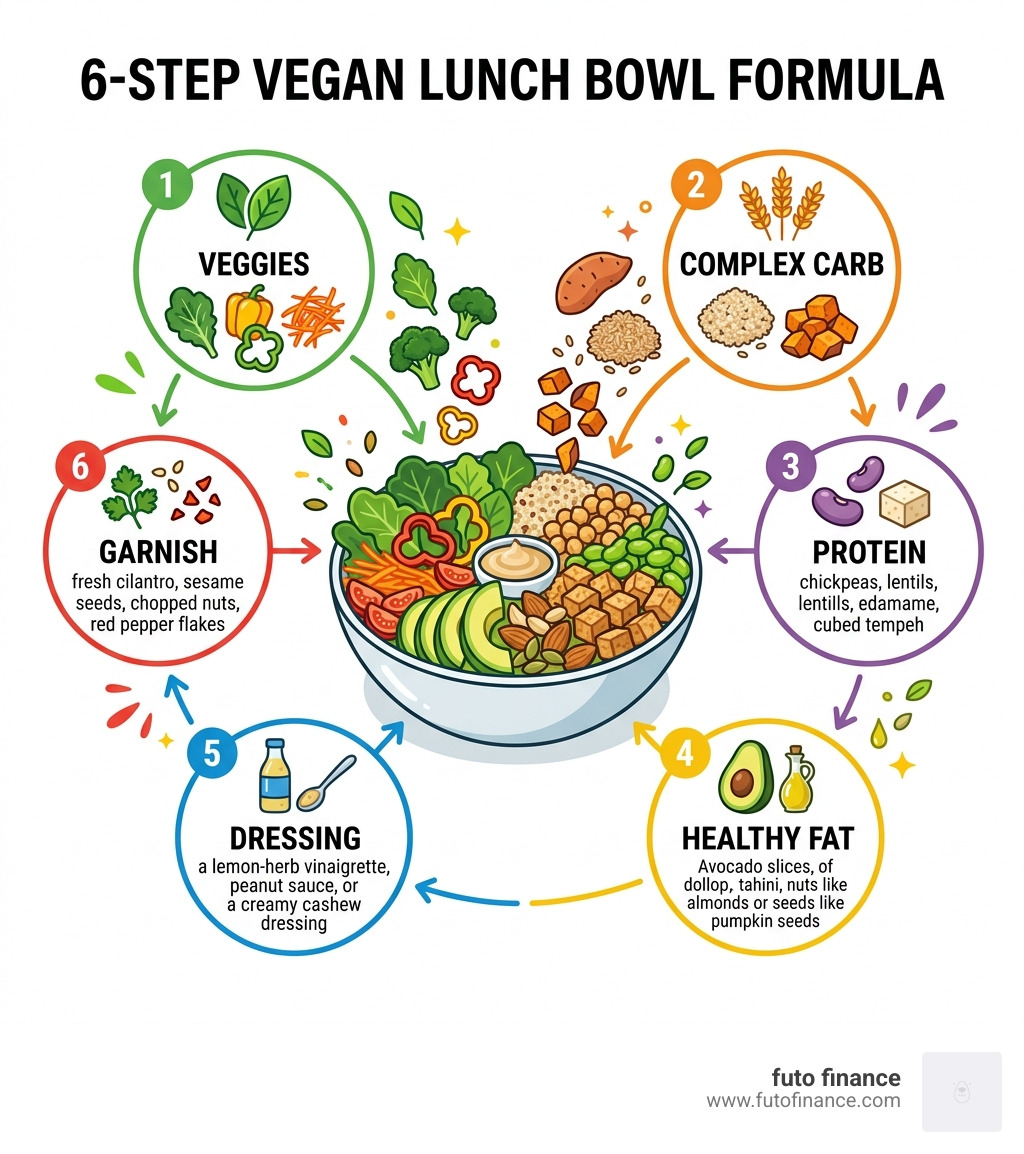
Essential Vegan Lunch Tips for Balanced Nutrition
When we talk about vegan lunch tips, the first hurdle is usually the “hunger gap.” We’ve all been there: you eat a massive salad at 12:00 PM and by 2:00 PM, your stomach is growling so loudly it’s distracting your coworkers or classmates. The secret to a lunch that actually sticks with you is macronutrient balance.
Scientific research into plant-based nutrition suggests that satiety — the feeling of being full — comes from a combination of fiber, protein, and healthy fats. We recommend aiming for 20 to 30 grams of protein per lunch. This isn’t just for bodybuilders; protein is essential for tissue repair, enzymatic reactions, and even keeping your hair and nails healthy.
To build a balanced lunch, follow this simple formula:
- Protein: Chickpeas, lentils, black beans, tofu, or tempeh.
- Complex Carbs: Quinoa, brown rice, sweet potatoes, or whole-wheat wraps. These provide sustained energy rather than the “sugar crash” you get from refined white bread.
- Healthy Fats: Avocado, tahini, nuts, or seeds. Fats slow down digestion, which regulates your blood sugar and keeps you full longer.
- Micronutrients: A variety of colorful veggies and fruits to ensure you’re getting your vitamins.
Smart Meal Prep Strategies and Vegan Lunch Tips
The biggest challenge people face when packing vegan lunches is the time it takes to prepare them every morning. Our best advice? Stop cooking every day. Batch cooking is the ultimate “cheat code” for the busy student or office worker.
Spend an hour on Sunday prepping your staples. Boil a large pot of quinoa or brown rice, roast a tray of sweet potatoes, and cook a batch of lentils or chickpeas. Having these ready in the fridge means you can assemble a “Buddha Bowl” in under five minutes. If you need more guidance on how to organize your week, check out More info about vegan meal planning.
Storage is just as important as the food itself. Invest in high-quality, airtight glass containers. Not only do they keep your food fresher for up to five days, but they also won’t leach chemicals into your food when you microwave them.
No-Cook and 10-Minute Vegan Lunch Tips
Sometimes, even Sunday prep doesn’t happen. For those “emergency” days, you need a 10-minute framework. Keep your pantry stocked with “no-cook” proteins like canned beans and chickpeas. You can drain, rinse, and toss them into almost anything.
Pair these with convenience items like pre-shredded cabbage or kale mixes and store-bought hummus. Hummus isn’t just a dip; it’s a fantastic creamy base for wraps and sandwiches that adds both protein and fat.
| Staple Ingredient | Prep Time | Protein Content (approx.) |
|---|---|---|
| Canned Chickpeas | 0 mins (Rinse only) | 14g per cup |
| Red Lentils | 10 mins (Boil) | 18g per cup |
| Quinoa | 15 mins (Boil) | 8g per cup |
| Smoked Tofu | 0 mins (Slice and eat) | 10g per 100g |
| Canned Black Beans | 0 mins (Rinse only) | 15g per cup |
15 Portable Vegan Lunch Ideas for the Office
Here are 15 tried-and-tested ideas that travel well and require minimal effort.
- Smashed Chickpea Wraps: Think of this as a vegan “tuna” salad. Mash chickpeas with a bit of tahini, lemon juice, mustard, and capers. Slap it in a whole-wheat wrap with some spinach and you’re good to go.
- Mason Jar Salads: The key is the order. Dressing goes at the bottom, followed by hearty veggies (carrots, chickpeas), then grains, and finally the leafy greens on top. This keeps everything crisp until you shake it out into a bowl.
- Lentil Thermos Soup: Red lentils break down quickly into a creamy soup. If you have a good thermos, it will stay hot for up to four hours, making it perfect for those without microwave access.
- Nut Butter Bagels: Don’t underestimate the power of a whole-wheat bagel. They have more protein than you’d think. Top with almond or peanut butter and sliced bananas for a dense, filling lunch.
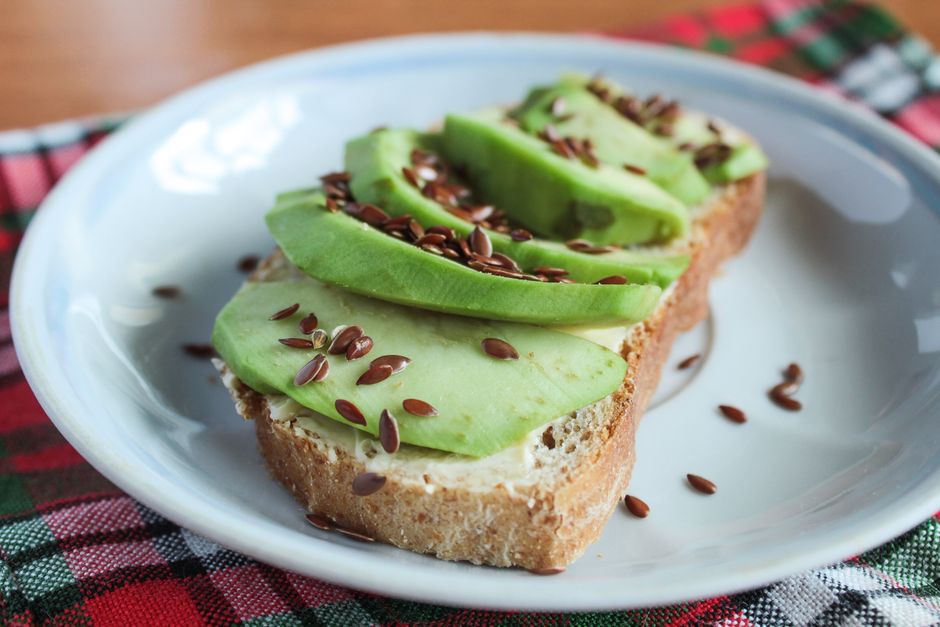
- Avocado Baguette: Simple and classic. Rub a piece of baguette with garlic, add sliced tomatoes, avocado, a drizzle of olive oil, and a pinch of salt and pepper.
- Tofu Caprese Sandwich: Use firm, smoked tofu slices instead of mozzarella. Layer with fresh basil, tomato, and a splash of balsamic glaze on toasted bread.
- Hummus Quesadillas: Spread hummus on a tortilla, add some black beans and spinach, fold it, and toast it in a pan (or even a toaster oven at work). The hummus acts as the “glue” that replaces cheese.
- Mock Tuna Salad: Use mashed chickpeas or even crumbled tempeh mixed with vegan mayo, celery, and dulse flakes for that “seafood” flavor.
- DIY Noodle Pots: Put rice noodles, shredded veggies, and a spoonful of miso paste or peanut butter in a jar. Just add boiling water from the office kettle at lunchtime.
- Black Bean Burrito Bowls: Combine canned black beans, leftover rice, salsa, corn, and avocado. It’s a classic for a reason—it’s cheap and delicious.
- Sweet Potato Sushi: Use roasted sweet potato as your filling. It holds up much better in a lunchbox than avocado, which can turn brown and mushy.
- Pesto Pasta: Toss whole-wheat pasta with vegan pesto (easy to find at most stores now) and add some frozen peas or white beans for extra protein.
- Quinoa Superfood Bowls: Mix quinoa with kale, blueberries, walnuts, and a lemon-tahini dressing. This is an antioxidant powerhouse.
- Deconstructed Burger Bowls: Take all your favorite veggie burger toppings—pickles, onions, lettuce, tomato—and chop up a cooked veggie burger patty. Serve it over a bed of greens to avoid a soggy bun.
- White Bean Arugula Salad: A simple 10-minute assembly. Toss canned white beans with arugula, lemon juice, and plenty of black pepper. It’s light but surprisingly high in fiber.
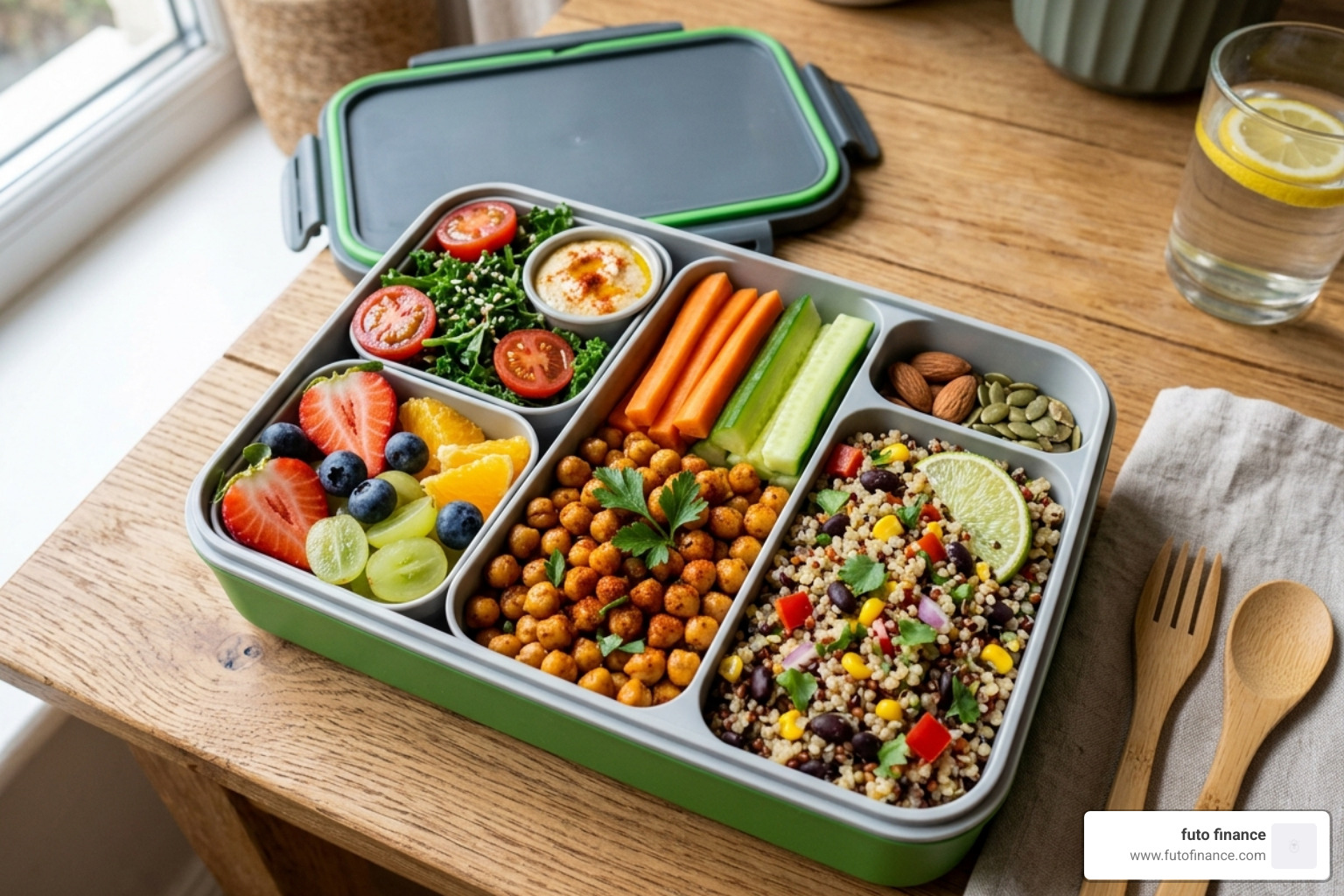
Packing and Portability: Avoiding the “Soggy Salad” Syndrome
There is nothing more discouraging than opening your lunch bag to find a wilted, lukewarm mess. To prevent the “Soggy Salad Syndrome,” we recommend a few specific techniques.
First, the Mason Jar method is a game-changer. By layering the dressing at the absolute bottom and the greens at the absolute top, you create a physical barrier of “hearty” ingredients (like chickpeas or cucumbers) that prevents the vinegar from wilting your lettuce.
Second, consider your hardware. While plastic containers are light, glass is superior for maintaining flavor and temperature. If you’re a student on the move, a divided bento box (like a Planetbox) is excellent for keeping “nibbly” items like nuts, fruit, and crackers separate from your main dish.
For hot meals, a high-quality thermos is an underrated piece of technology. You can heat your soup or grain bowl at 8:00 AM, and it will still be steaming by noon. This is ideal if your office or campus microwave always has a 20-minute line.
Creative Customization for Every Lifestyle
We know that one size doesn’t fit all. If you’re an athlete, you might need to double the portion of grains and beans to hit your calorie targets. If you’re a parent packing for a school, you’ll need to swap out peanut butter for sunflower seed butter to keep things nut-free and school-safe.
For the picky eaters among us, the best way to enjoy vegan lunches is through flavor boosters. A plain bowl of rice and beans is boring, but add a drizzle of sriracha-tahini dressing, a sprinkle of nutritional yeast (which adds a cheesy flavor), or some dulse flakes, and suddenly it’s a gourmet meal.
Don’t let leftovers go to waste, either. That half-portion of curry from last night can be stuffed into a pita or used as a topping for a baked sweet potato. If you find yourself needing a little something extra between meals, we have plenty of More info about vegan snacks to keep your energy levels high.
Frequently Asked Questions about Vegan Lunches
How do I make vegan lunches more filling?
Focus on calorie density. If your lunch is just lettuce and tomato, you’ll be hungry in an hour. Add “heavy hitters” like avocado, nuts, seeds, and legumes. Whole grains like farro or quinoa also provide much more fiber than white rice, which keeps you satisfied for longer.
What are the best containers for packing vegan meals?
We love glass jars for salads and soups. For “assembled” lunches like wraps or sushi, a stainless steel bento box with leak-proof lids is the way to go. If you don’t have access to a fridge, look for an insulated bag with a small ice pack.
Can I make vegan lunches without using leftovers?
Absolutely. Many of the ideas on our list, like the white bean salad or the nut butter bagel, use store-bought staples that require zero cooking. Keep a “lunch kit” in your desk drawer with a tin of beans, a jar of nuts, and some hot sauce for quick assemblies.
Conclusion
At Futo Finance, we believe that being vegan shouldn’t be a financial or logistical burden, especially for university students. By using these vegan lunch tips, you can save money, eat better, and stay energized for your afternoon lectures or meetings.
You don’t need to be a master chef to pack a great lunch. Start with one or two of these ideas this week—maybe a smashed chickpea wrap or a simple grain bowl—and see how much better you feel by mid-afternoon. For more student-friendly advice and recipes, visit More vegan recipes and tips. Happy packing!

Melo Rodrigues is the founder of Futo Finance and a specialist in student-budget veganism. Having mastered the art of plant-based cooking in a university setting, Melo is dedicated to helping students achieve nutritional excellence without financial strain. Through Futo Finance, Melo shares lab-tested strategies for eating smart and living sustainably on a budget.
