
Warm Up for Less with These Student Vegan Soups
Why Affordable Student Vegan Soups Are a Campus Game-Changer
Affordable student vegan soups are one of the smartest ways to eat well on a tight budget. Here are some of the best options you can make for under $2 per serving:
- 1-Pot Lentil Soup – ~$1.00/serving, 19g protein, ready in 30 minutes
- Vegan Split Pea Soup – under $1.00/serving, 17g protein, 18g fiber
- Creamy Vegetable Soup – ~$1.64/serving, uses basic canned goods and coconut milk
- Hearty Autumn Vegetable Soup – ~$1.50/serving, ready in 40 minutes
- Friendship Soup (vegan version) – ~$1.64/serving, made with dry lentils and split peas
- Chickpea and Kale Stew – under $1.50/serving, high fiber and filling
Campus life is expensive. Rent, textbooks, and fees eat through a student budget fast. Food often becomes an afterthought — leading to costly takeout or sad instant noodles.
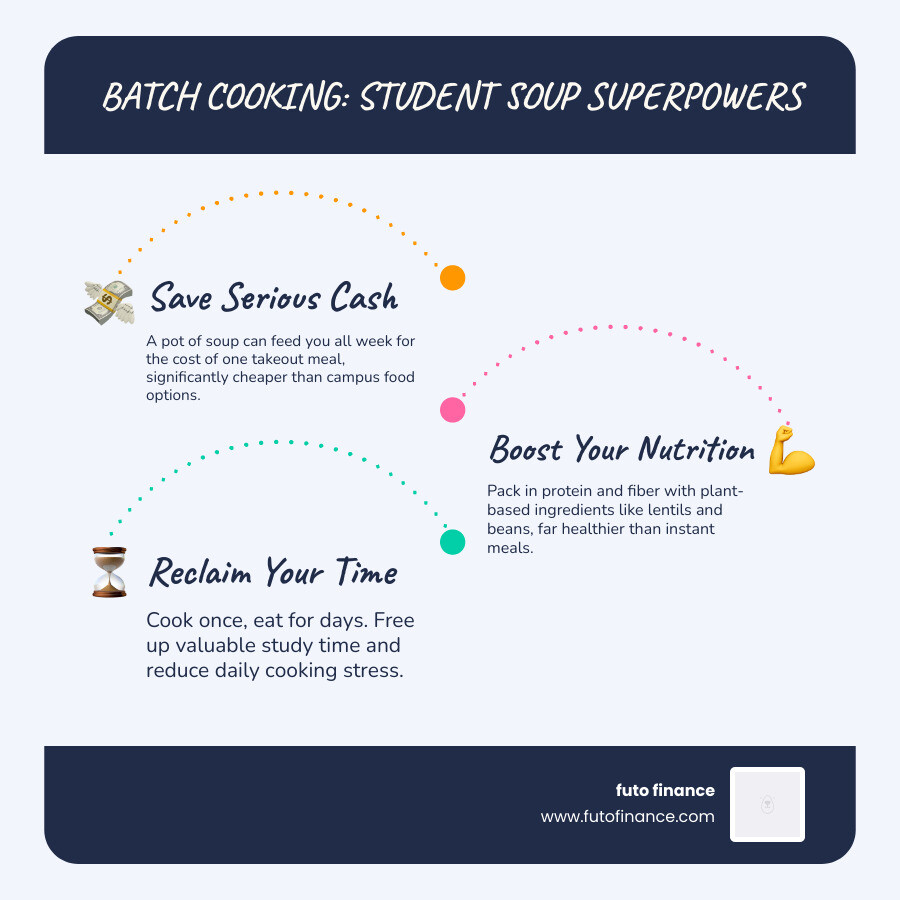
But here’s the thing: a pot of vegan soup can feed you for an entire week for less than the price of one takeout meal.
Dry lentils, canned beans, and frozen vegetables are some of the cheapest ingredients you can buy. Combined with a few pantry spices, they become genuinely satisfying meals — not just “broke student” survival food.
| Meal | Cost Per Serving | Protein | Time |
|---|---|---|---|
| Homemade lentil soup | ~$1.00 | 19g | 30 min |
| Homemade split pea soup | ~$0.90 | 17g | 55 min |
| Takeout ramen | ~$12-15 | 8-12g | 0 min (but ouch) |
| Campus café soup | ~$6-8 | varies | 5 min |
The math is clear. Making soup at home wins every time — on cost, nutrition, and how full you actually feel afterward.
Below, you’ll find everything you need: where to buy the cheapest ingredients, six simple recipes with full cost breakdowns, meal prep tips, and how to adapt everything to whatever equipment you have in your dorm or apartment.
Sourcing the Cheapest Ingredients for Your Affordable Student Vegan Soups
When we talk about affordable student vegan soups, the secret isn’t just in the cooking; it’s in the shopping. As of April 2026, grocery prices can be unpredictable, but certain staples remain consistently budget-friendly.
The Power of Bulk Bins
If your local grocery store has a bulk section, make it your best friend. Buying dry lentils, split peas, and barley by weight is significantly cheaper than buying pre-packaged bags. For instance, dry split peas can often be found for under $1.50 per pound, which can provide enough base for six to eight servings of soup.
Pantry Staples and Canned Goods
Canned beans (chickpeas, black beans, kidney beans) are incredibly convenient. While dry beans are cheaper, canned versions are still very affordable—often under $0.80 per can—and save hours of soaking time. Look for generic or store brands; they are nutritionally identical to name brands but cost about 30-40% less.
Don’t Sleep on Frozen Veggies
Fresh produce is great, but it spoils quickly. For a student lifestyle, frozen vegetables are a lifesaver. Frozen spinach, corn, peas, and mixed vegetable bags are frozen at peak ripeness, meaning they retain their vitamins. Plus, you only use what you need, which eliminates food waste.
Utilizing Community Resources
Many universities now host food pantries or “SNAC” (Student Nutrition Access Center) programs. These are excellent places to source dry pasta, canned tomatoes, and vegetable bouillon at no cost. Additionally, check out resources like the Cornell Cooperative Extension for community-based nutrition tips and low-cost recipe ideas.
Vegetable Scraps: The Free Broth
Stop throwing away your onion skins, carrot tops, and celery ends! Keep a “scrap bag” in your freezer. Once it’s full, boil the contents in water for an hour, strain it, and you have a rich, flavorful vegetable stock for $0.00.
6 Budget-Friendly Recipes to Try This Semester
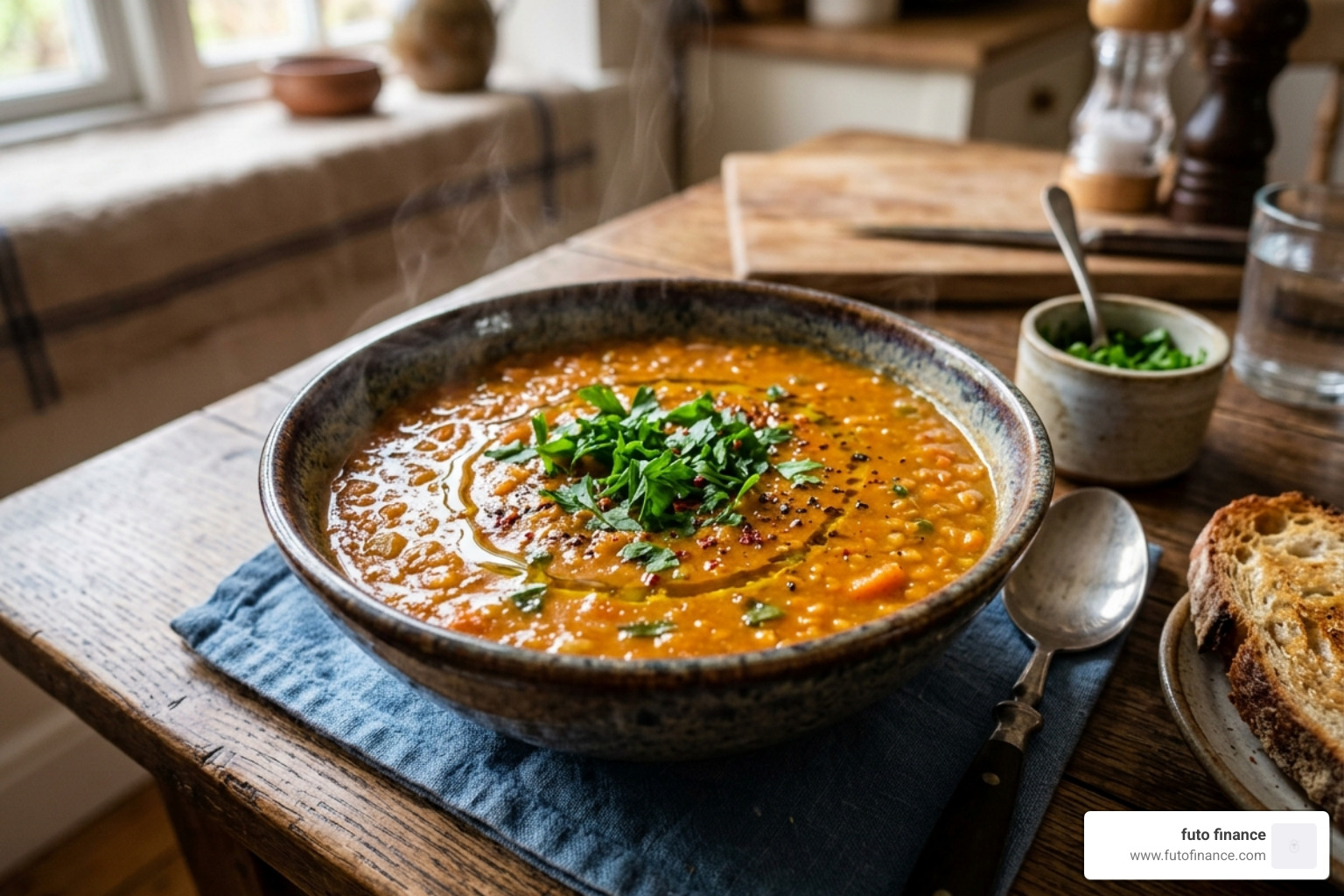
Ready to get cooking? We’ve rounded up six of the most reliable, affordable student vegan soups that are high in flavor and low in cost.
1. 1-Pot Everyday Lentil Soup
This is the “holy grail” of student meals. It uses just 10 basic ingredients and one pot, making cleanup a breeze.
- Ingredients: Dry green or brown lentils, onion, garlic, carrots, potatoes, vegetable broth, and dried herbs (thyme/rosemary).
- Cost: ~$1.00 per serving.
- Method: Sauté the veggies, add the lentils and broth, and simmer for 30 minutes. Stir in some kale or spinach at the end for an extra nutritional punch. It provides nearly 19g of protein and 14g of fiber per serving!
2. Vegan Split Pea Soup
Comfort food at its peak. This soup is naturally creamy without needing expensive dairy alternatives.
- Ingredients: Dry yellow or green split peas, carrots, celery, onion, and a bay leaf.
- Cost: Under $1.00 per serving.
- Method: Sauté aromatics, add peas and water/broth. Simmer for about an hour. Pro tip: Soak the peas overnight to cut the cooking time in half.
3. The Broke Vegan’s Creamy Vegetable Soup
Specifically designed for the “starving student,” this recipe uses canned goods to create a rich texture.
- Ingredients: Canned beans, tomatoes, carrots, green beans, coconut milk, and farfalle pasta.
- Cost: ~$1.64 per serving.
- Method: Cook the pasta separately. Boil the canned veggies and coconut milk together, then stir in the pasta and seasonings like Creole spice or garlic powder.
4. Hearty Autumn Vegetable Soup
Perfect for those chilly October or November nights when you need something warming.
- Ingredients: Zucchini, kale, cannellini beans, canned tomatoes, and leeks (or onions).
- Cost: ~$1.50 per serving.
- Method: Sauté the leeks and carrots, add tomatoes and stock, then simmer. Add the beans and greens at the very end to keep them from getting mushy.
5. Chickpea and Kale Stew
A thicker, heartier option that feels more like a meal than a light soup.
- Ingredients: Canned chickpeas, diced tomatoes, kale, and plenty of garlic.
- Cost: ~$1.30 per serving.
- Method: Sauté garlic and onions, add chickpeas and tomatoes with their juices. Simmer for 20 minutes and wilt the kale in the last 5 minutes.
6. Miso Udon Noodle Soup
A much healthier and more filling alternative to the $0.50 instant ramen packets.
- Ingredients: Udon noodles, miso paste, tofu, and frozen stir-fry veggies.
- Cost: ~$1.80 per serving.
- Method: Boil the noodles and veggies. Whisk the miso paste into warm water (don’t boil the miso itself, as it kills the healthy probiotics!) and combine.
How to Meal Prep Affordable Student Vegan Soups
We know you’re busy. Between lectures and late-night study sessions, you don’t want to cook every day.
- Batch Cooking: Always double the recipe. It takes the same amount of time to cook a large pot as a small one.
- Storage: Keep soup in the fridge for up to 5 days. Use airtight glass or BPA-free plastic containers.
- Freezing: Most vegan soups (except those with lots of pasta, which can get soggy) freeze beautifully for up to 3 months. Leave an inch of space at the top of your container because liquid expands when it freezes!
- Portioning: Freeze in individual “single-serve” portions so you can grab one and go.
Customizing Affordable Student Vegan Soups with Pantry Staples
Don’t be afraid to experiment! Soup is the most forgiving dish in the kitchen.
- The Umami Bomb: Add a tablespoon of nutritional yeast for a cheesy, savory flavor without the dairy.
- The Acid Kick: If your soup tastes “flat,” add a squeeze of lemon juice or a teaspoon of apple cider vinegar at the end. It brightens all the other flavors.
- Texture: If you want a creamy soup but don’t have coconut milk, take a cup of the soup (with the beans/veggies), blend it, and pour it back in.
- Toppings: Use leftover bread to make croutons or serve with a side of seedy sourdough for dunking.
Essential Tools and Time-Saving Hacks for Busy Students
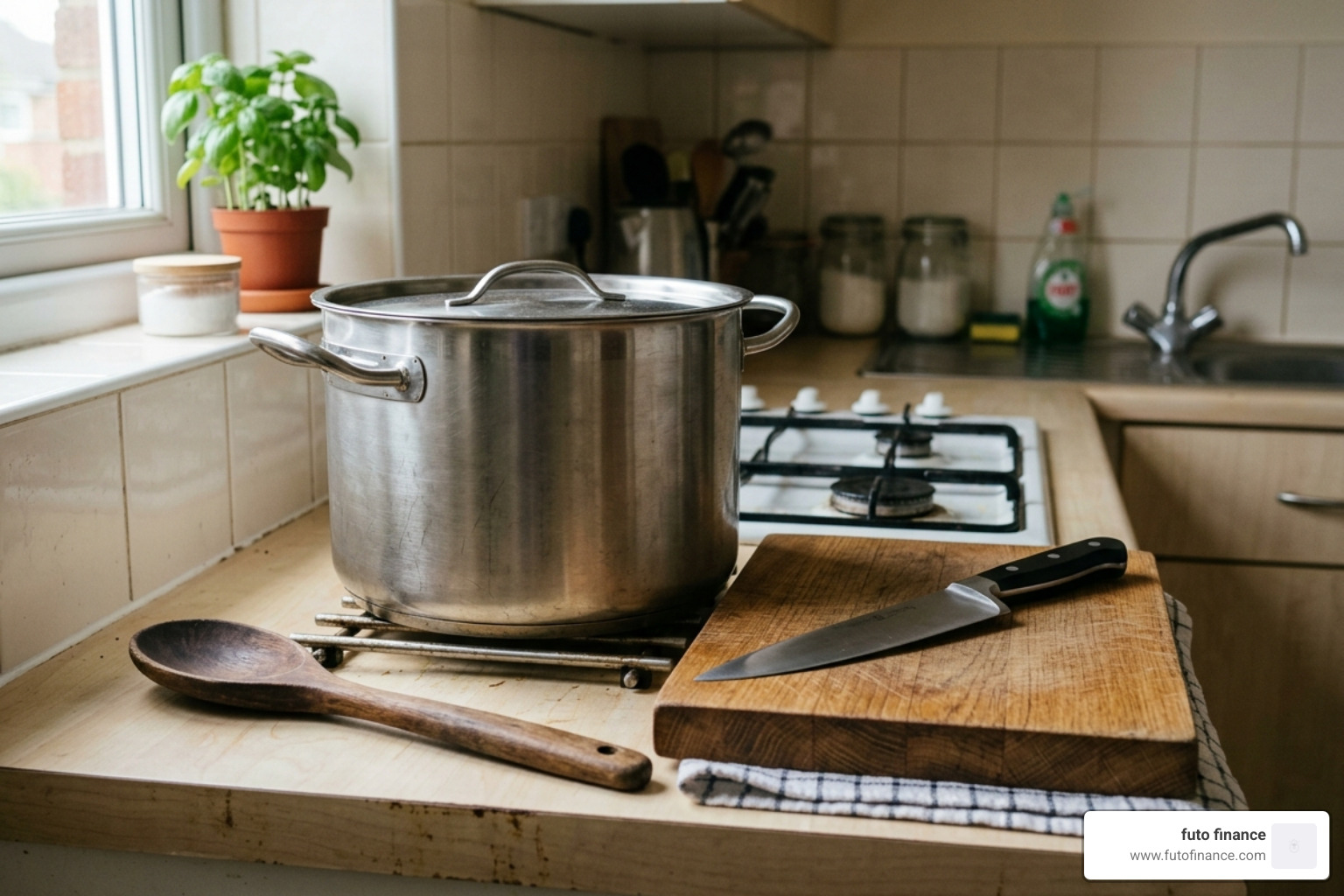
You don’t need a professional kitchen to make amazing affordable student vegan soups.
The Minimalist Tool Kit
- A Large Stock Pot: This is your primary investment. A 5-quart pot is usually enough for batch cooking.
- A Sharp Knife: A single, decent chef’s knife makes chopping veggies much faster and safer.
- Immersion Blender (Optional): If you love creamy soups, a cheap immersion blender is a game-changer. Alternatively, a potato masher works for a “rustic” chunky-creamy vibe.
Tech Adaptations
- Instant Pot: Most lentil and bean soups can be made in 15-20 minutes under high pressure. Just remember to reduce the liquid by about 25% since there is no evaporation.
- Slow Cooker: Throw your ingredients in before your 9:00 AM lecture, set it to “Low,” and come home to a finished dinner.
- Stovetop: The classic method. It’s reliable and gives you the most control over flavor.
Time-Saving Hacks
- Mise en Place: This is a fancy French term for “getting your stuff together.” Chop all your veggies before you turn on the heat. It prevents burning things while you’re frantically dicing an onion.
- Clean as You Go: Wash your cutting board and knife while the soup is simmering. You’ll thank yourself when you’re done eating and only have one pot to wash.
- Common Mistake: Don’t overcook your greens! Add spinach, kale, or parsley in the very last few minutes so they stay vibrant and nutrient-rich.
Frequently Asked Questions about Student Vegan Soups
How long can I store vegan soup in the fridge?
Most vegan soups stay fresh and delicious for 4 to 5 days in an airtight container. In fact, many soups (like lentil or chili) actually taste better on day two because the spices have more time to meld together.
Can I make these soups in a dorm room with limited equipment?
Absolutely. If you aren’t allowed a stove, a small slow cooker or an electric pressure cooker is a great workaround. Even a simple electric kettle can be used to make “jar soups” where you combine pre-cooked noodles, thin-sliced veggies, and bouillon in a heat-safe jar and add boiling water.
How do I make my soup more filling without spending more money?
The “Three Pillars of Fullness” are fiber, protein, and healthy fats.
- Fiber: Keep the skins on your potatoes and use plenty of beans.
- Protein: Lentils and split peas are your cheapest high-protein options.
- Fats: A drizzle of olive oil or a few slices of avocado (if on sale) can help keep you full for hours. Adding a side of cheap brown rice or whole-wheat pasta directly into the bowl also adds “staying power.”
Conclusion
At Futo Finance, we believe that being a student shouldn’t mean sacrificing your health or your values. Eating a plant-based diet is not only better for the planet, but it’s also remarkably kind to your bank account when you focus on affordable student vegan soups.
By mastering a few basic recipes and shopping smart, you can save hundreds of dollars a semester while fueling your brain for those tough exams. Every pot of soup you make is an investment in your wellness and your financial freedom.
For more tips on navigating university life on a plant-based budget, check out More info about vegan student life. Happy cooking!

Melo Rodrigues is the founder of Futo Finance and a specialist in student-budget veganism. Having mastered the art of plant-based cooking in a university setting, Melo is dedicated to helping students achieve nutritional excellence without financial strain. Through Futo Finance, Melo shares lab-tested strategies for eating smart and living sustainably on a budget.
