
Vegan Food on a Budget: A Beginner’s Guide to Plant-Based Savings
The Truth About Eating Vegan on a Budget in 2026
Vegan recipes on a budget are more accessible than most people think — and this guide will show you exactly how to make them work.
Here are the best budget-friendly vegan meals to get started:
| Recipe | Cost Per Serving | Protein |
|---|---|---|
| Vegan Split Pea Soup | $0.63 | 23g |
| Chickpea Rice | $0.65 | 9g |
| Lentil Stew | $0.80 | 10g |
| Red Beans and Rice | $1.23 | 22g |
| Vegan Lasagna | $1.26 | 15g |
The biggest myth about veganism is that it’s expensive. It’s not — if you know what to buy.
The truth is that plant-based staples like lentils, beans, rice, and split peas are among the cheapest foods in any grocery store. A full pot of split pea soup can cost as little as $3.16 total. A hearty lentil stew comes in under $1 per serving.
For university students juggling classes, a tight budget, and zero time, this matters a lot.
You don’t need fancy meat replacers or specialty vegan cheeses. You don’t need a full kitchen or hours of free time. Many of the most filling and nutritious vegan meals come together in one pot, in under 30 minutes, for less than $2 a serving.
This guide covers everything — from stocking your pantry to batch cooking for the week.
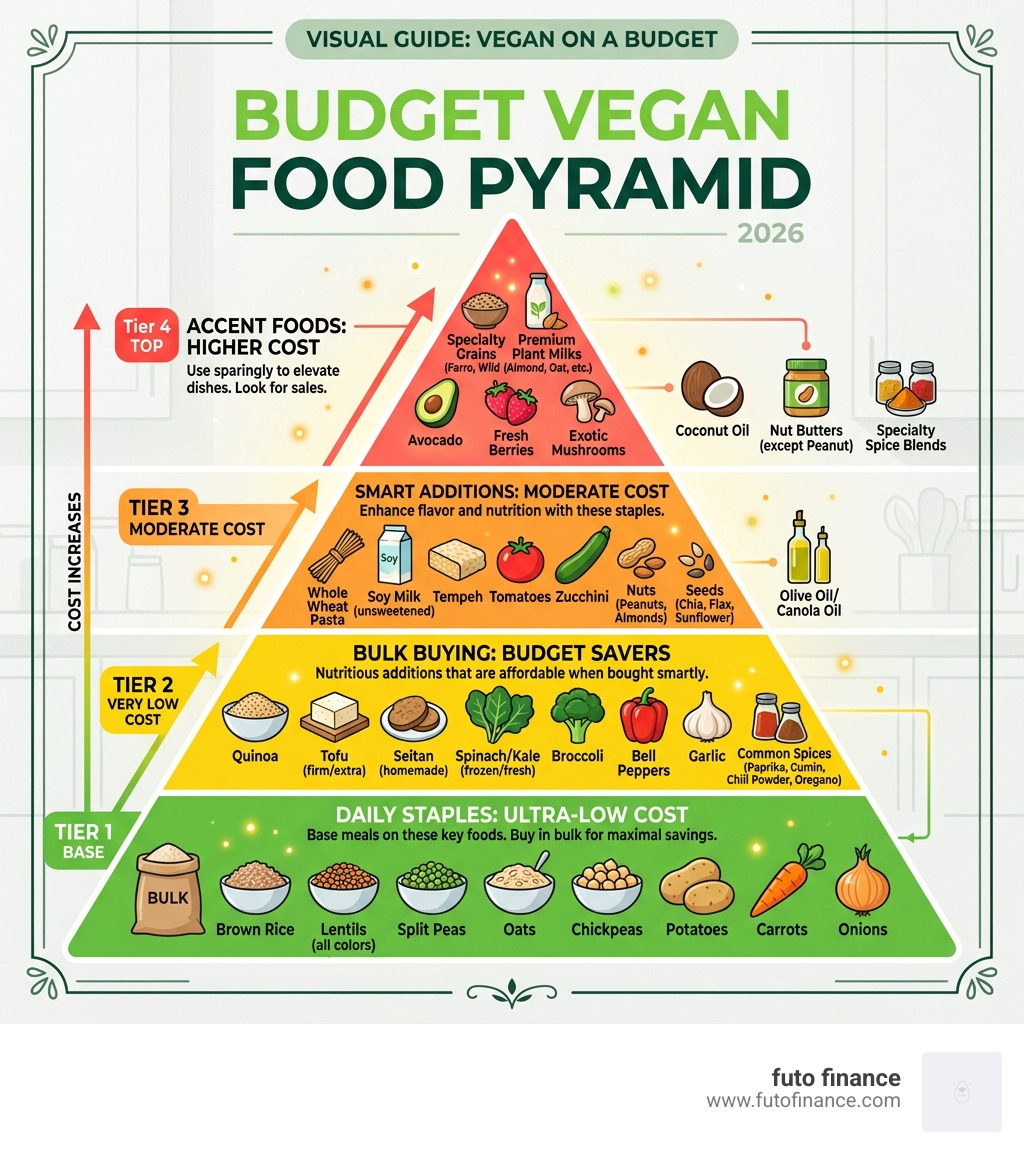
Mastering vegan recipes on a budget: Essential Pantry Staples
When we talk about vegan recipes on a budget, the secret weapon isn’t a fancy kitchen gadget—it’s a well-organized pantry. If you have the right base ingredients, you’re never more than 20 minutes away from a meal that costs less than a fancy coffee.
At Futo Finance, we always tell students that the grocery store is a strategic battlefield. To win, you need to stop buying pre-packaged “vegan” convenience foods and start looking at the bottom shelf.

The “Big Three” Staples
- Rice and Grains: White rice, brown rice, and oats are the backbone of affordable eating. A massive bag of rice from the bottom shelf of the ethnic food aisle is significantly cheaper than those small, boxed versions.
- Dried Legumes: Lentils, chickpeas, and split peas are your protein powerhouses. Buying them dry is the ultimate money-saver, though canned beans are still incredibly affordable at roughly $0.70 to $0.80 per can.
- Canned Tomatoes and Broth: These are the flavor bases for almost every stew, soup, and pasta sauce we make.
Shelf-Stable Saviors
- Vegetable Broth: Keep cartons on hand, or better yet, use “Better Than Bouillon” or bouillon cubes to save space and money.
- Agave Nectar: A perfect, cheaper alternative to maple syrup for sweetening oats or sauces.
- Sunflower Seeds: These are the unsung heroes of the nut world. They provide the same crunch and healthy fats as pine nuts or cashews but at a fraction of the price.
- Oils: Skip the expensive avocado or specialty oils. A large bottle of vegetable or canola oil handles high-heat cooking perfectly, while a decent olive oil can be saved for finishing dishes.
For more deep dives into navigating the grocery store as a student, check out our more info about student vegan tips.
Smart Substitutions to Lower Your Grocery Bill
One of the biggest mistakes we see people make when trying out vegan recipes on a budget is following recipes too strictly. If a recipe calls for quinoa, but you have rice, use the rice! Quinoa is great, but rice is often half the price and just as filling.
Here are some of our favorite “Budget Swaps”:
- Agave vs. Maple Syrup: In 2026, maple syrup prices can fluctuate wildly. Agave is shelf-stable, incredibly sweet, and much more budget-friendly for your morning oatmeal.
- Sunflower Seeds for Nuts: Making a pesto or a crunchy salad? Swap walnuts or pine nuts for sunflower seeds. You get that nutty texture without the “premium” price tag.
- Toast for Breadcrumbs: Don’t buy a canister of breadcrumbs. Take those two end-slices of the bread loaf that no one wants to eat, toast them until they are rock hard, and crush them up. It’s free and reduces waste.
- Cheaper Onions: Red onions are often more expensive than yellow or white onions. Unless you’re eating them raw in a salad, yellow onions provide the exact same flavor base for a lower price.
Adapting Comfort Classics into vegan recipes on a budget
You don’t have to give up your favorite childhood meals just because you’re eating plant-based on a student budget. In fact, many comfort foods are naturally suited for a vegan makeover.
Vegan Lasagna Traditional lasagna is a cheese-and-meat bomb that can easily cost $25 to make. Our version uses a Tofu Ricotta (made by mashing extra-firm tofu with a bit of lemon juice and salt) and a lentil-based “meat” filling. The result? A massive pan that provides about 180 grams of protein total for only $1.26 per serving.
Shepherd’s Pie Swap the ground lamb or beef for brown lentils. Lentils have a similar “mouthfeel” and soak up the savory flavors of thyme and rosemary perfectly. Top it with mashed potatoes (made with olive oil and a splash of starchy potato water instead of expensive vegan butter) for a meal that feels like a warm hug.
Red Beans and Rice This is a New Orleans staple that is naturally budget-friendly. By skipping the andouille sausage and using smoked paprika, you get that signature smoky depth without the animal products or the high cost. It costs about $7.40 for a massive pot that feeds you for half the week.
High-Protein Meals Under $2 Per Serving
There’s a persistent myth that you can’t get enough protein on a vegan diet without spending a fortune on protein powders or processed “fake meats.” We’re here to debunk that.
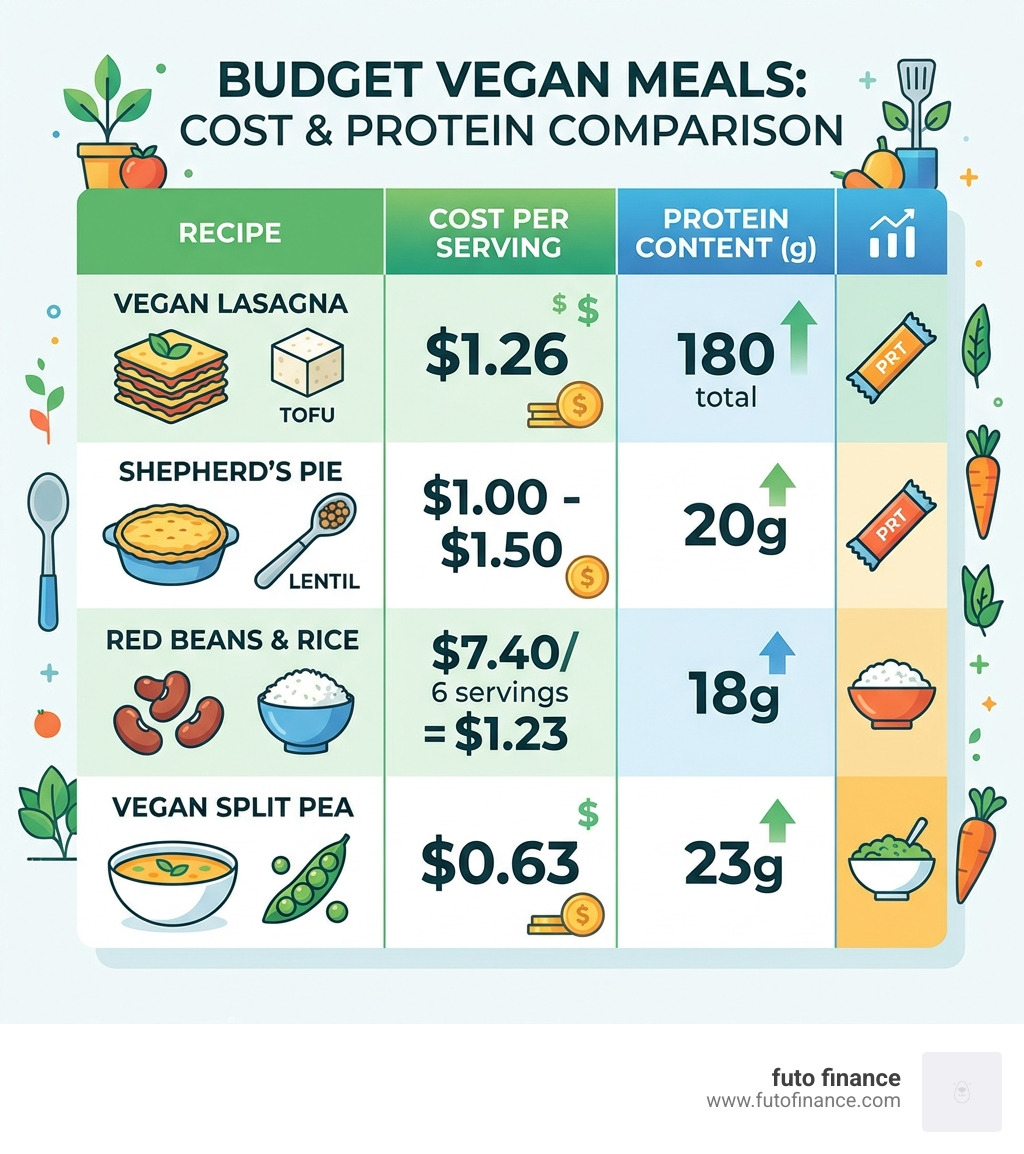
As you can see, the protein-to-cost ratio of legumes is unbeatable. For example, a serving of Vegan Split Pea Soup costs only $0.63 but packs a whopping 23g of protein. That’s more than enough to fuel a long afternoon of lectures or a gym session.
If you’re curious about how plant proteins stack up, you can read more about the scientific research on plant protein variety. The short version? You don’t need to worry about “combining” proteins at every meal. As long as you eat a variety of foods throughout the day, your body is smart enough to do the rest.
The Power of Legumes for Hearty Meals
Legumes are the MVP of vegan recipes on a budget. They are shelf-stable, versatile, and incredibly filling thanks to their high fiber content.
- Lentils: These are the fastest-cooking dried legumes. Red lentils break down into a creamy consistency (perfect for dals and soups), while brown and green lentils hold their shape (great for “meat” sauces and stews).
- Chickpeas (Garbanzo Beans): These are incredibly versatile. You can roast them for a crunchy snack, mash them into a “tuna” salad, or toss them into a one-pot rice dish.
- Split Peas: Often underrated, split peas are dirt cheap. They naturally thicken soups as they cook, eliminating the need for added starches or cream.
- Black Beans: A staple for tacos, chilis, and burgers. They are packed with antioxidants and fiber.
Quick One-Pot vegan recipes on a budget for Students
We know that as a student, you don’t always have an hour to simmer a stew. Sometimes you have 20 minutes between a seminar and a study group.
The 15-Minute Buddha Bowl This is our “single guy/girl” lunch hero. Use pre-cooked rice (or leftovers), a handful of canned chickpeas, and a diced sweet potato. Sauté the potato in a skillet with a little sesame oil for 8-10 minutes, throw in the chickpeas and a splash of soy sauce, and serve it over the rice. It’s healthy, costs under $5, and uses exactly one pan.
One-Pot Chickpea Rice This is a “stingy vegan” classic. You fry up some onions, garlic, and carrots, add dry rice, a can of chickpeas, vegetable stock, and spices (like cumin and smoked paprika). Let it simmer for 13-15 minutes. The rice absorbs all the flavor from the chickpeas and spices. It’s a complete meal for about $0.65 per serving.
Sheet-Pan Pancakes Yes, you can make pancakes on a budget! Instead of flipping them one by one, pour your vegan batter (flour, sugar, baking powder, soy milk) onto a greased sheet pan and bake. It’s faster, uses less oil, and is perfect for meal prepping breakfast for the whole week.
Flavor Hacks: Rich Tastes Without Expensive Replacers
The biggest hurdle for beginners is making plant-based food taste “rich” and savory without using meat or expensive cheeses. You don’t need a $10 block of vegan cheddar to make a meal delicious. You just need a few flavor-bomb ingredients.

The Umami Secret
Umami is the “fifth taste”—the savory, “crave-worthy” flavor found in meat and aged cheeses. You can replicate this using:
- Soy Sauce: Adds salt and a deep, fermented richness to everything from stews to pasta sauces.
- Smoked Paprika: This is “liquid gold” for vegans. It provides that smoky, grilled flavor that people miss when they stop eating bacon or sausage.
- Nutritional Yeast: Affectionately known as “nooch,” these yellow flakes add a nutty, cheesy flavor to popcorn, pasta, and sauces.
- Mushrooms and Walnuts: When finely chopped and sautéed together, they create a savory, “meaty” base for tacos or lasagna.
Replicating Meat-Based Richness
One reason meat-based dishes taste so “satisfying” is the fat content. When we cook vegan recipes on a budget, we can mimic this by being strategic with our fats.
- Coconut Oil: Adding a spoonful of coconut oil to a bean stew or a pot of red beans and rice adds a velvety, rich mouthfeel similar to animal fat.
- Mashing Your Beans: This is a pro-tip for creamy soups. Instead of adding cream, take a potato masher (or the back of a spoon) and mash about 20% of the beans against the side of the pot. It releases starches that naturally thicken the liquid and create a creamy texture for free.
- Tomato Paste: Sautéing tomato paste with your onions and garlic (a process called “pincé”) caramelizes the sugars and adds a massive depth of flavor that makes a 30-minute soup taste like it simmered all day.
- Frying Spices: Don’t just dump your cumin and paprika into the water. Fry them in oil for 30 seconds before adding your liquids. This “blooms” the spices, releasing oils that carry much more flavor.
Meal Prep Strategies for Maximum Savings
Meal prepping is the difference between eating a healthy $1 lunch and panic-buying a $12 burrito on campus. When you’re making vegan recipes on a budget, cooking in bulk is your best friend.
The Batch Cooking Method
Don’t just cook for tonight; cook for the “future you.” If you’re making a Lentil Stew or Split Pea Soup, double the recipe. These dishes actually taste better the next day as the flavors have more time to meld. Most bean-based stews freeze beautifully for up to three months.
The Reheating Rice Trick
Leftover rice can get dry and crunchy in the fridge. Here is a life-saver: when reheating rice in the microwave, place a single ice cube on top of the rice and cover the bowl with a plate or a damp paper towel. The ice cube won’t melt completely, but it will create steam that rehydrates the rice, making it fluffy again.
Seasonal Shopping and Waste Reduction
- Shop the Seasons: Sweet potatoes are dirt cheap in the fall. Cabbage is practically free in the winter. Base your “Buddha Bowls” around whatever is on sale.
- Don’t Toss the Scraps: Keep a “stock bag” in your freezer. Throw in onion ends, carrot peels, and celery butts. When the bag is full, boil it with water for an hour to make your own free vegetable broth.
- Portion Control: Use your containers to divide meals immediately after cooking. This prevents you from overeating at dinner and ensures you actually have that lunch ready for tomorrow.
Frequently Asked Questions about Budget Veganism
Is veganism more expensive than a standard diet?
Actually, it’s usually cheaper! While “specialty” vegan products like mock meats and cashew cheeses are expensive, the core of a vegan diet—grains, legumes, and seasonal produce—is much cheaper than meat and dairy. In 2026, a pound of dried lentils is significantly more affordable than a pound of ground beef. By avoiding the processed “vegan” aisle and sticking to the produce and bulk sections, you’ll see your grocery bill drop.
How do I get enough protein on a tight budget?
Legumes are your best friend. A single serving of split pea soup or lentil stew can provide 20-25g of protein for under $1. Tofu is also an incredibly affordable protein source, especially if you buy it from Asian grocery stores. Our Vegan Lasagna recipe provides 180g of protein for the whole pan, proving that you don’t need expensive supplements to meet your goals.
Can I cook these recipes in a small dorm kitchen?
Absolutely. Most of the recipes we recommend at Futo Finance are “one-pot” or “one-pan” meals. This means you only need a single burner or a hot plate. If you don’t have a stove, many grains like couscous or “instant” rice can be made with just a kettle of boiling water, and canned beans can be seasoned and eaten without heavy cooking.
Conclusion
Eating vegan recipes on a budget isn’t about deprivation; it’s about being a smarter cook. By mastering a few basic staples like lentils and rice, and using flavor hacks like smoked paprika and soy sauce, you can eat like a king on a student budget.
At Futo Finance, we believe that financial wellness and physical health go hand-in-hand. You shouldn’t have to choose between your bank account and your values. Start with one of the recipes in the table above, buy your beans in bulk, and watch how easy it is to save money while eating well.
For more inspiration on your plant-based journey, explore our more info about affordable vegan meal plans. Happy cooking!

Melo Rodrigues is the founder of Futo Finance and a specialist in student-budget veganism. Having mastered the art of plant-based cooking in a university setting, Melo is dedicated to helping students achieve nutritional excellence without financial strain. Through Futo Finance, Melo shares lab-tested strategies for eating smart and living sustainably on a budget.
